
The short answer
What to do first
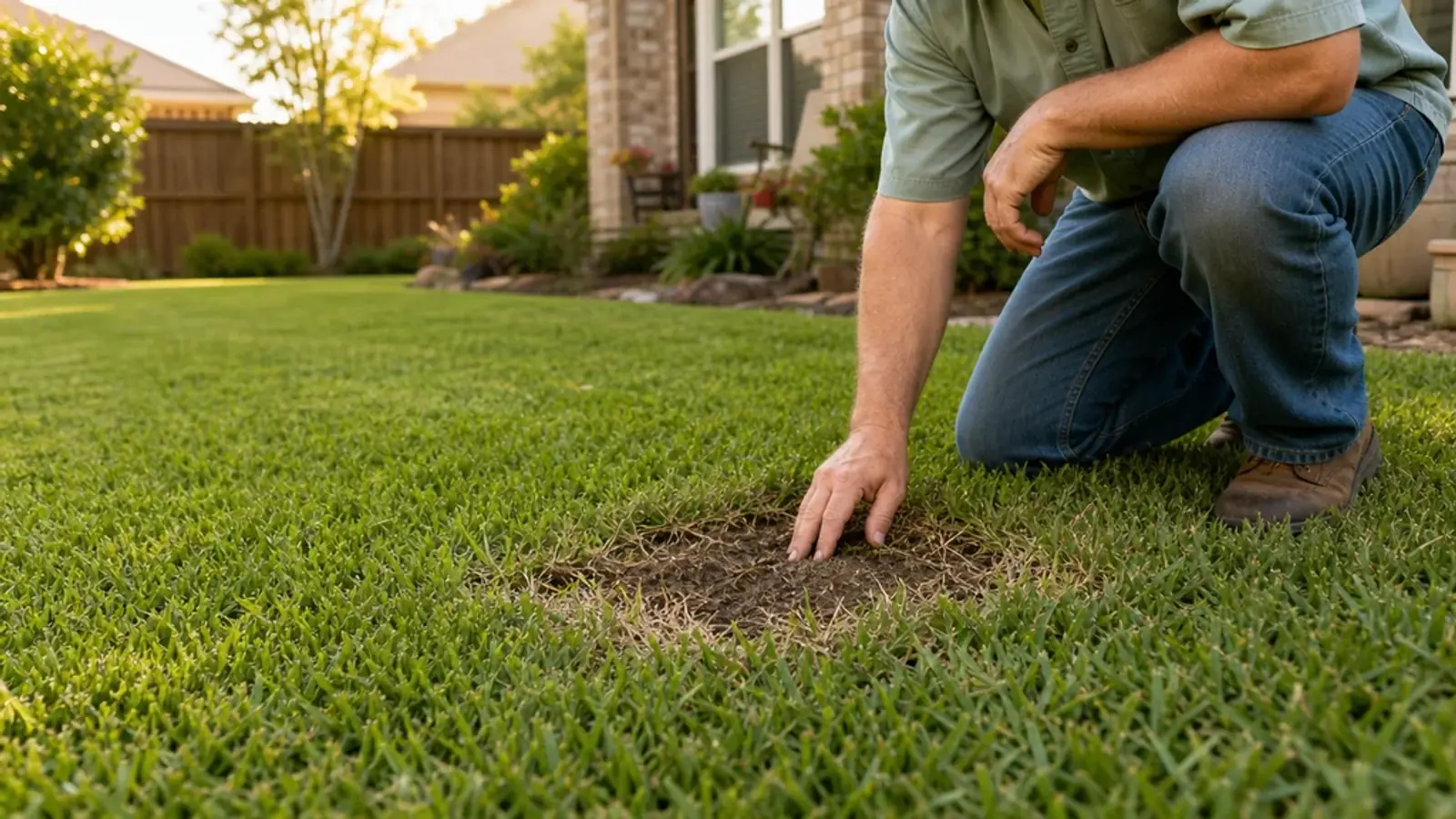
Prepare a lawn patch by removing dead grass and debris, loosening the top layer of compacted soil, and leveling the area with the surrounding turf. Correct drainage or buried-obstruction problems first, then pre-wet the soil when the product directions call for it.
Remove what blocks the soil
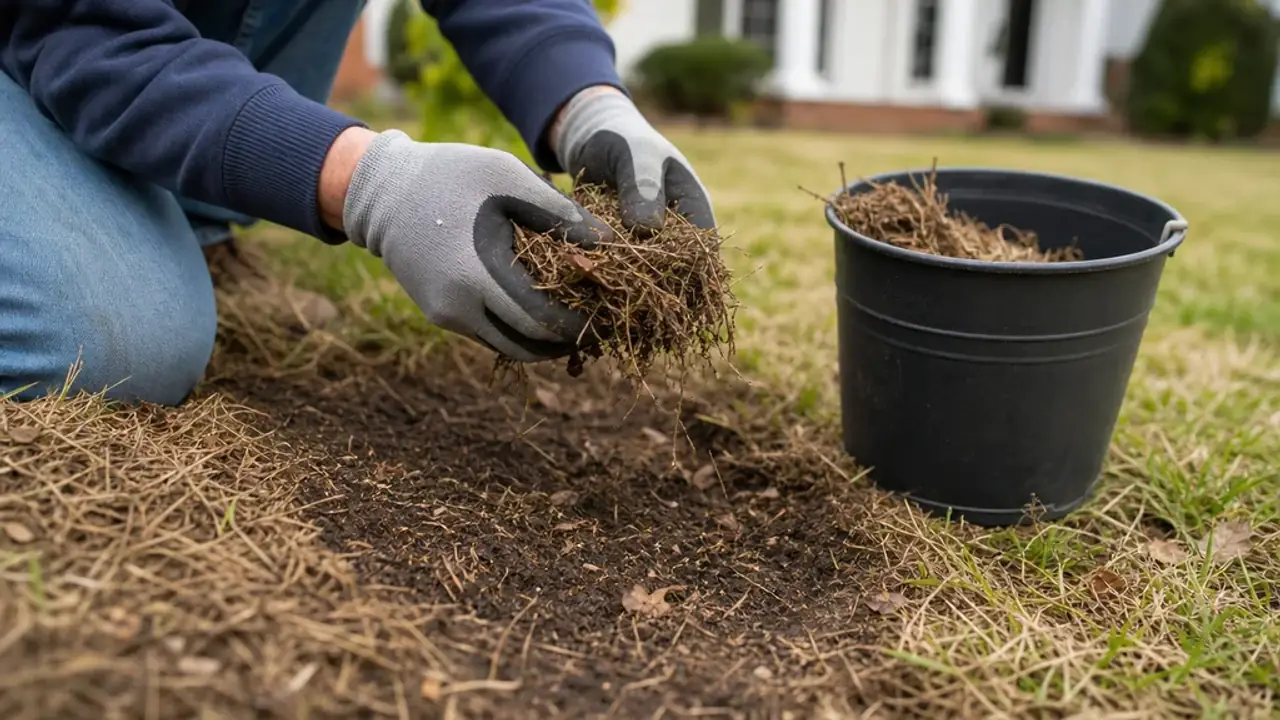
Seed and repair material need a path to soil. Pull out leaves, dead stems, loose thatch, stones, and other debris instead of spreading material over them. Work from the center outward so you can preserve healthy turf around the patch.
If you find plastic, construction fill, a large root, or another buried obstruction, stop and correct it. Covering the problem only delays the next failure.
Loosen the surface without overworking it
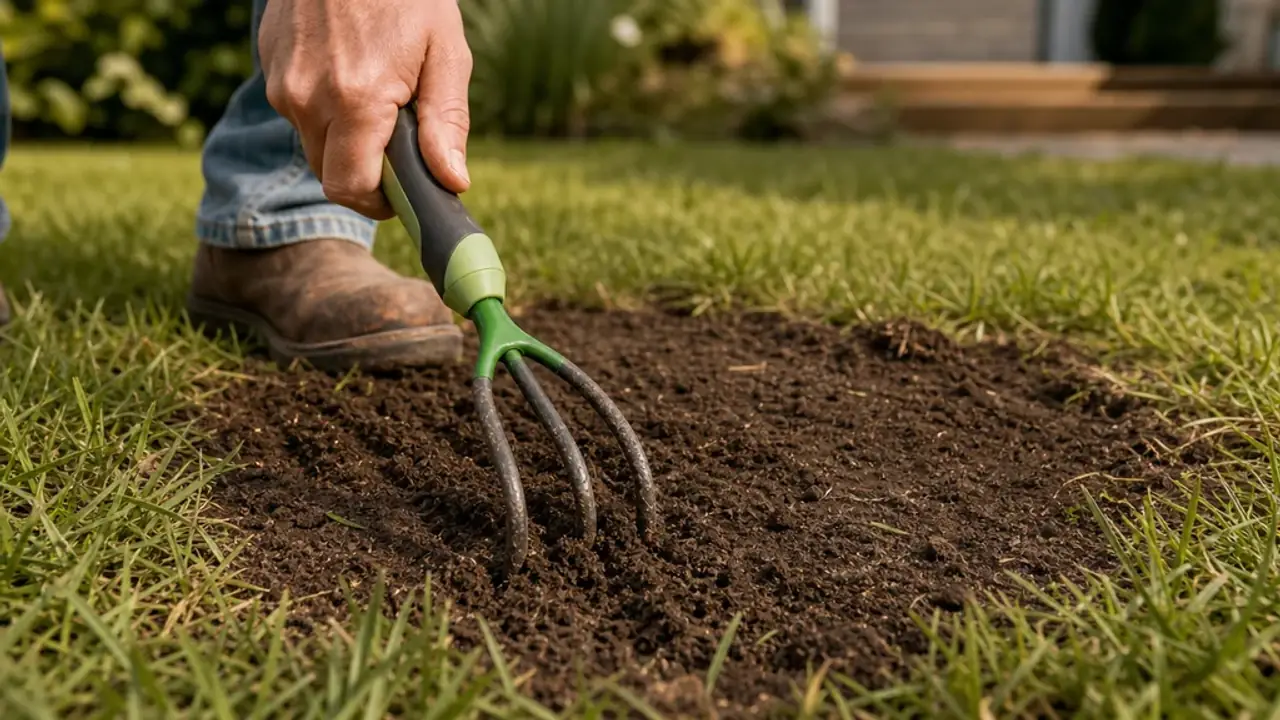
Use a hand rake or cultivator to break the crust on the top layer. You want small soil crumbs and shallow grooves that can hold moisture and material in place. Deep tilling can create a low spot after the soil settles and can damage nearby roots.
Hard soil that immediately seals back over may need more diagnosis. Compaction caused by repeated traffic will return unless the traffic pattern changes.
Level the patch and check drainage
Bring the prepared soil level with the base of the surrounding grass. A depression can collect water, while a mound can dry faster and be scalped by a mower.
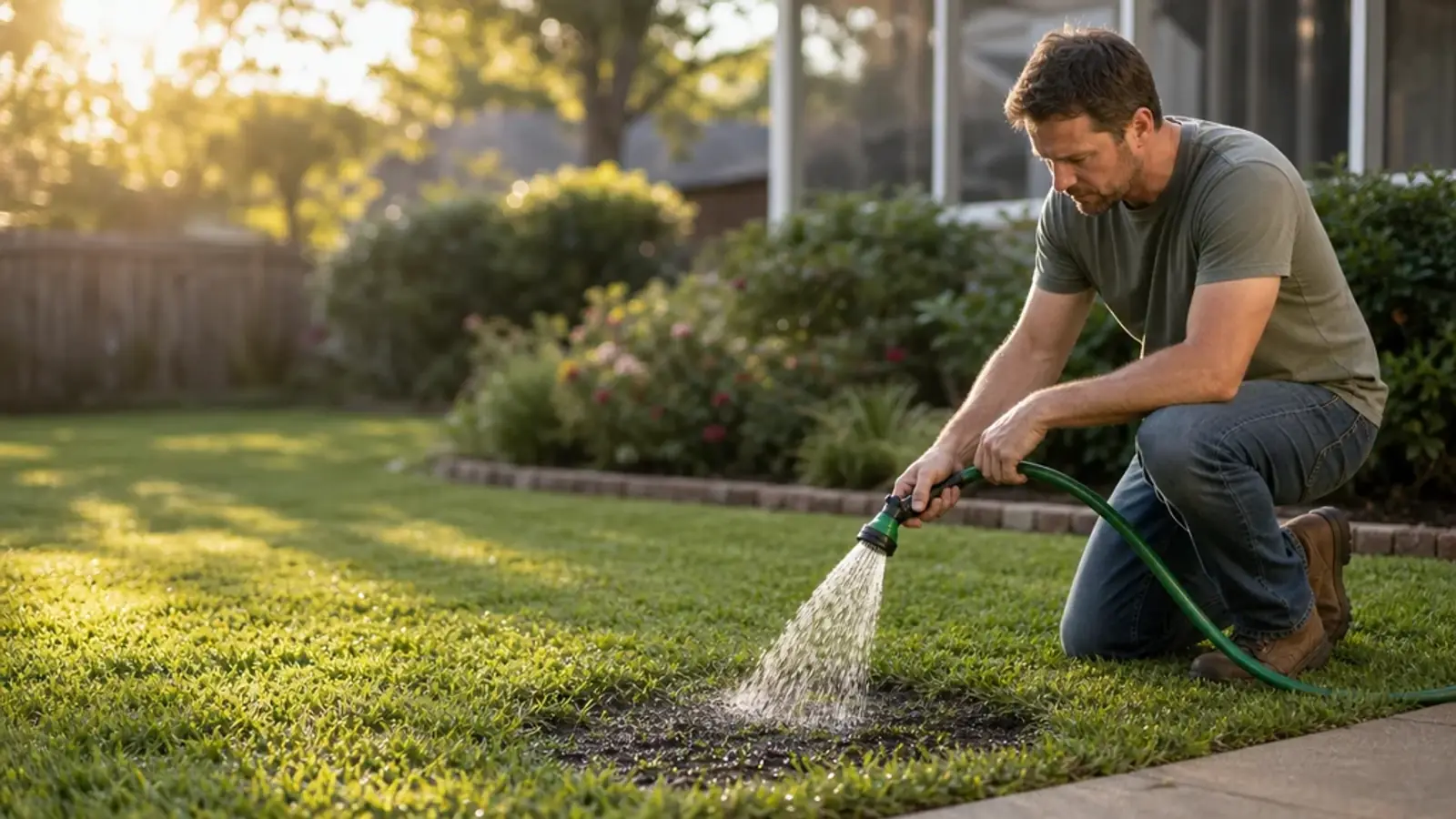
Run a small amount of water across the patch. It should soak in without immediately pooling or running away. Fix obvious grade or drainage problems before you continue.
- Do not leave a bowl-shaped depression.
- Do not cover exposed soil with a thick layer of new topsoil unless the grade requires it.
- Keep loose soil out of drains, walkways, and neighboring turf.
Finish with a firm, receptive surface
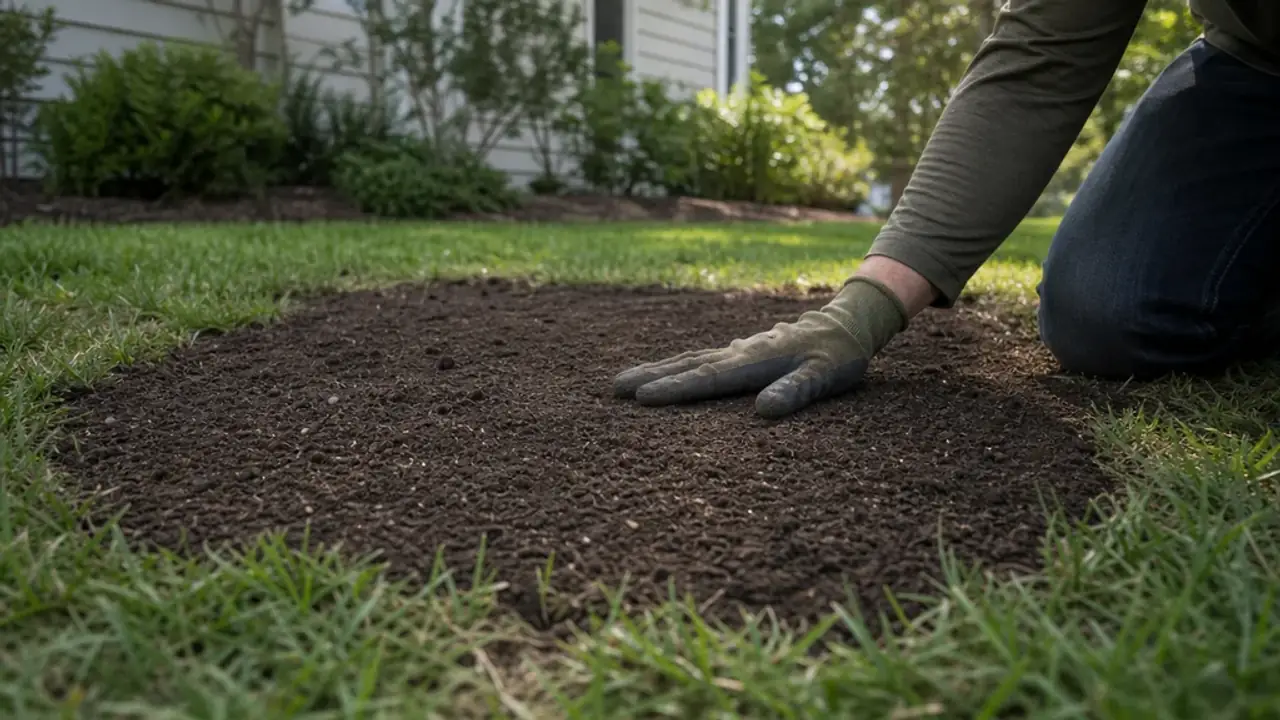
A ready patch is clear, level, lightly loosened, and firm enough that a hand press does not sink deeply. That surface supports direct seed-to-soil contact while still accepting water.
From this point, follow the package directions exactly. Soil preparation does not replace the stated application rate or watering schedule.
Common questions
Before you repair the patch
Do I need to add topsoil before repairing a lawn patch?
Not automatically. Add soil only when you need to correct the grade or replace missing material. A thick new layer can bury surrounding turf and change drainage.
How deep should I loosen soil for grass repair?
For a small patch, break up the top layer enough to remove the crust and create a receptive surface. Avoid deep excavation unless you are correcting a separate soil problem.
Can I put grass seed on hard soil?
Seed sitting on sealed, compacted soil has poor contact and is easier to wash or dry out. Clear and lightly loosen the surface first.