
The short answer
What to do first
Repair a Bermuda bare spot by first identifying whether the lawn is common or hybrid Bermuda, then removing dead grass and debris, loosening the top layer of soil, and correcting obvious drainage or shade problems. Seed may suit seeded common Bermuda; many hybrid lawns need matching plugs, sprigs, sod, or recovery from surrounding runners instead.
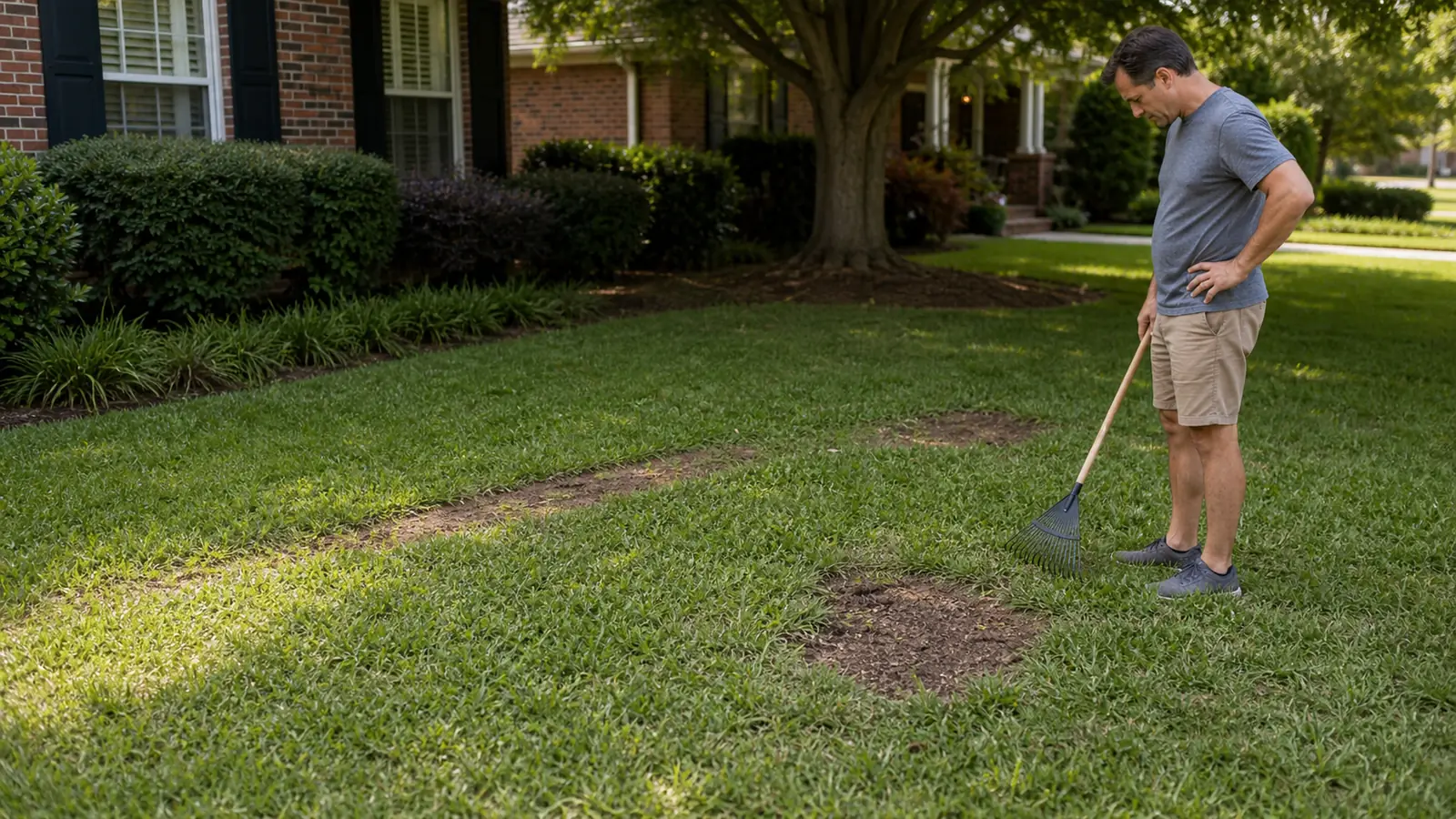
Start with the reason the patch is bare
A repair product cannot correct a problem that is still active. Before you add seed, check for standing water, dense shade, repeated foot traffic, pet damage, buried debris, or soil that has become hard enough to shed water.
Bermuda grass performs best with sun and warm soil. If the surrounding turf is struggling everywhere, or the patch stays wet long after the rest of the lawn dries, solve that larger issue before treating the area as a simple patch repair.
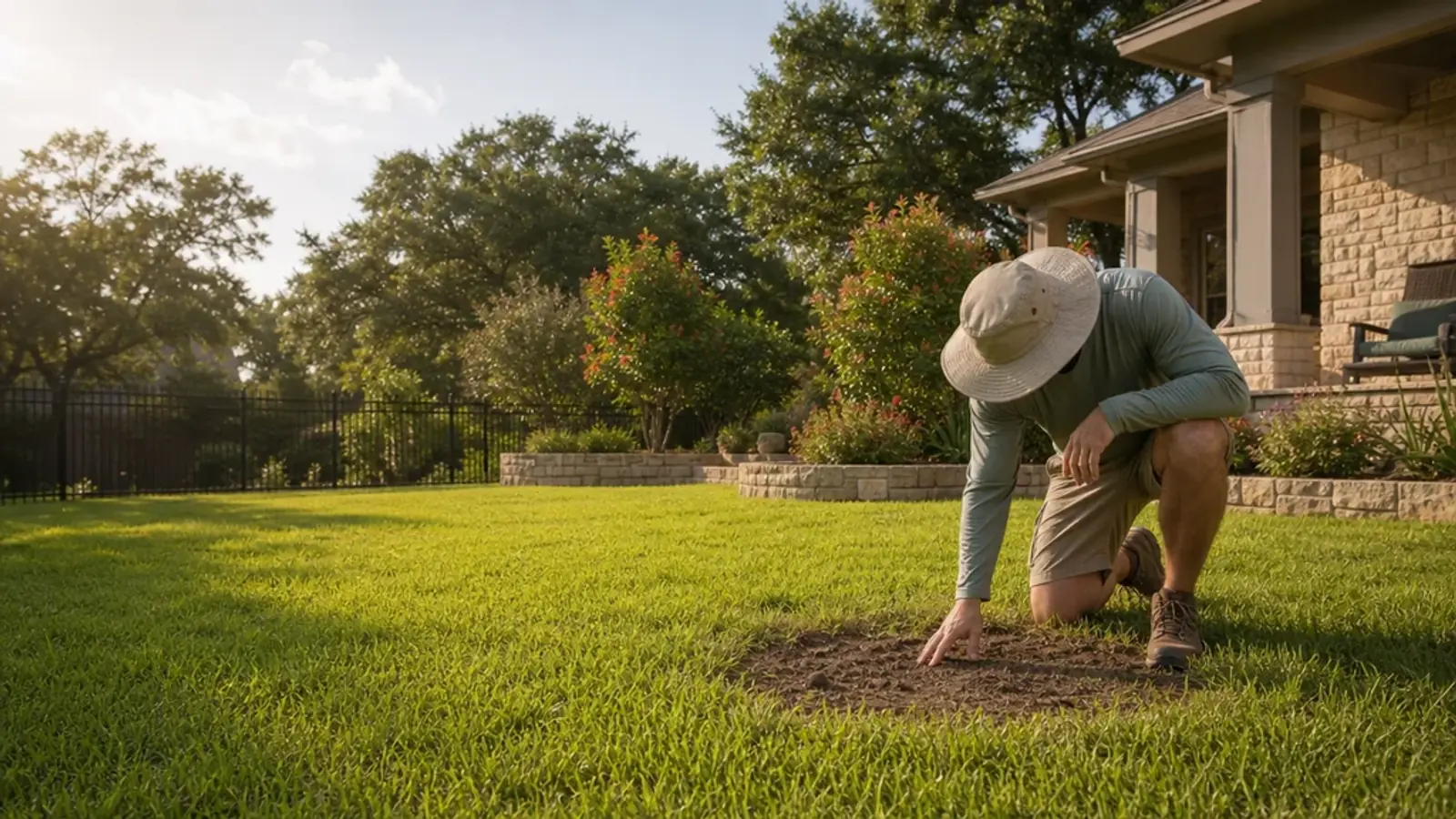
Identify the Bermuda type before buying seed. Clemson Extension notes that hybrid cultivars do not produce viable seed, so a hybrid lawn is normally established and repaired vegetatively with matching sod, plugs, or sprigs. Common and improved seeded Bermuda cultivars are a different category. When the cultivar is unknown, compare the patch with the original sod paperwork or ask a local extension office or turf supplier before mixing grass types.
- Confirm the surrounding lawn is Bermuda or another compatible warm-season grass.
- Repair during active warm-season growth rather than during dormancy.
- Address drainage, shade, traffic, or debris before adding seed.
Expose and loosen the soil
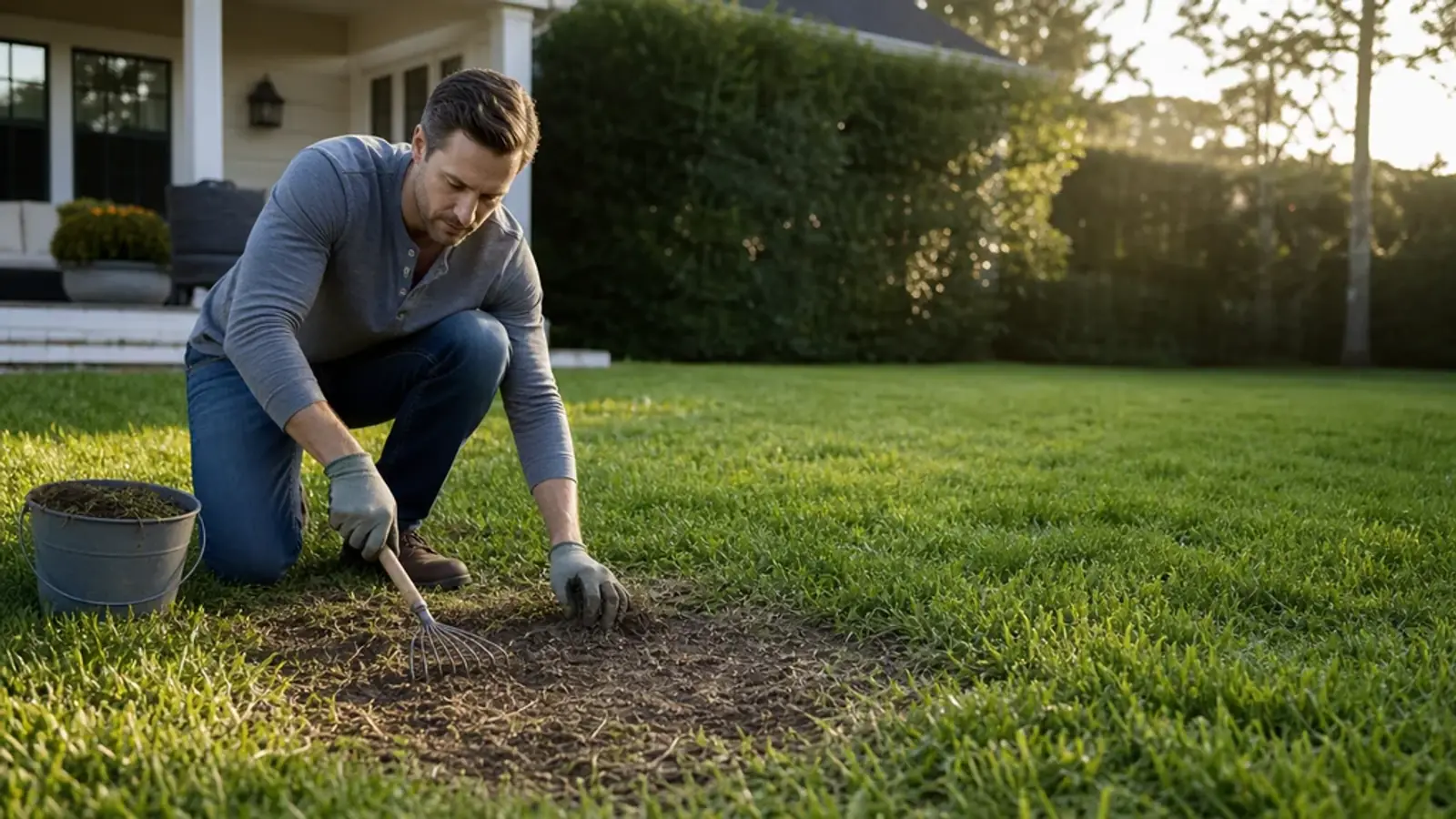
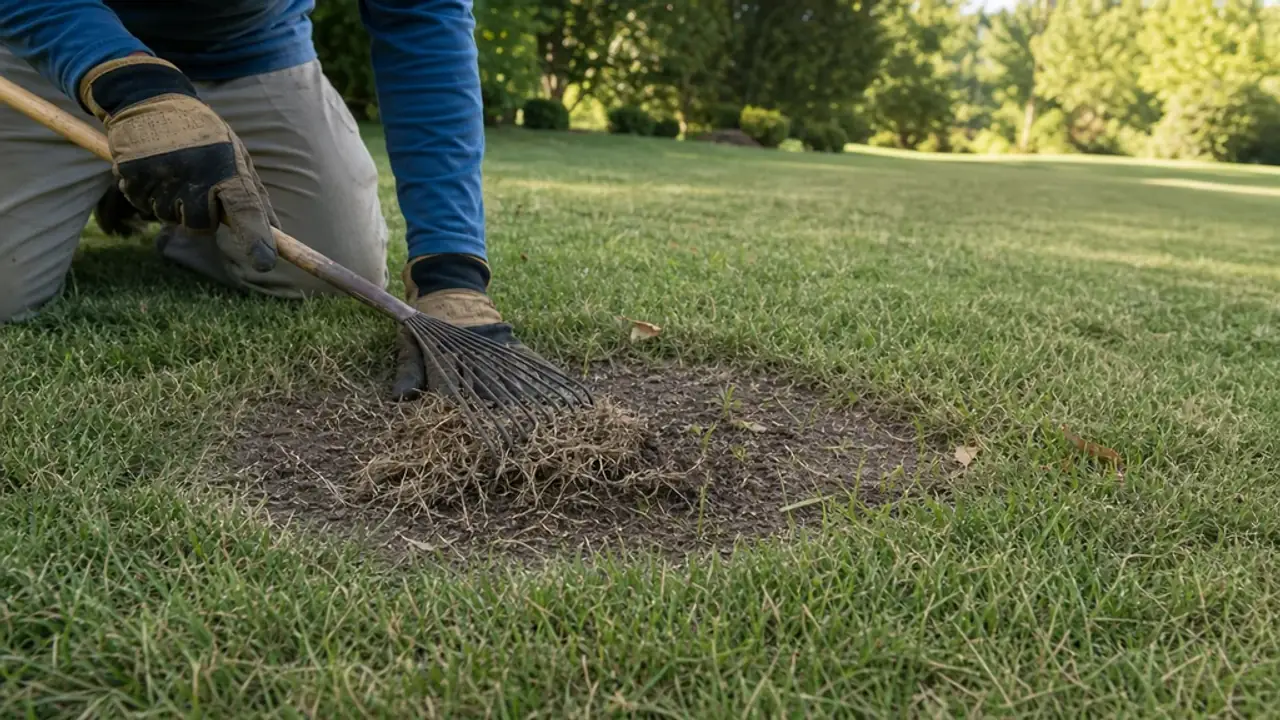
Rake out dead grass, loose thatch, stones, and plant debris until you can see the soil surface. Loosen only the top layer. The goal is a receptive surface with good seed-to-soil contact, not a deep hole or a pile of fluffy soil that will settle unevenly.
Level the prepared area with the surrounding turf. If the soil is powder-dry, pre-wet the patch according to the product directions before applying the repair material.
Use a repair system suited to Southern lawns
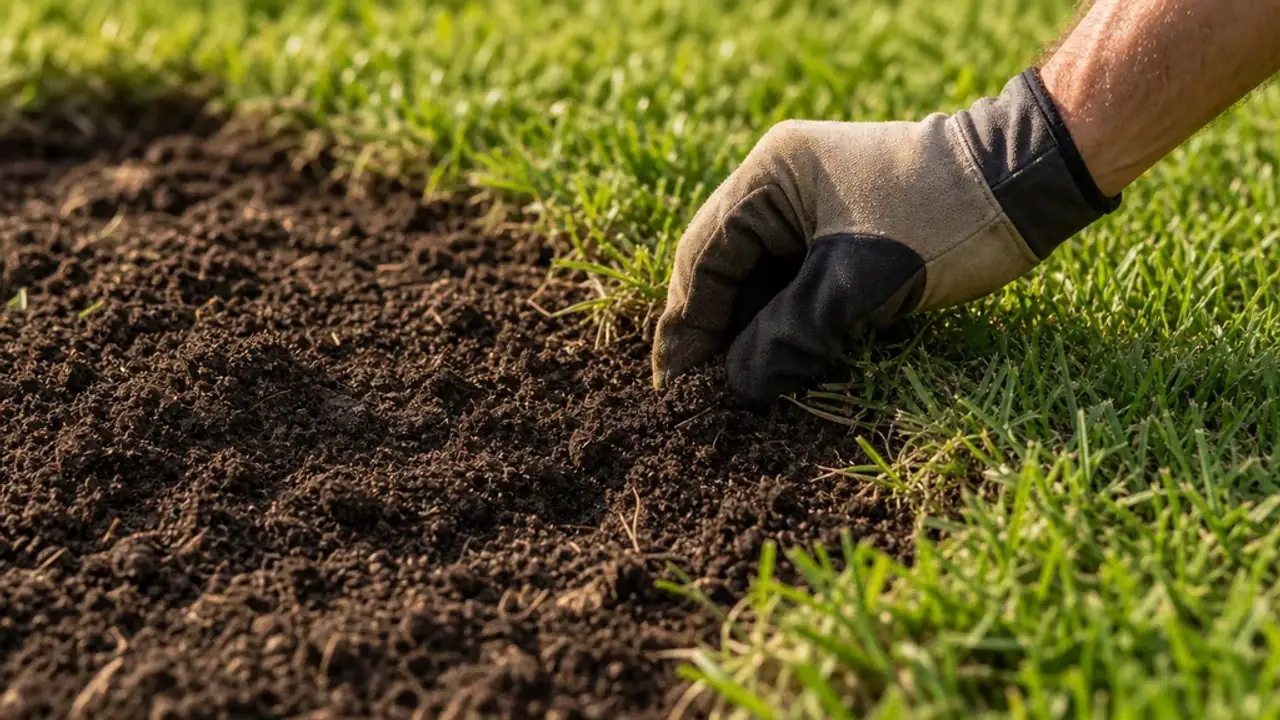
Follow the final package label for coverage, preparation, application, and watering. A region-specific repair system should pair its supporting materials with seed selected for the conditions where it will be used, rather than treating every climate as interchangeable.
Do not bury the seed under a thick soil layer or add more material than the stated coverage. More product does not replace preparation, sunlight, or consistent moisture.
- Measure the patch before choosing a package size.
- Apply the stated amount evenly across the prepared soil.
- Keep the surrounding turf from shading or covering the patch.
Water consistently, not aggressively
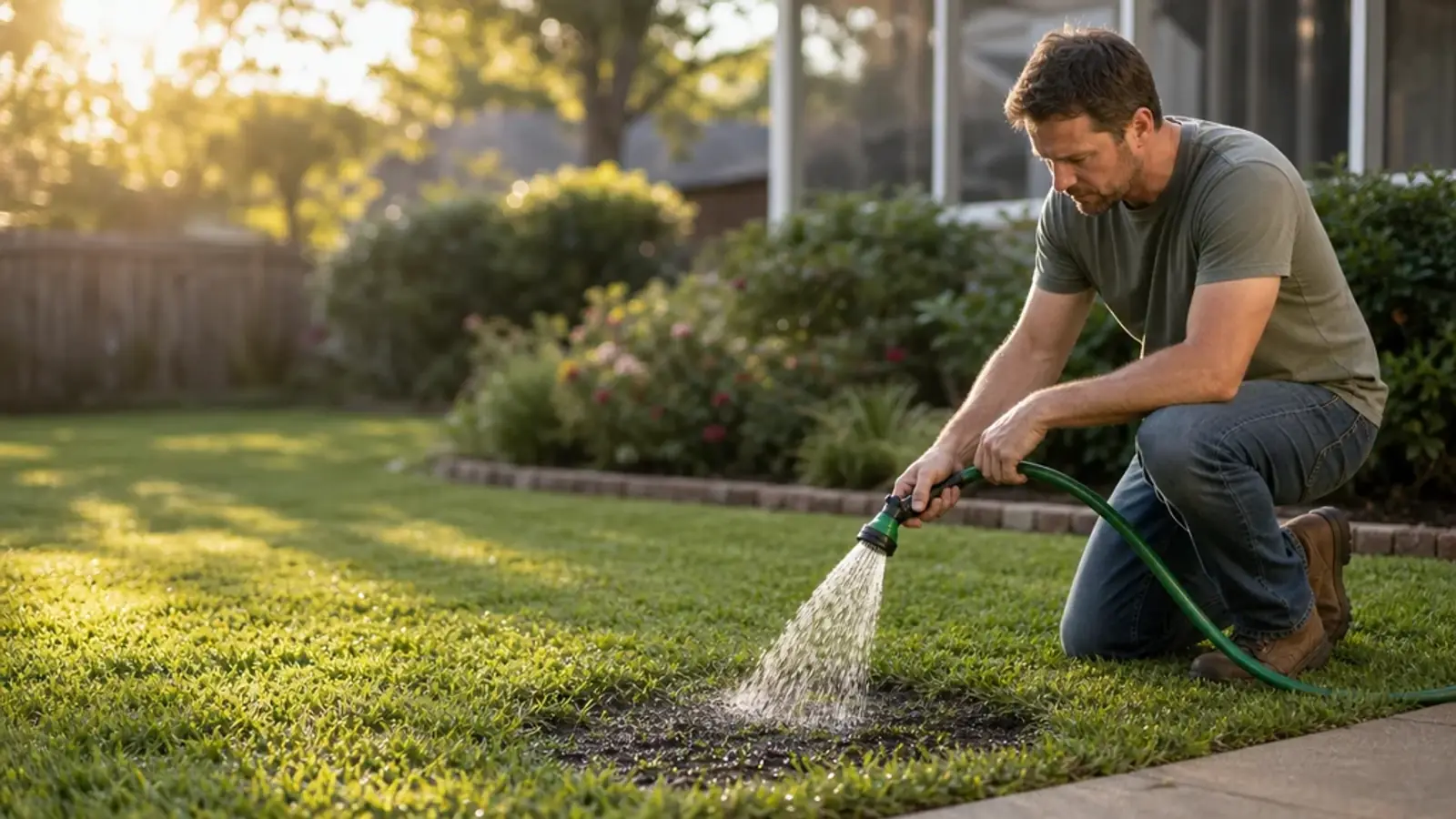
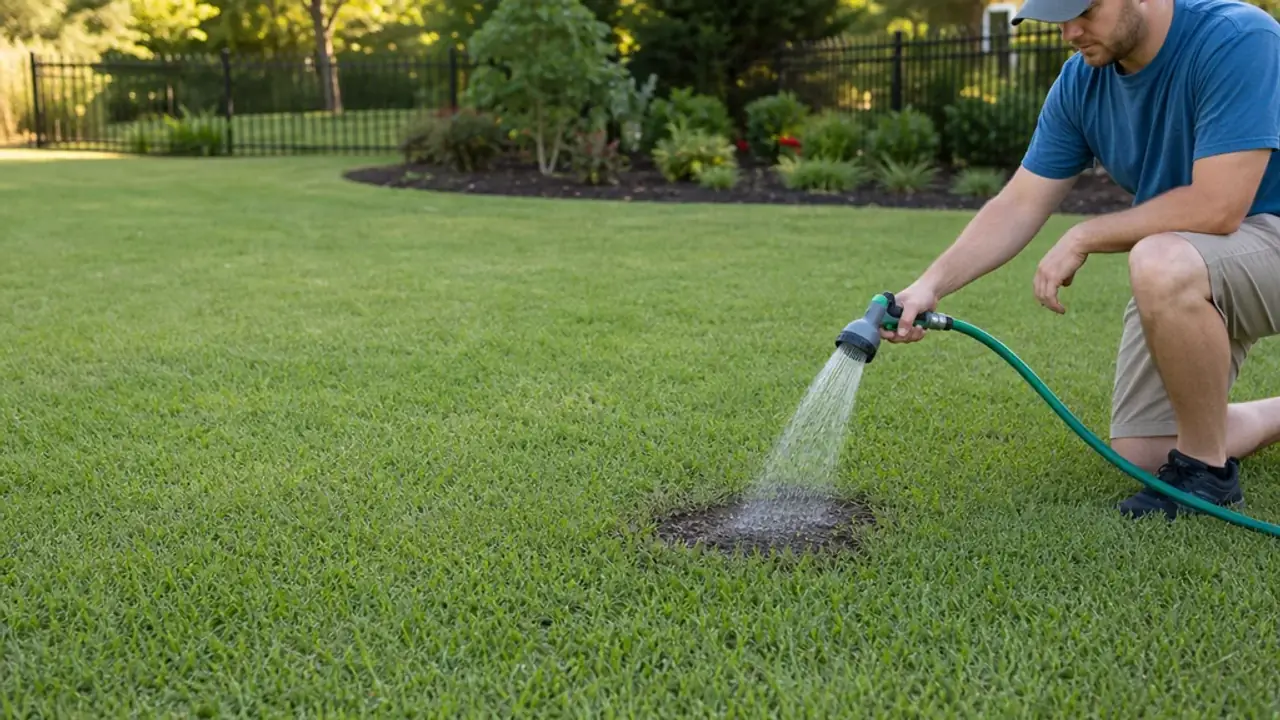
Keep the repaired soil consistently moist, not soggy. YardDay South directions call for watering once a day during the 7-14 day window. Weather, soil, and preparation affect how quickly a patch changes, so check the soil rather than flooding it on a fixed assumption.
Green can begin showing in seven days when preparation, conditions, application, and daily watering line up. Continue following the package watering window even after the first visible growth.
Common questions
Before you repair the patch
What is the best time to repair bare spots in Bermuda grass?
Repair when Bermuda is actively growing and the lawn is no longer dormant. Warm soil, adequate sunlight, and a consistent watering routine matter more than a calendar date.
Should I remove dead Bermuda grass before repairing the spot?
Yes. Remove loose dead grass, thatch, and debris so the repair material can contact soil. Do not excavate healthy runners around the edge.
How long should I water a repaired Bermuda patch?
Follow the package label. YardDay South uses a 7-14 day daily-watering window and calls for soil that is consistently moist, not soggy.
Can I seed a bare spot in hybrid Bermuda?
Usually not. Hybrid Bermuda cultivars generally do not produce viable seed. Repair a hybrid lawn with matching plugs, sprigs, sod, or growth from healthy surrounding runners, and confirm the cultivar before adding a different seeded Bermuda.