
The short answer
What to do first
If a dog has just urinated on the lawn, rinse that location promptly with plain water to dilute the deposit. If the grass is already dead, flushing cannot revive it: remove loose dead turf, confirm the spot is not disease or another problem, prepare the soil, and repair with grass or a regional patch method that matches the lawn.
Recognize a likely urine spot without guessing
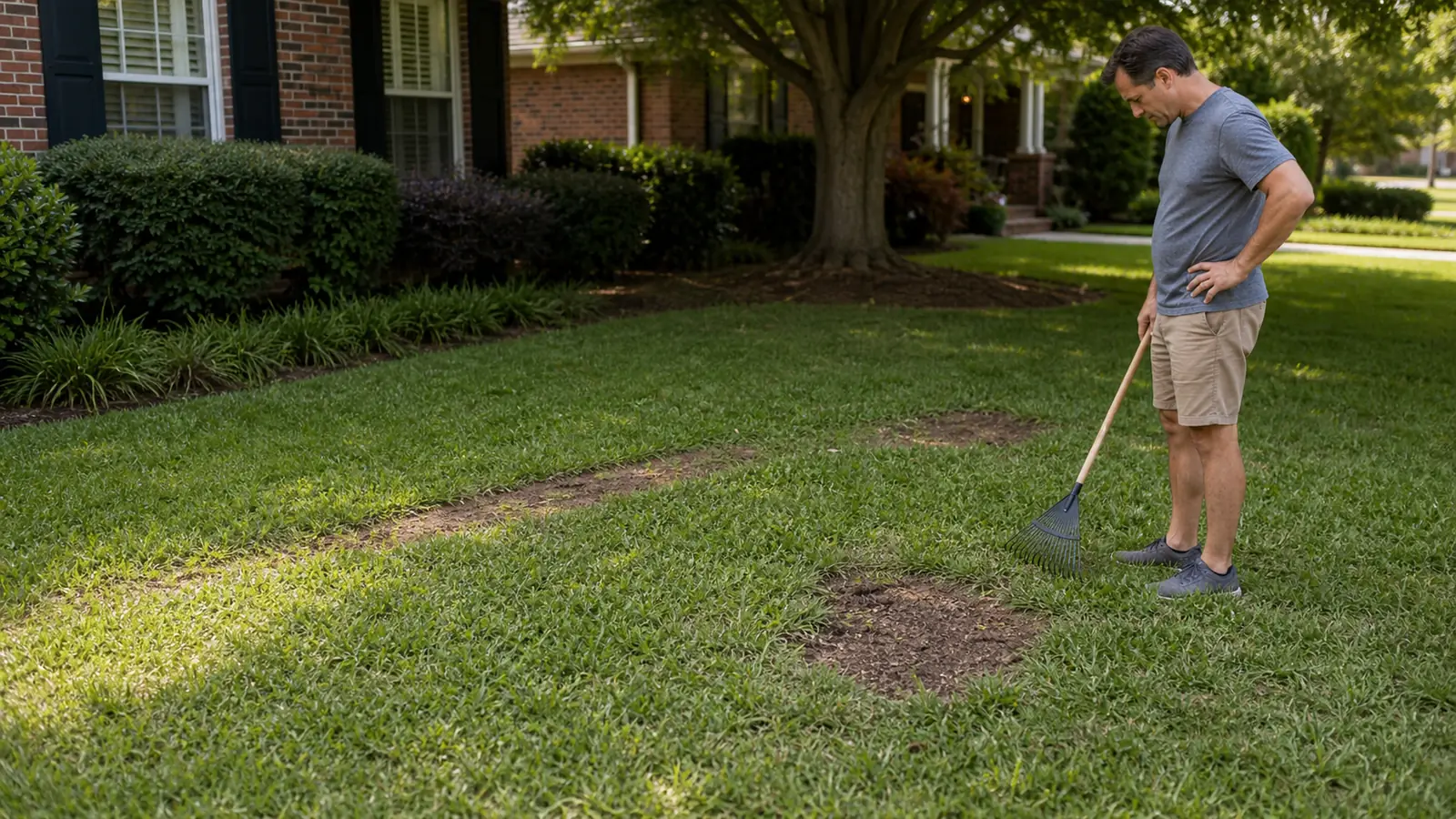
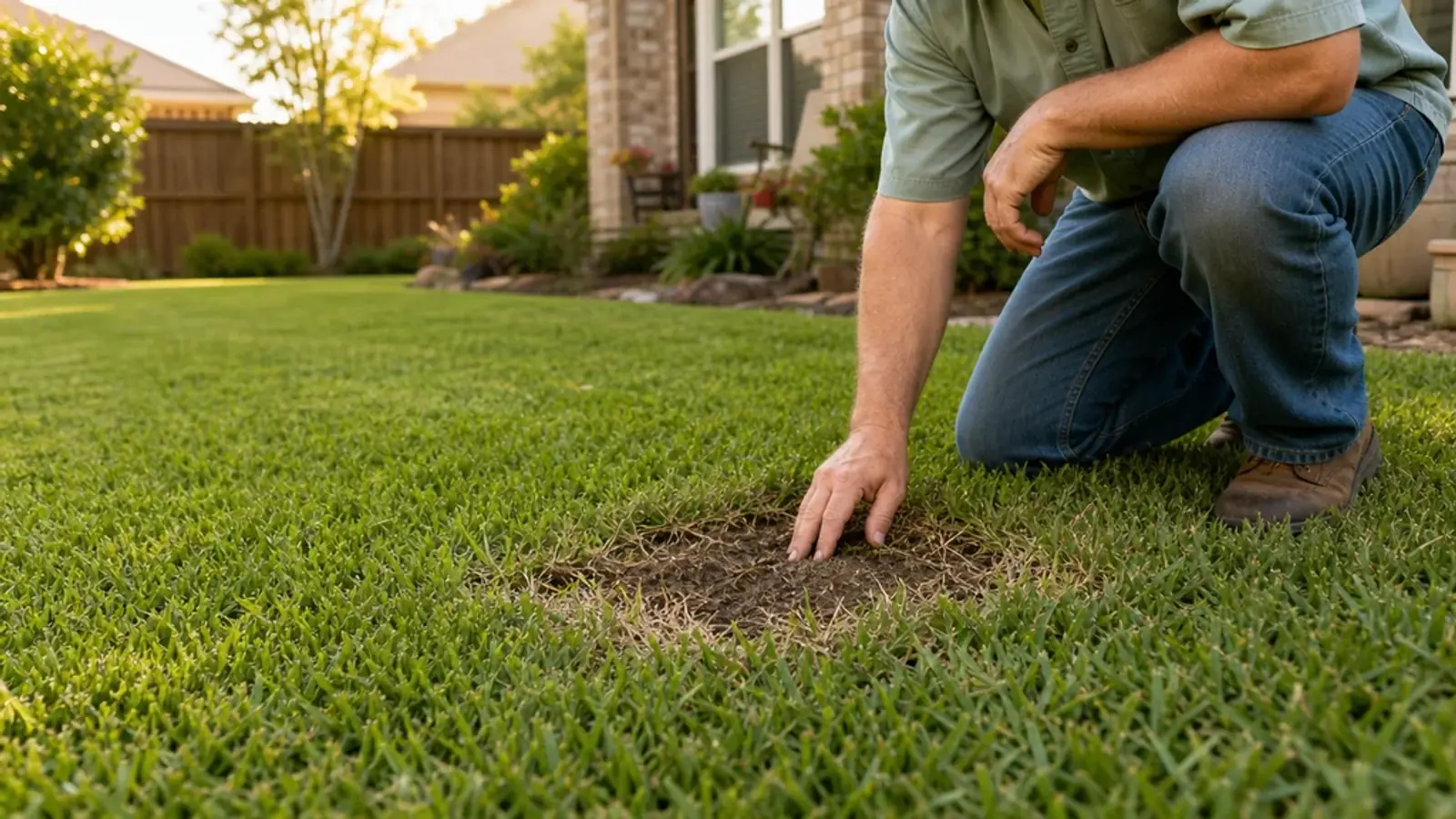
Dog urine injury often appears as a small round or irregular straw-brown center with a darker green ring around it. The concentrated deposit can injure turf in the center while the less concentrated edge receives enough nutrients to grow more vigorously. The pattern is especially common where a dog repeatedly squats in the same parts of the lawn.
That visual clue is not proof by itself. Fungal disease, insects, spills, drought, irrigation gaps, mower damage, and compacted soil can also create discolored turf. Urine spots usually line up with where the dog spends time and remain relatively small. A patch that keeps expanding, repeats across areas the dog does not use, or causes turf to lift away from missing roots deserves a different diagnosis.
Look at several days of behavior before treating every brown circle as pet damage. Note the dog’s usual route, compare the green ring, and check whether the soil is unusually wet, dry, or hard. When the pattern is unclear, a local extension office can help distinguish environmental injury from a pest or disease problem.
Rinse a fresh location with plain water
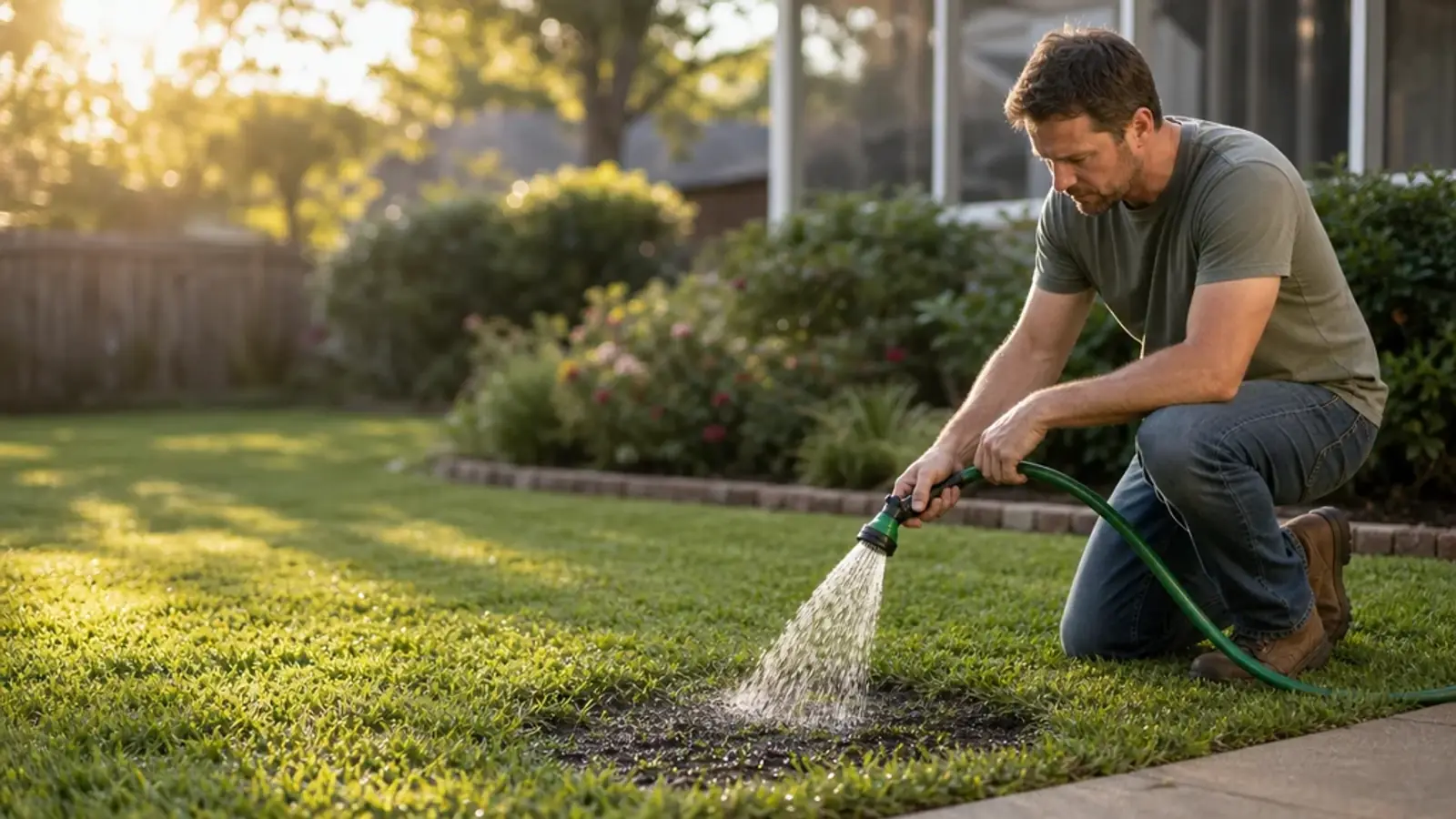
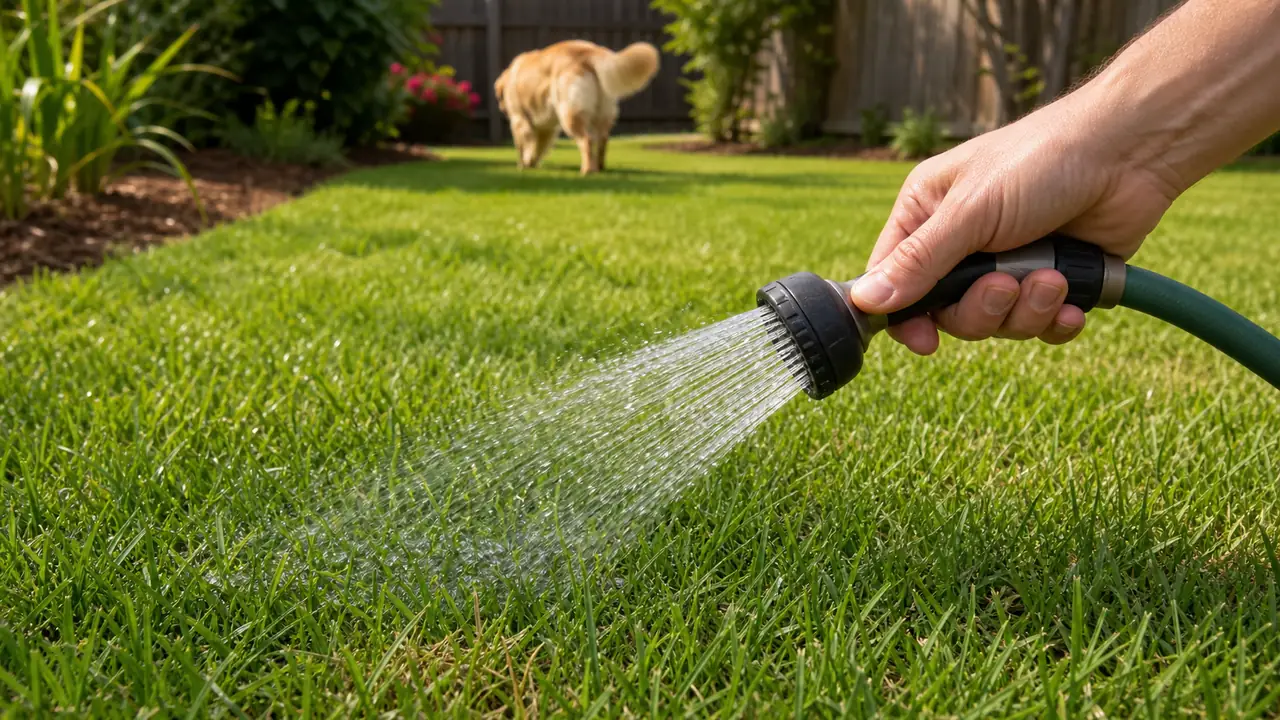
The most useful immediate lawn action is simple dilution. After the dog finishes, apply plain water to that location soon enough to spread the deposit through a larger soil area. Use a gentle shower rather than a hard jet. The goal is to rinse the grass and soil, not create a puddle or move the problem into a flower bed or drain.
This step is preventive. It can reduce the concentration that reaches the turf, but it cannot guarantee that injury will not occur. Soil, grass species, existing moisture, weather, and how much was deposited all affect the outcome. If the lawn is already straw-brown and the blades are dead, adding water later will not bring dead tissue back to life.
Do not apply household chemicals, salt treatments, or improvised neutralizers to the lawn. They can add a second source of injury or change soil conditions without solving the original problem. Plain water is the practical first response supported by extension guidance.
Keep lawn repair separate from pet health
Do not change a dog’s food, water access, medication, or supplements for the purpose of protecting grass without veterinary guidance. A dog’s hydration and diet are health decisions, not lawn treatments. Products marketed to change urine can create unnecessary risk or distract from a simple yard-management solution.
Fresh water should always be available for the dog as directed by normal care, but restricting or forcing water is not an appropriate lawn strategy. If urination frequency, volume, color, or behavior changes unexpectedly, contact a veterinarian. That is a health signal even if it also changes the lawn pattern.
For the yard, stay with physical management: rinse a fresh location, train the dog toward a designated surface, protect active repairs, and replace turf that is already dead. Those actions address the lawn without experimenting on the animal.
Repair the spot only after the grass is dead
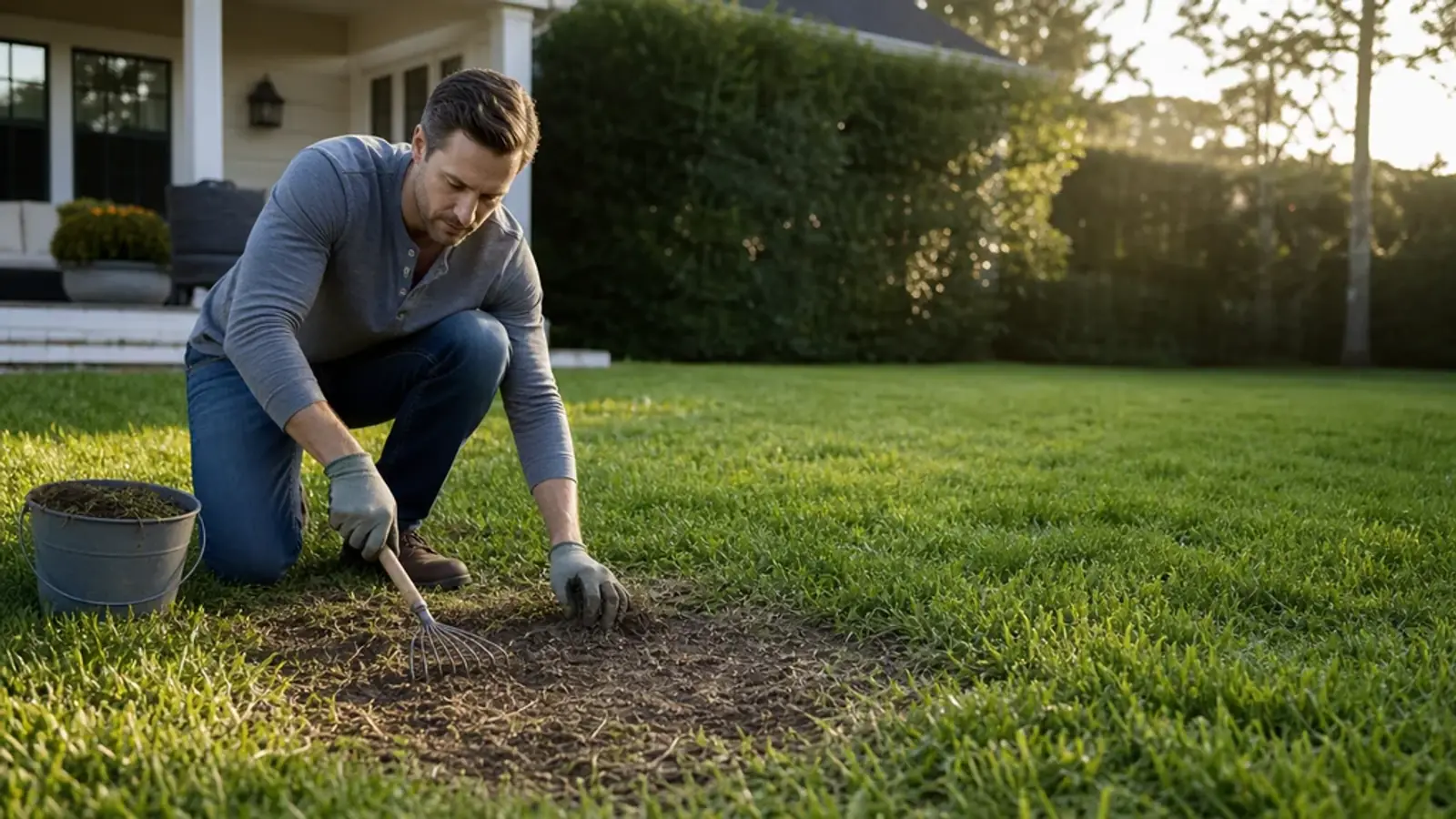
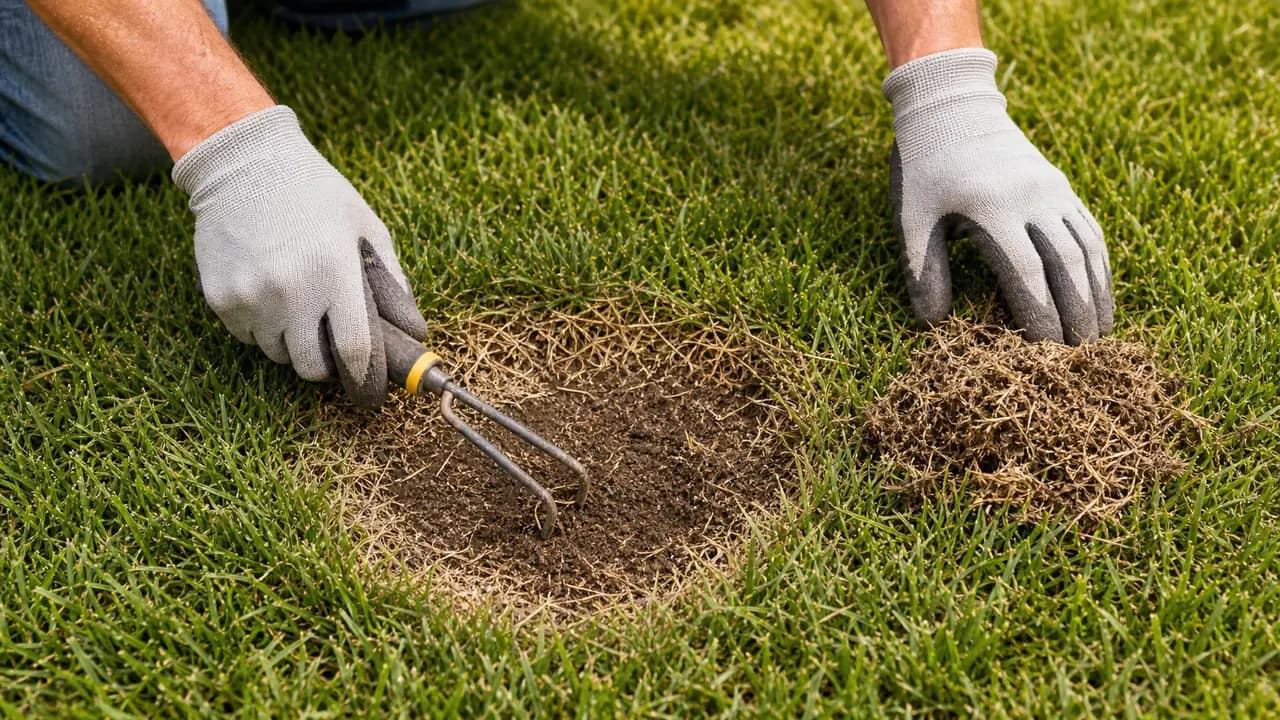
Wait long enough to tell stressed grass from dead grass. If the center remains straw-colored, pulls away easily, and shows no recovery while the surrounding lawn is actively growing, remove the loose dead material. Work from the center outward and preserve healthy turf around the edge. Rake until the soil is visible, then lightly loosen the surface and bring it level with the surrounding lawn.
Choose a repair that matches the existing grass. A spreading warm-season lawn may recover through surrounding runners or matching plugs. Seed is appropriate only when the grass can be established from seed and the new growth will be compatible. A regional homeowner patch system can organize a small measured repair, but it does not remove the need for grass fit, preparation, and label-directed watering.
Apply only the stated coverage and keep the repaired area protected from the dog. A small temporary barrier is usually more reliable than expecting the dog to recognize freshly prepared soil. Follow the repair label for watering and establishment, then reopen the area gradually when the new grass can tolerate normal traffic.
Reduce repeat damage with a designated area
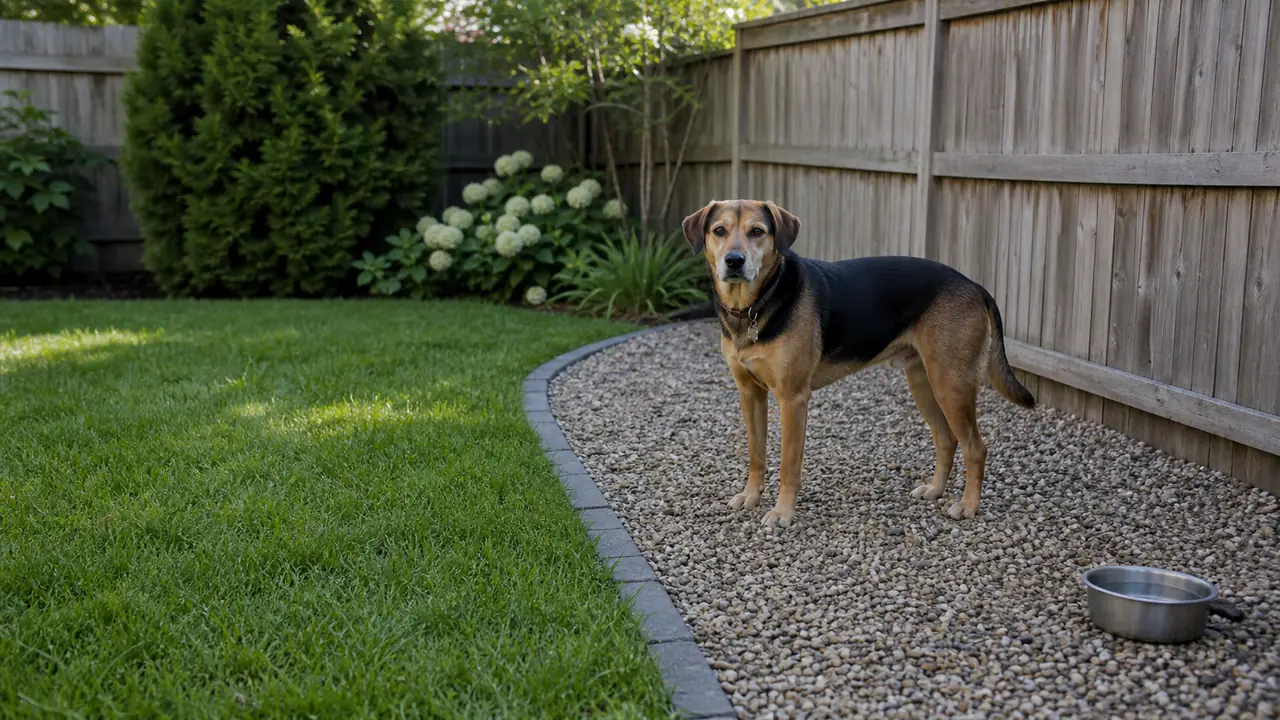
The lowest-maintenance prevention strategy is training the dog to use one durable location instead of scattering concentrated spots across the lawn. Pea gravel, mulch selected for pet use, or another cleanable surface can work when it is comfortable, accessible, and safe for the animal. Place the area where water can drain without carrying waste toward play spaces or neighboring property.
Training takes repetition. Walk the dog to the location, use the same cue, and reward the correct behavior. Keep the route easy in rain, heat, and low light. A designated area can still require periodic rinsing, waste pickup, and surface maintenance, but it confines that work to one place.
If a separate area is not practical, keep a hose or watering can ready and rotate where the dog enters the yard when possible. Neither method makes the lawn immune, but both reduce repeated concentration in the same turf.
Know when the pattern points somewhere else
A urine repair should remain small and understandable. If spots merge into large sections, return after the dog no longer uses the area, or appear with mushrooms, web-like growth, visible insects, or loose roots, investigate another cause. Irrigation gaps can repeat in the same shape, and heat reflected from a wall or pavement can create localized injury that resembles a pet spot.
Do not keep reseeding an expanding pattern. Take photos that show the whole lawn and close views of the edge, record recent weather and treatments, and ask a local extension office or turf professional for help. A correct diagnosis protects the rest of the lawn and keeps unnecessary products away from the pet’s space.
The useful rule is simple: rinse a fresh known location, repair confirmed dead turf, and stop guessing when the pattern does not match the dog’s behavior.
Common questions
Before you repair the patch
Will grass grow back after dog urine damage?
Stressed grass may recover, but dead turf will not turn alive again. Once the center is confirmed dead, remove the loose material, prepare the soil, and repair it with a method compatible with the existing lawn.
What should I put on a fresh dog urine spot?
Use plain water promptly to dilute the deposit. Avoid household chemicals and improvised neutralizers that can create additional lawn injury.
Should I give my dog a supplement to protect the lawn?
Do not change a dog’s diet, medication, supplements, or water access for lawn appearance without veterinary guidance. Use yard-management steps instead and contact a veterinarian about health concerns.
How can I tell dog urine damage from lawn disease?
Likely urine spots often align with the dog’s routine and may have a small brown center with a darker green edge. Expanding, widespread, rootless, or otherwise unusual patches deserve a local diagnosis rather than automatic urine treatment.