
The short answer
What to do first
Hydroseeding is a hydraulic planting method that uses powered equipment and a hose to distribute prepared seeding material across bare soil. Professional crews use it for large lawns, slopes, construction sites, and other areas where even site-scale application matters. A homeowner hydroseed-style patch system is a different, smaller category intended for measured repairs with ordinary household tools.
Hydroseeding is a method, not one retail product
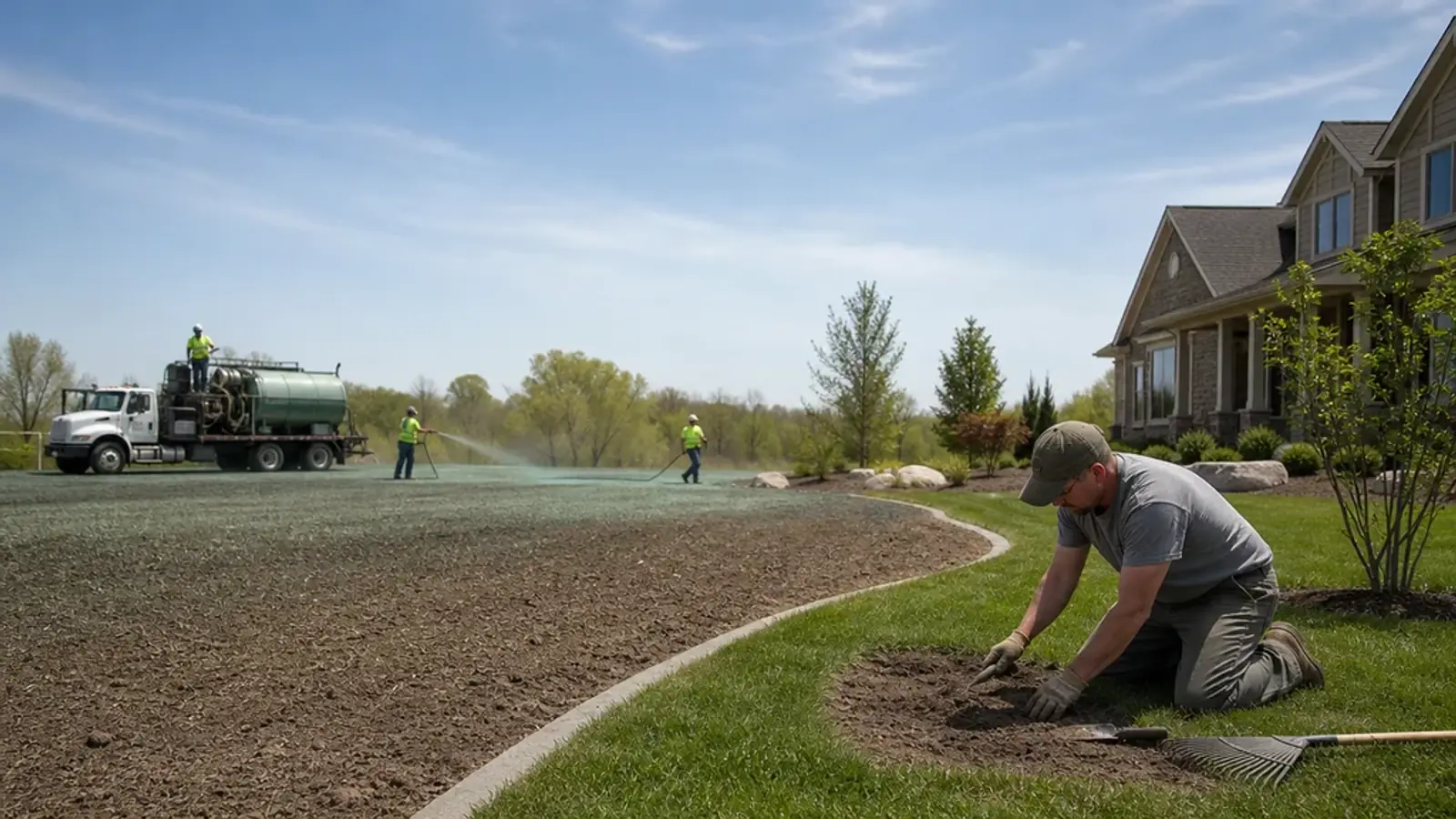
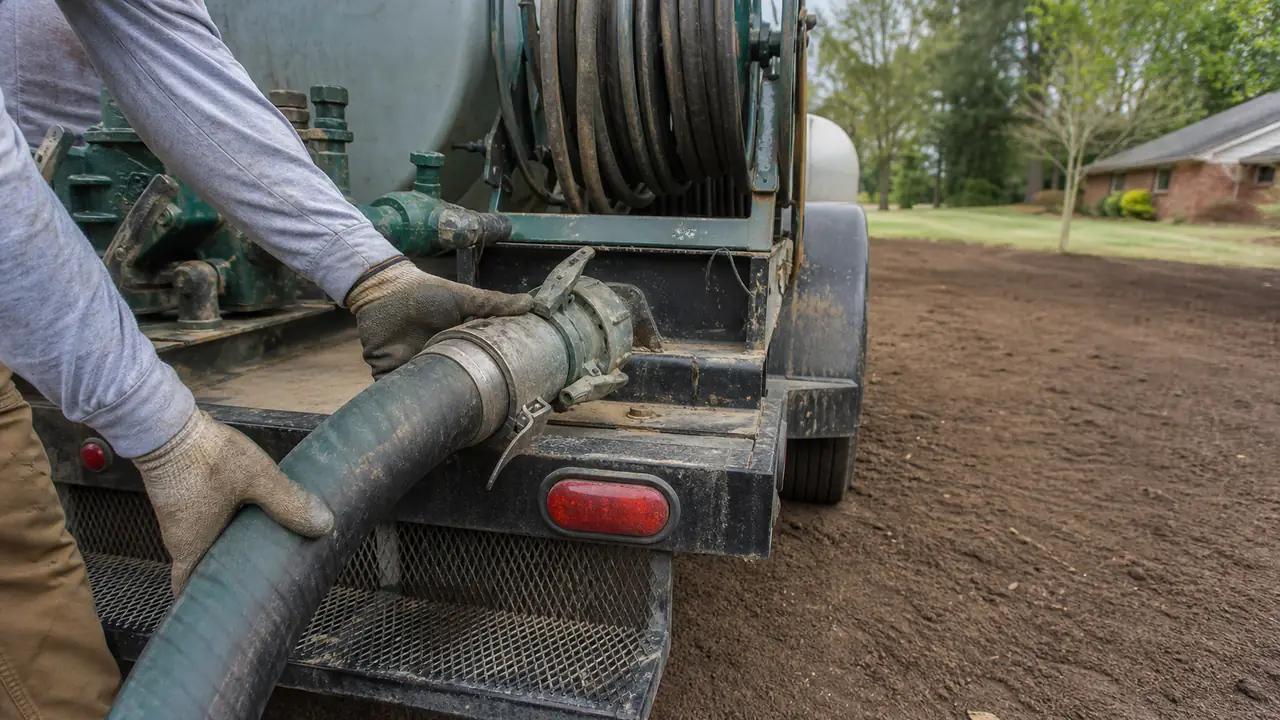
Professional hydroseeding uses a powered tank-and-hose system to apply prepared seeding material over bare, prepared ground. The operator controls the spray path while the equipment moves material across a much larger area than a homeowner could reasonably treat by hand. The method is common on new lawns, disturbed soil, slopes, and difficult-to-reach sites where broad, even application is useful.
The word describes the application method, not a promise about the finished lawn. Soil preparation, grass selection, season, water, grade, weather, and follow-up care still determine establishment. A green tint on the ground shows where material was applied; it is not established grass and should not be presented as a result.
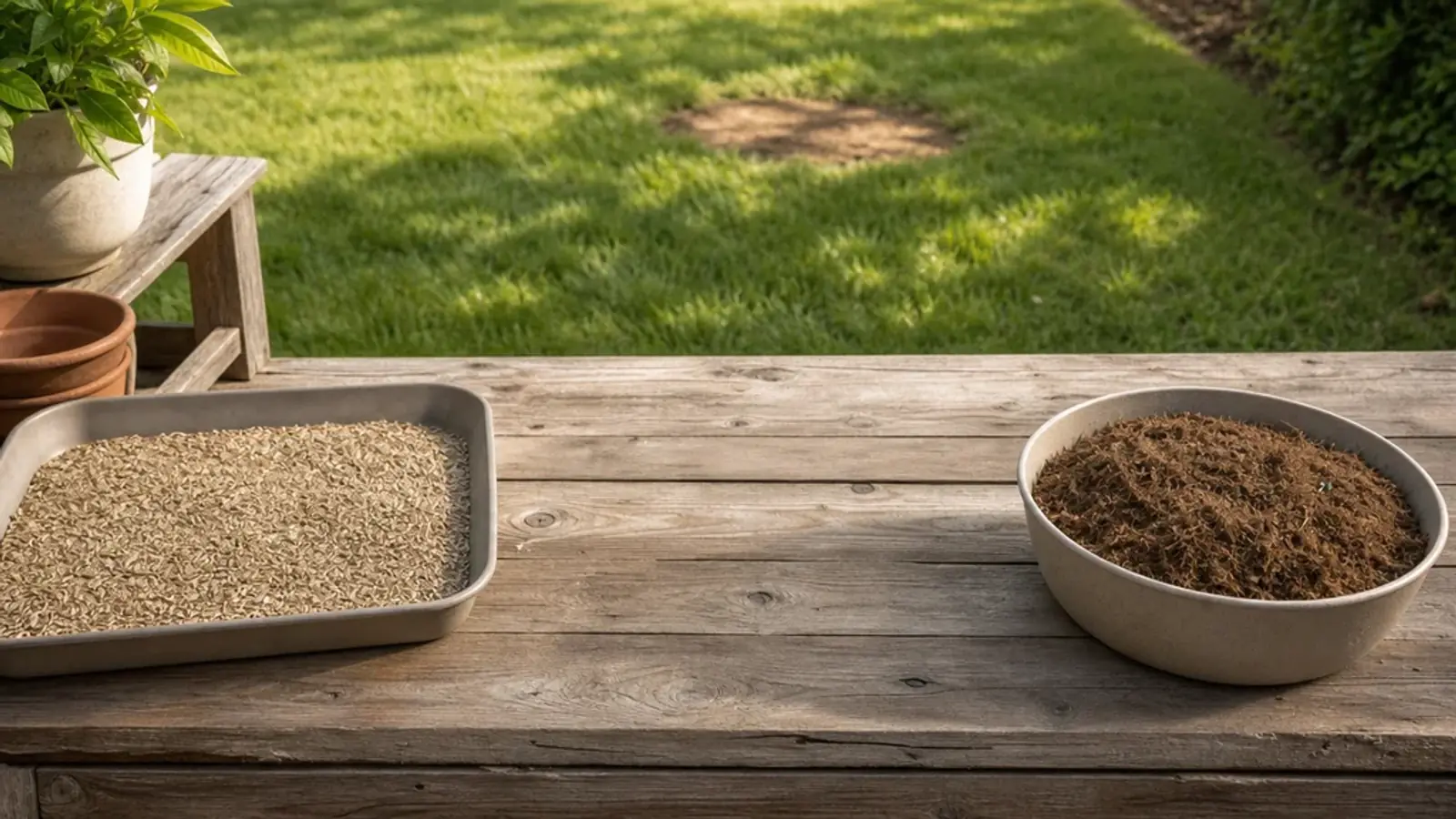
Consumer products sometimes use hydroseed or spray-on language for smaller jobs. Those products do not turn a garden hose, shaker, or bucket into a professional tank system. They belong to a homeowner patch category with different coverage, equipment, and site expectations.
The ground is prepared before the hose starts
Hydroseeding is normally applied to exposed soil, not sprayed over an untouched lawn as a shortcut. The site may need debris removal, grade correction, compaction relief, or topsoil work before application. Water must be able to enter the surface without immediately pooling or carrying material downhill.
Existing weeds, construction debris, hard subsoil, and drainage failures do not disappear beneath an application. On a new construction site, the preparation can be a larger part of the project than the spray itself. A professional proposal should explain whether grading, soil work, erosion measures, and cleanup are included or remain the homeowner’s responsibility.
For an existing thin lawn, overseeding is a different decision. New seed still needs contact with soil, which can require mowing, dethatching, aeration, or another preparation step. Spraying across standing grass without creating contact can leave material caught above the soil.
Professional hydroseeding earns its place on large or difficult sites
The method is best understood as a coverage tool. A crew can work across a broad prepared yard more efficiently than a homeowner placing material by hand. Hoses can reach terrain that is awkward for other equipment, and a trained contractor can coordinate application with site access and erosion needs.
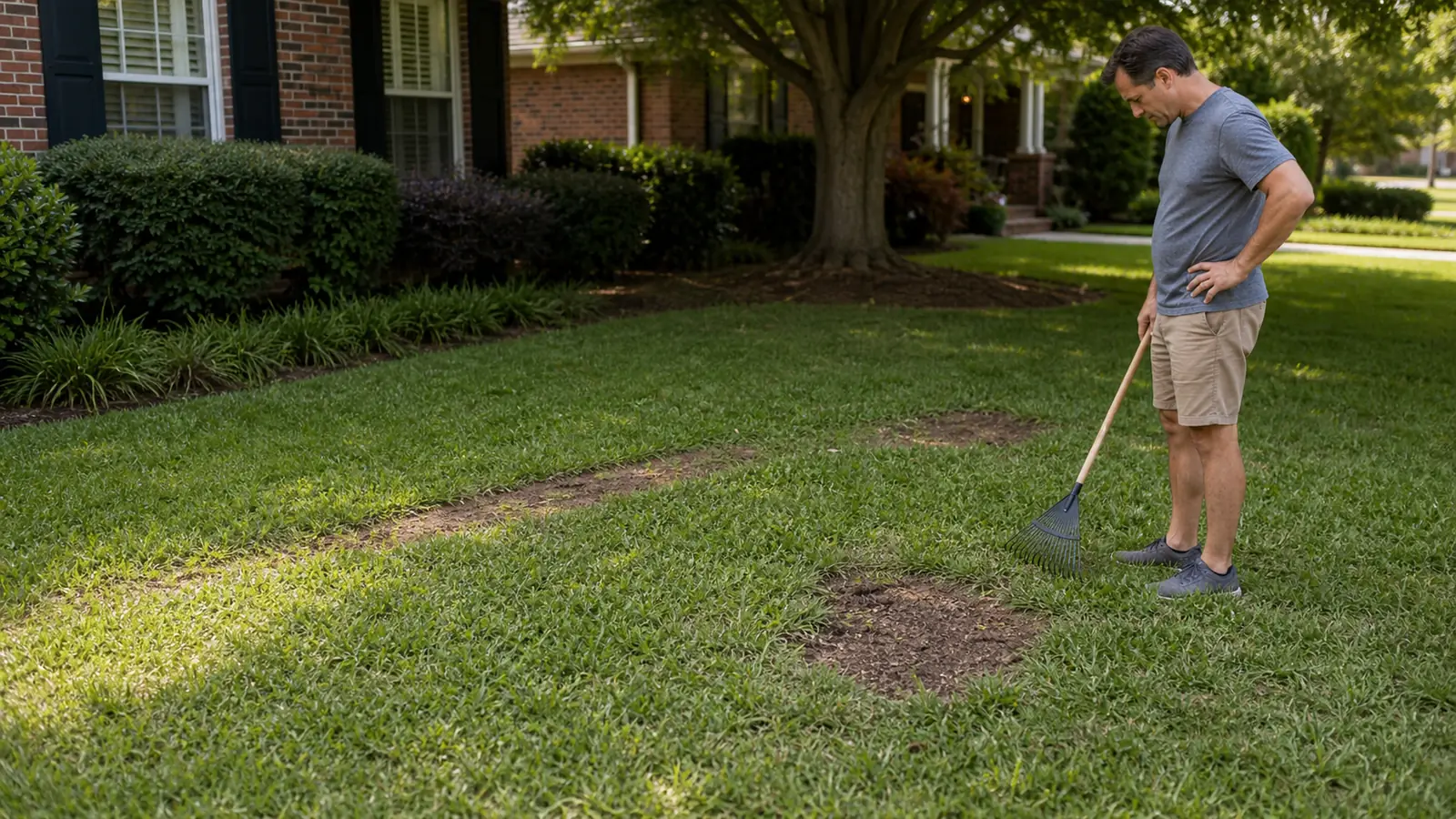
That does not make professional hydroseeding the automatic answer for every bare spot. Mobilizing a crew and equipment for one small patch may be disproportionate to the job. A small repair can often be prepared, measured, applied, and watered with household tools when the underlying problem is already understood.
Slope changes the calculation. A gentle accessible area may still fit ordinary lawn establishment, while a steep or actively eroding surface can require engineered controls and professional judgment. Homeowners should not treat a difficult slope as a normal patch because a spray method is available.
Measure the job before comparing methods
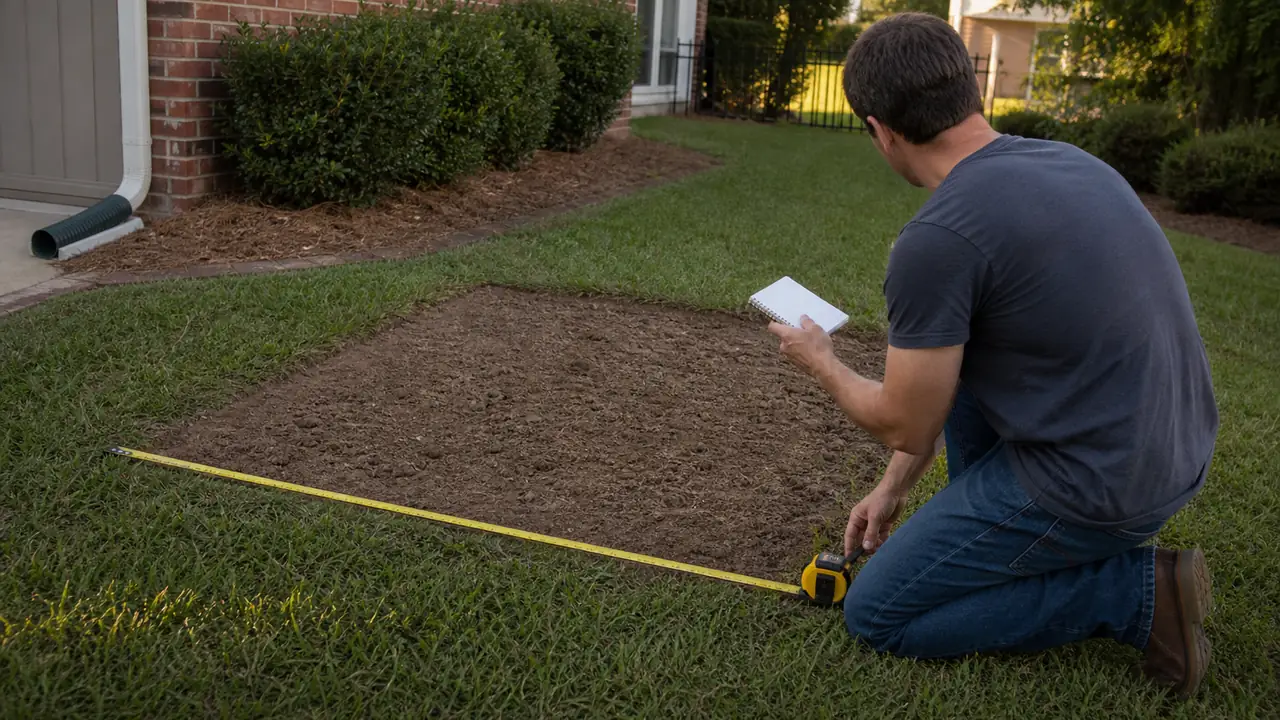
Start with square footage. Measure simple rectangles, divide irregular ground into smaller shapes, and total only the bare area that will be treated. Then list the preparation: debris removal, grading, soil replacement, access, erosion concerns, and watering. A quote or product price without that scope is not a meaningful comparison.
Professional service can be appropriate for a full yard or a site where equipment and labor solve real constraints. Conventional seed can be appropriate when the homeowner wants to select and manage each part of a prepared job. Sod provides immediate cover. A homeowner patch system fits a bounded repair where ordinary tools and a repeatable watering routine are realistic.
Ask what happens after application. Who waters, how often, for how long, and what should happen after heavy rain? Who repairs runoff or an irrigation gap? Clear responsibility matters more than a generic promise that one method is faster or easier.
A DIY hydroseed-style patch system is a smaller category
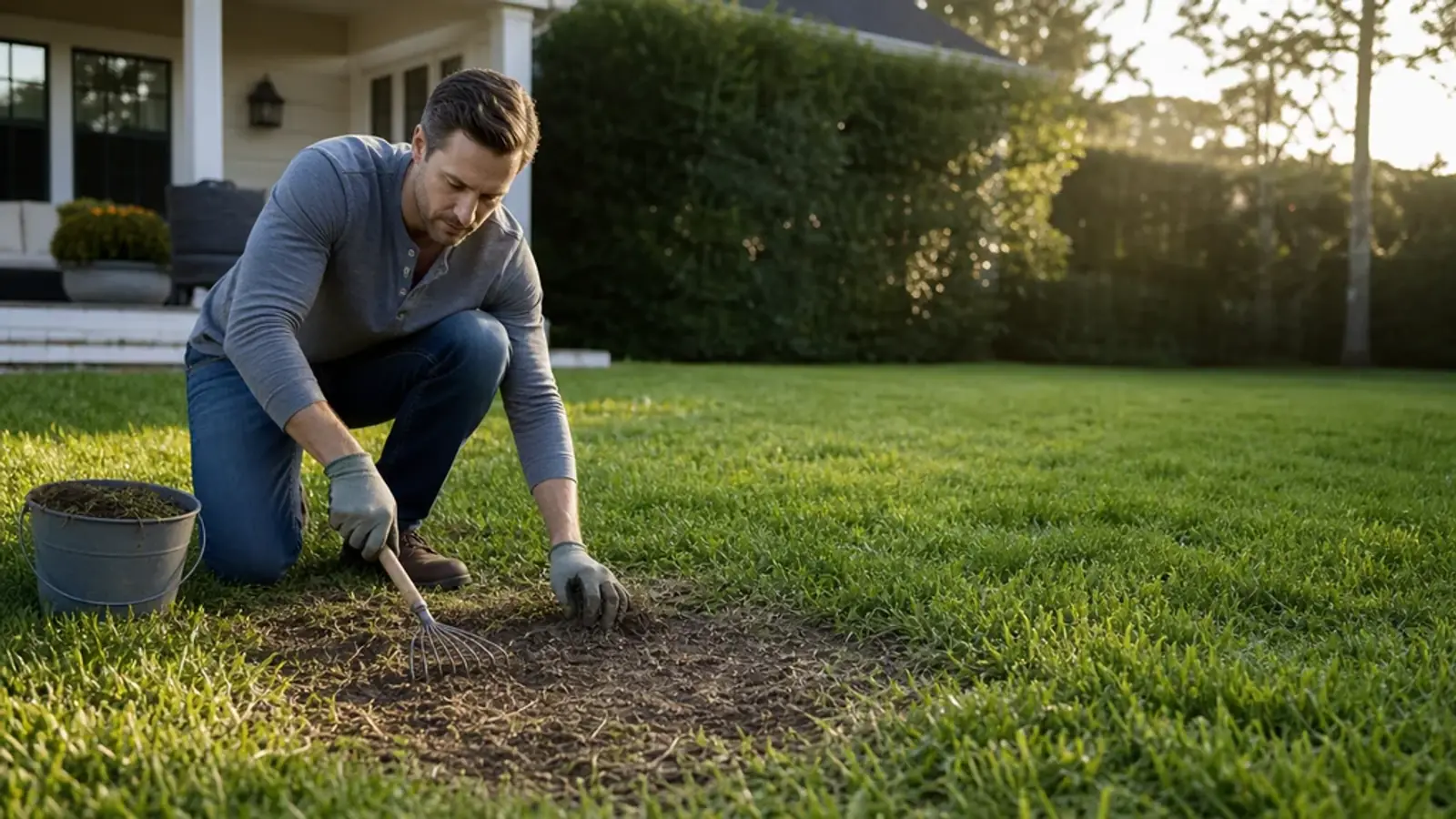
A homeowner system organizes a measured repair for self-application. The job should be small enough to clear and prepare by hand, reachable with ordinary watering tools, and compatible with the regional lawn. The homeowner owns the diagnosis, preparation, application, protection, and follow-up.
The hydroseed-style description communicates a coordinated planting process, but it should not imply that the pouch or applicator duplicates a truck-mounted service. Professional rigs are built for site-scale distribution. Homeowner systems trade that capacity for a smaller, more accessible routine.
YardDay South is positioned for warm-season bare-patch work in the South, not every climate and not every full-yard project. Measure the repair, confirm product fit, read the final label, and choose professional help when the site needs grading, erosion control, or equipment beyond a normal patch.
Ask a professional what the quote actually includes
A useful hydroseeding quote identifies the measured area, grass selection, site preparation, access assumptions, application scope, watering responsibility, and any erosion or follow-up work. It should also explain what the homeowner must complete before the crew arrives and what weather conditions could change the schedule.
Compare quotes on the same scope. One contractor may include grading or soil preparation that another excludes. A lower number can become a larger project when the homeowner discovers that bare construction soil, debris removal, or watering setup was never included.
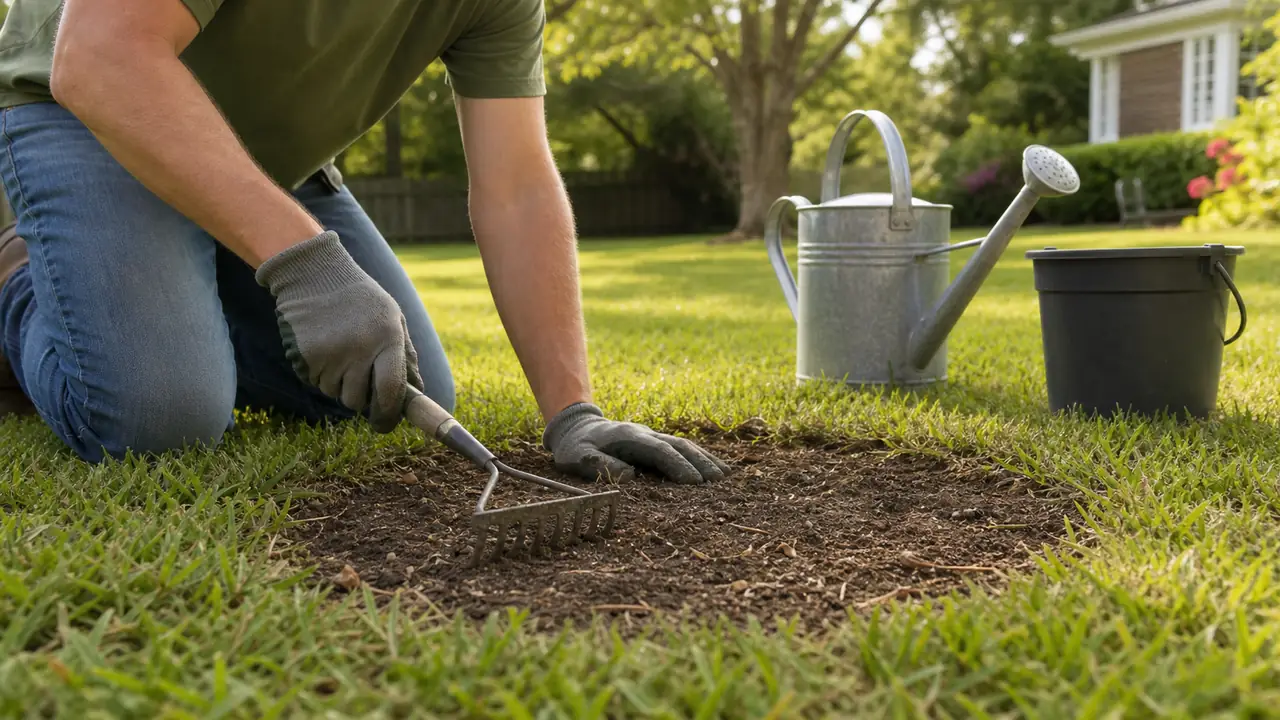
For one or several small patches, make the same checklist for a DIY option. Count tools, preparation time, total measured coverage, watering access, and the cost of correcting the cause. The honest choice is the method that fits the site and the work—not the one with the most impressive name.
Common questions
Before you repair the patch
Is hydroseeding the same as spray-on grass seed?
Professional hydroseeding is a powered tank-and-hose application method for prepared sites. Spray-on and hydroseed-style consumer products are smaller homeowner categories and should not be assumed to provide the same equipment, coverage, or service.
Can hydroseeding be applied over existing grass?
A thin lawn can sometimes be overseeded, but new seed still needs soil contact. An untouched layer of standing grass or thatch can block that contact, so the site may need mowing, dethatching, aeration, or other preparation first.
Is professional hydroseeding worth it for one bare patch?
Usually the job should be compared by area and site difficulty. Professional equipment makes sense for large, steep, eroding, graded, or hard-to-reach ground. A bounded patch may fit a homeowner repair when it can be prepared and watered correctly.
Does hydroseeding remove the need to prepare soil?
No. Hydroseeding is an application method. Debris, compaction, poor grade, drainage problems, and incompatible site conditions must still be addressed.