
The short answer
What to do first
After rain moves grass seed, let flowing water stop and avoid walking in saturated soil. Photograph the patch, mark where seed and soil collected, and identify whether water came from the slope, a downspout, pavement, irrigation, or compacted ground. Correct concentrated flow and restore the grade before reseeding only the areas that lost material. Use label-approved mulch or an anchored erosion-control approach when the site requires it; severe or recurring erosion is not a normal patch repair.
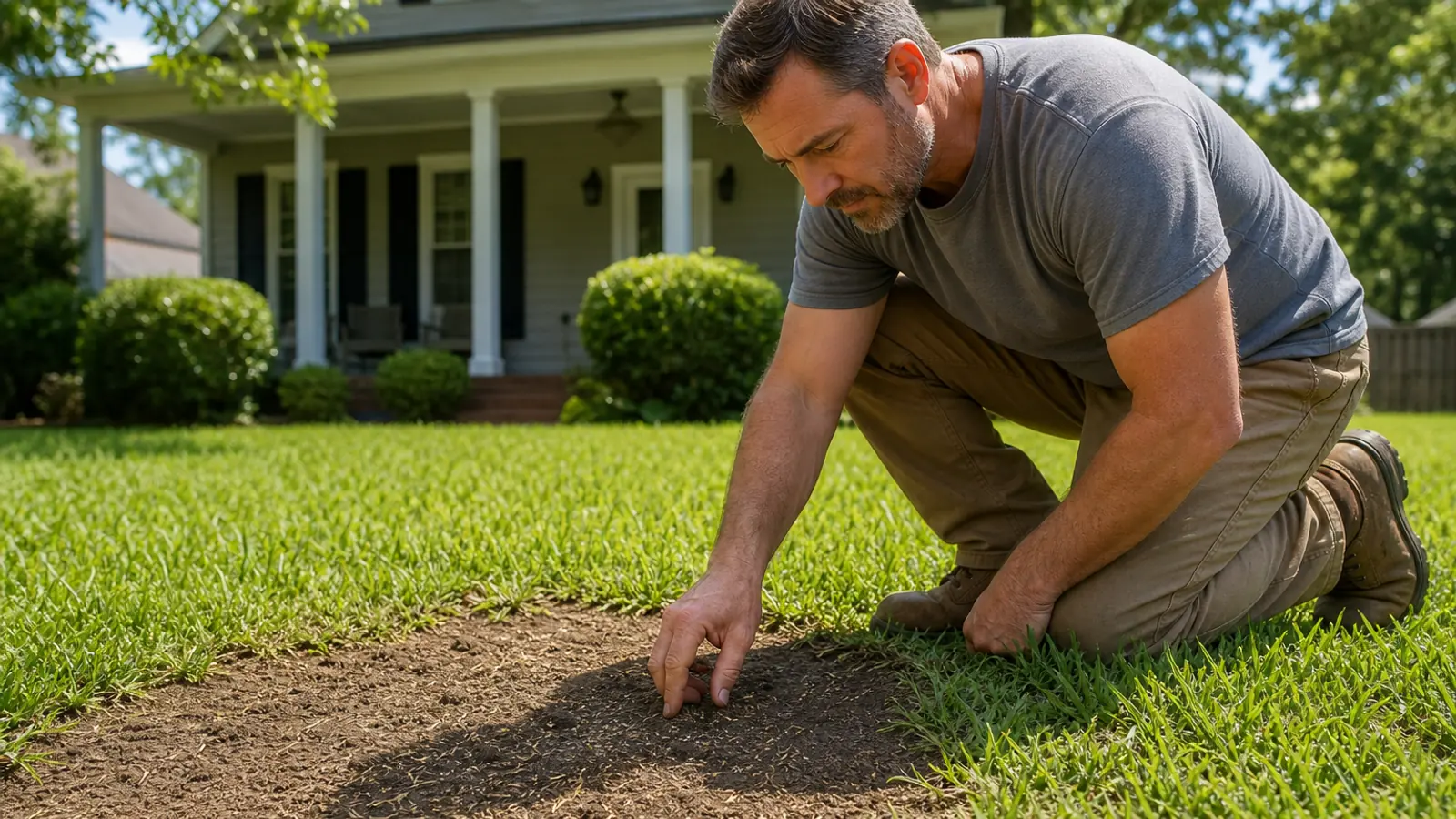
Wait for safe footing, then document where the material went
Do not walk into flowing water or churn a saturated patch into mud. Wait until the storm has passed, water is no longer moving across the site, and the surface can be inspected without leaving deep footprints. Keep people and pets away from eroded edges, steep slopes, exposed utilities, or unstable retaining features.
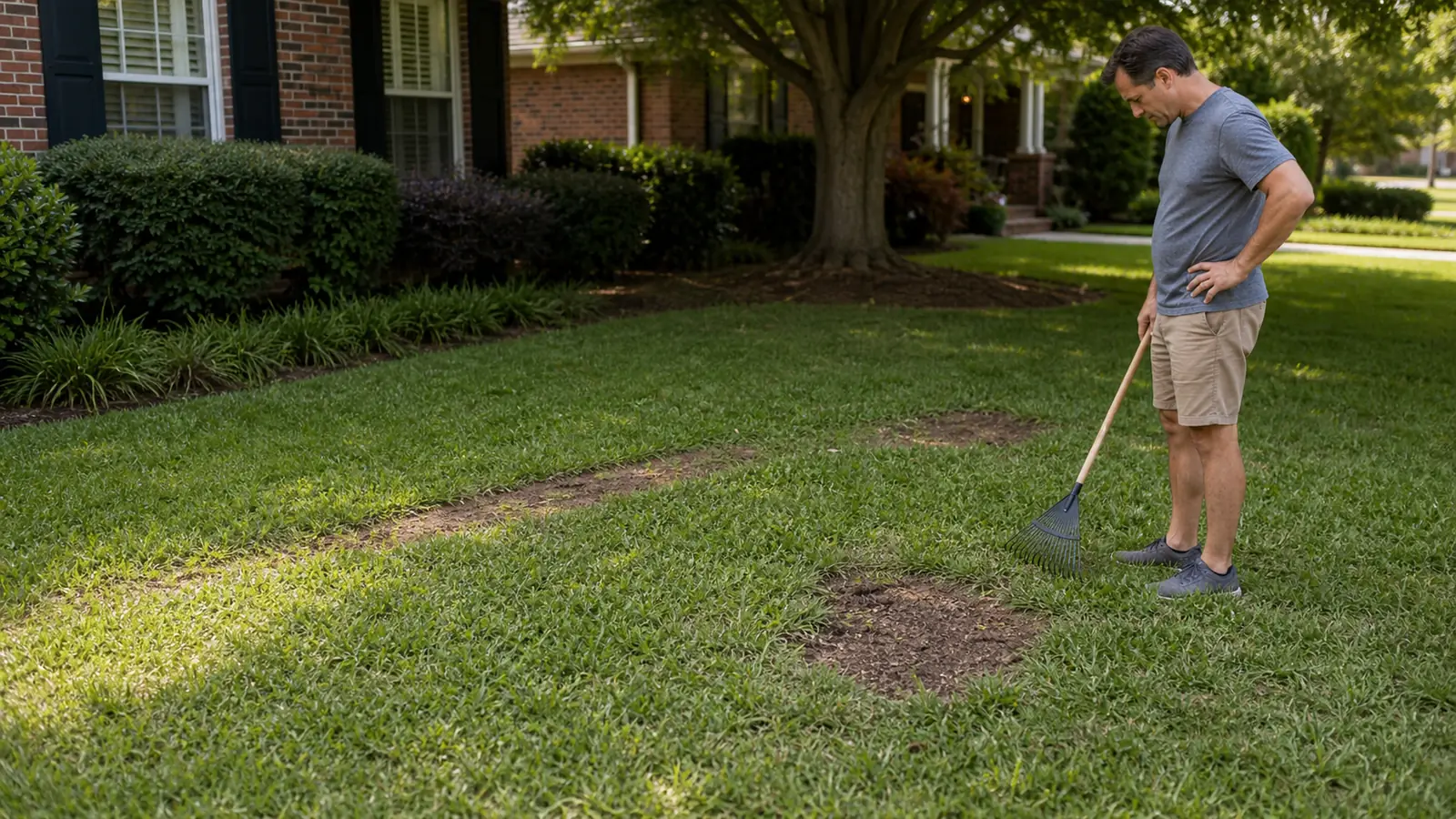
Take wide photos showing the uphill water path and close photos of the patch. Mark bare channels, piles of seed or mulch, sediment at the downhill edge, and places where the original grade changed. Seed can redistribute unevenly without leaving the property; a thick pile at one edge and an empty strip above it are both signs of movement.
Do not immediately broadcast a full second application. Some material may remain correctly placed, while another section lost seed or soil. Reapplying at the original full rate can create a dense lower band and a thin upper band. The first job is to map loss and understand the water.
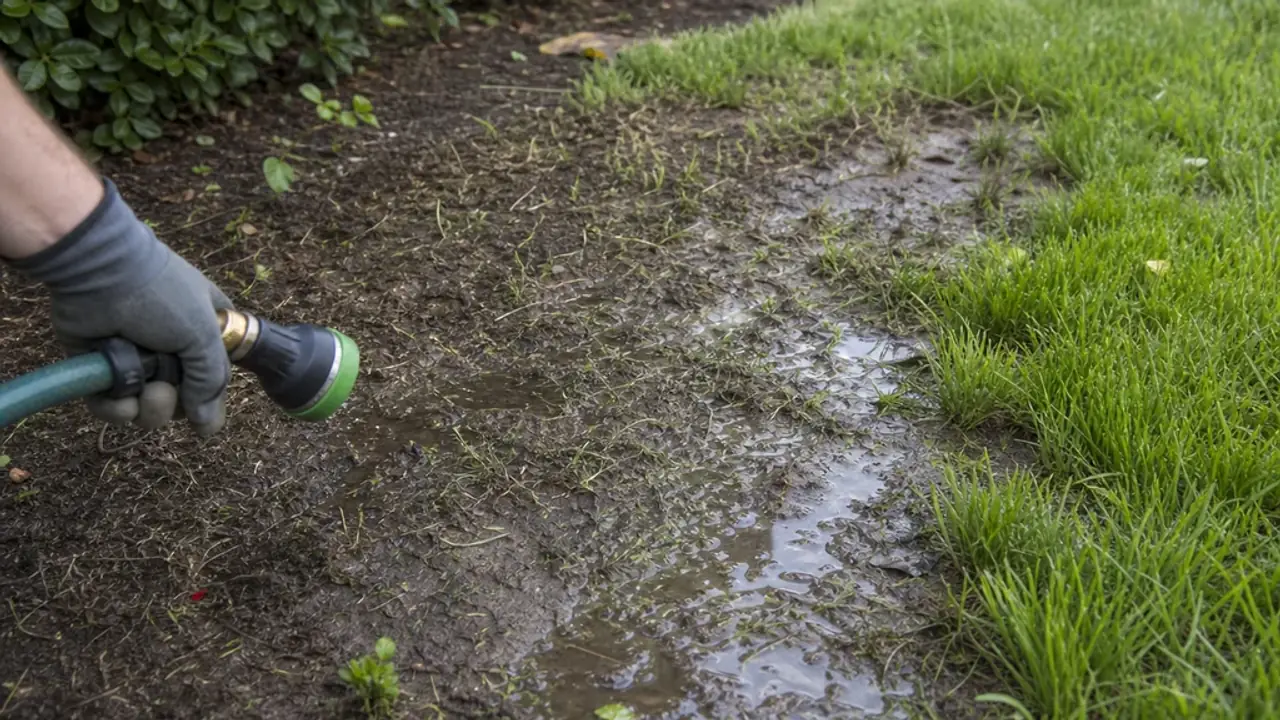
Trace runoff uphill before repairing the patch
Rain is the trigger, but the site determines where the water concentrates. Follow the path uphill. Check roof downspouts, driveway and patio edges, irrigation heads, compacted traffic lanes, low spots, bare slopes, neighboring grades, and soil crusting. Water arriving from a hard surface can carry more volume and speed than rain falling directly on the patch.
Compacted soil accepts water slowly. Clemson Extension explains that reduced infiltration contributes to runoff and erosion. If water regularly sheets across hard soil, repairing only the washed strip leaves the hydraulic problem intact. Redirect traffic, correct an irrigation problem, or plan appropriately timed cultivation before exposing another seedbed.
Do not redirect runoff toward a neighboring property, foundation, sidewalk hazard, storm drain full of sediment, or another unstable slope. Roof drainage, repeated gullies, retaining structures, and property-line flow can require a drainage or landscape professional. A lawn product is not an engineered stormwater control.
- Look beyond the patch for concentrated water from roofs, pavement, irrigation, or an upper slope.
- Correct compaction and traffic patterns that prevent infiltration.
- Escalate structural, property-line, foundation, or severe erosion concerns.
Rebuild the grade without burying surviving seed
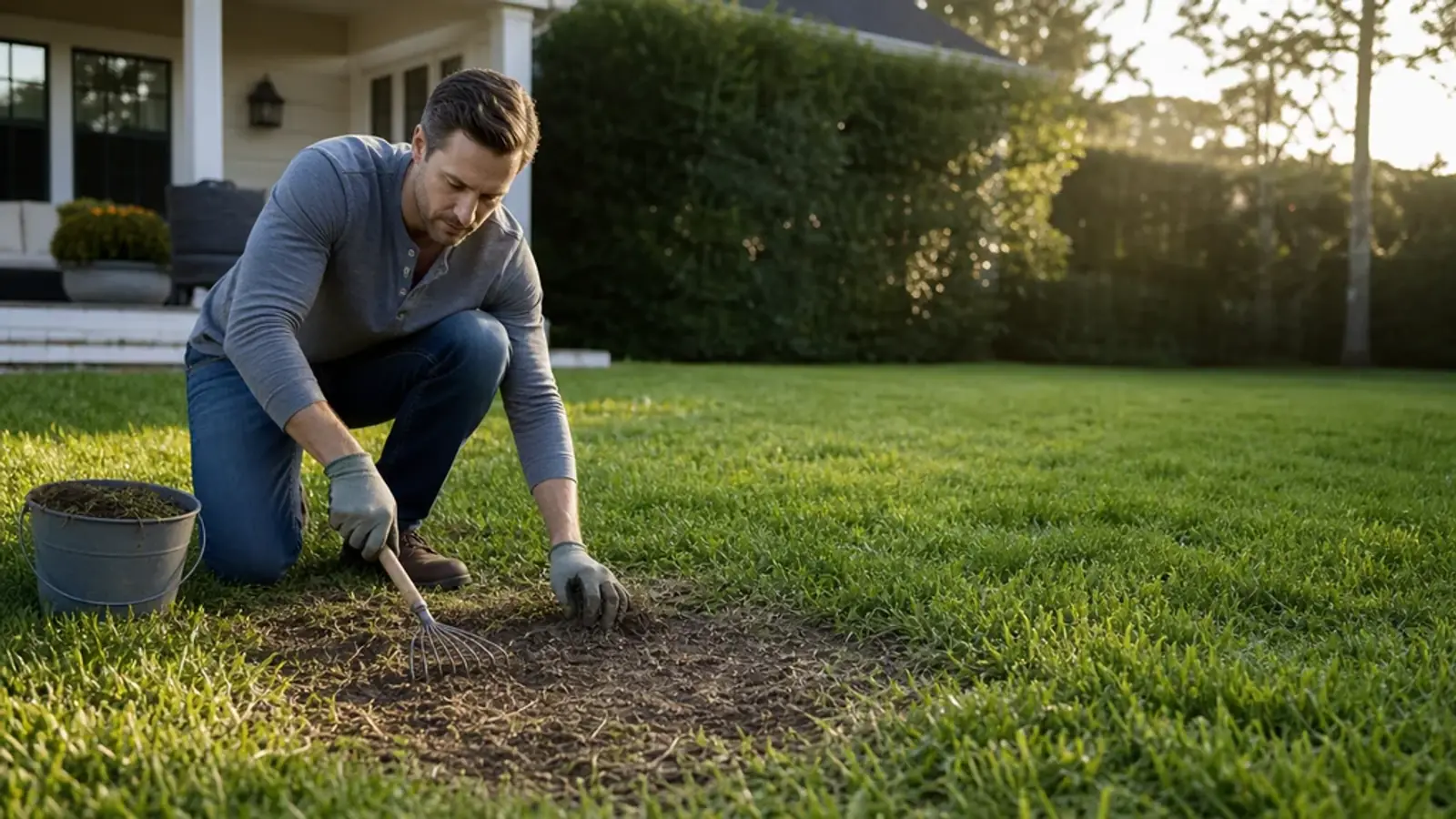
Let saturated soil become workable before raking. Pulling tools through mud can smear the surface, deepen channels, and mix seed into an unknown depth. Once the soil is moist rather than sticky, remove foreign debris and inspect whether topsoil left the patch or merely shifted inside it.
Return displaced soil only when it is clean, belongs in the patch, and can be spread without creating a mound. Sediment mixed with driveway residue, pet waste, unknown chemicals, or storm-drain debris should not be scraped back into a seedbed. Restore a smooth grade that does not form a bowl and lightly firm the surface.
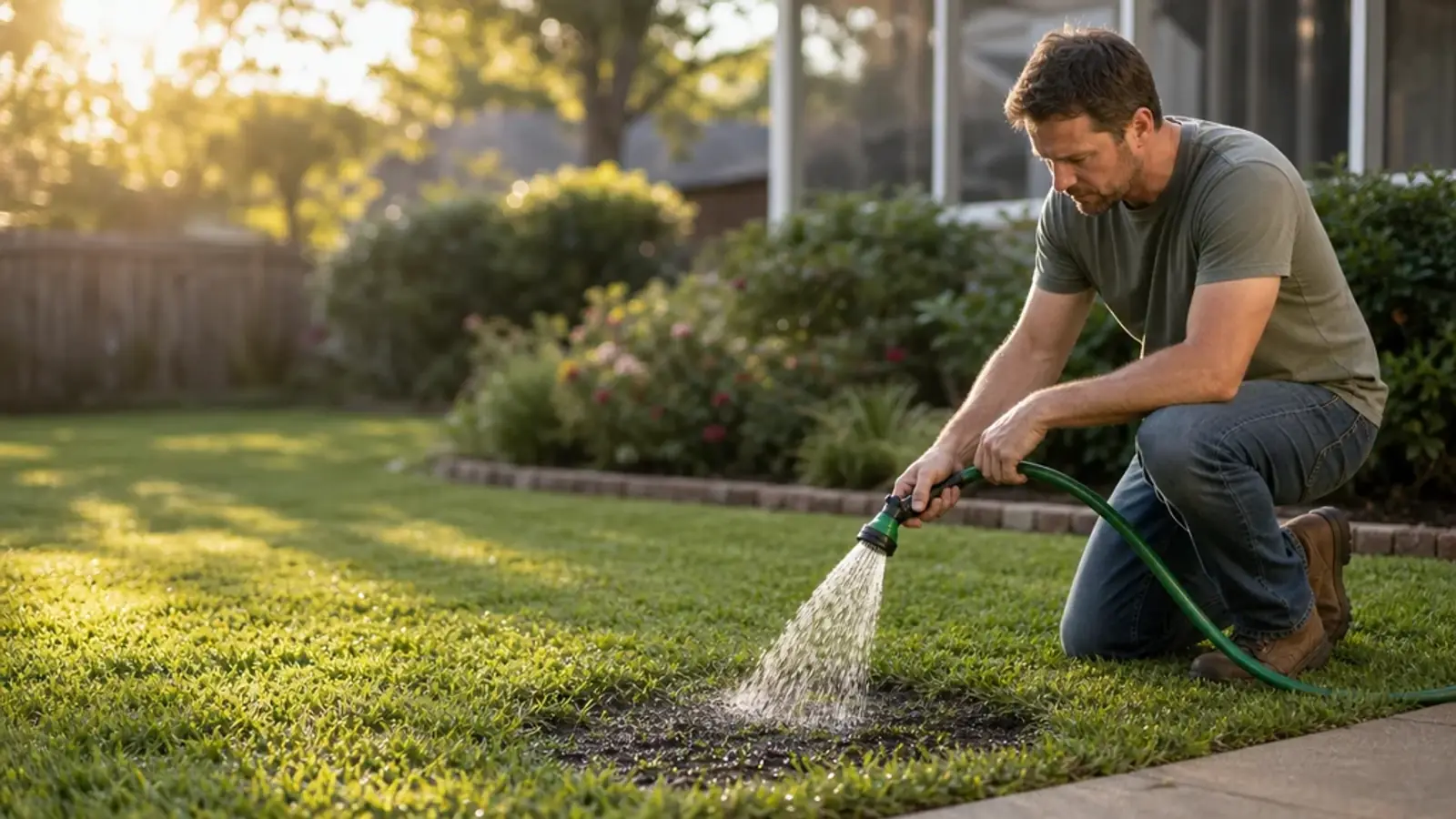
Use a small test watering or the next light rain to observe flow before reseeding. If a channel reforms, the patch is not ready. Correct the incoming water route or stabilize the site first. Repeatedly filling the same eroded groove is not a durable lawn repair.
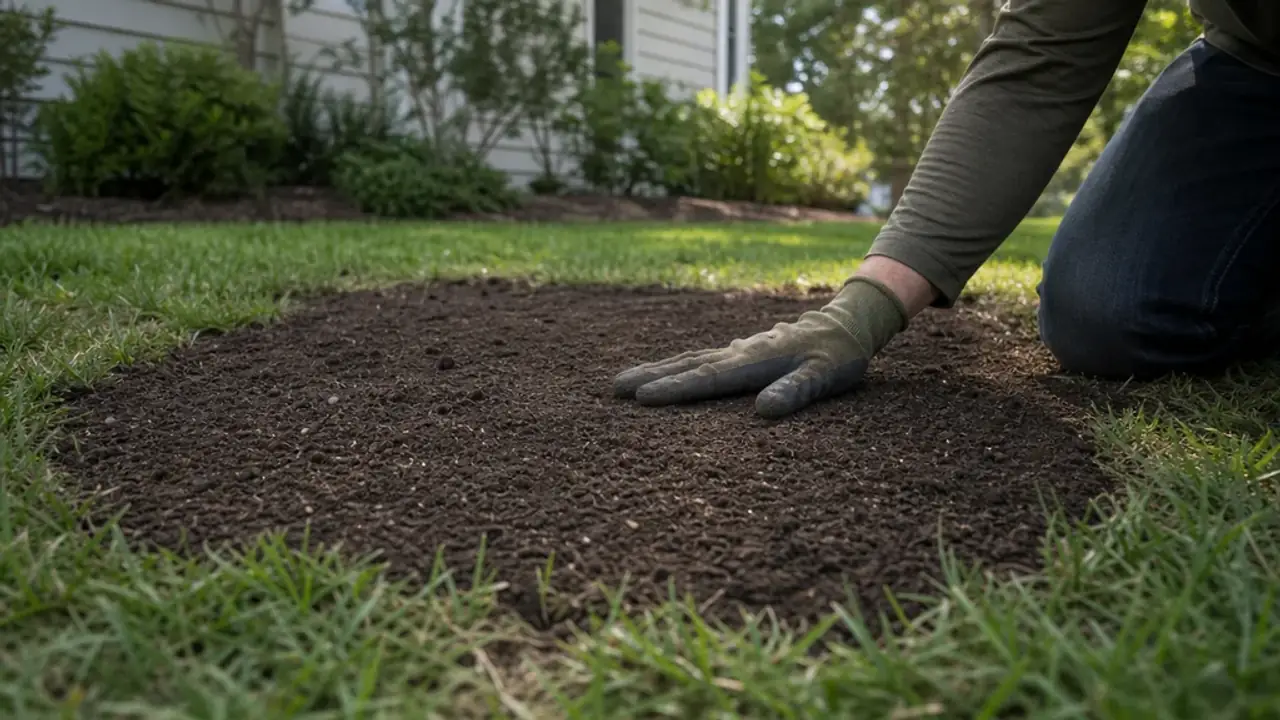
Choose mulch or erosion control for the actual flow
Mulch can help retain moisture and reduce movement of seed and soil. Penn State Extension emphasizes that proper mulch is especially important on slopes, while too little may not control movement and too much can smother seedlings or encourage disease. Follow a university recommendation or the selected product label for material and rate rather than creating an opaque blanket.
UGA Extension recommends straw over seed on plantable slopes to help prevent downhill movement, paired with gentle misting from the top. On more demanding sites, an anchored biodegradable erosion-control blanket, wattles, or another site-specific measure may be appropriate. Installation matters: loose material that becomes runoff debris is not control.
A steep, long, actively gullying, or concentrated-flow slope exceeds a routine patch. It may need terracing, drainage work, professionally selected matting, sod, or another planting strategy. Avoid plastic netting or a product that creates a pet, wildlife, mower, or trip hazard, and follow local stormwater requirements.
Reseed the lost areas, not the entire patch by reflex
When the grade is stable, identify where viable material remains. An evenly covered area may only need protection and corrected watering. A visibly empty channel may need a measured replacement. A dense pile at the bottom may need to be thinned and redistributed only if the label permits and the material is clean and still suitable.
Measure the actual area being redone. Apply the compatible seed or repair system at its labeled rate, create the specified soil contact, and install the selected stabilization. Do not double the rate to compensate for anxiety about another storm. Excessive density can increase competition and disease pressure.
Check the forecast as a risk-management step, not a guarantee. No forecast eliminates the chance of rain. Avoid beginning when severe weather is imminent, but design the surface and protection for normal rainfall. If ordinary storms repeatedly remove the repair, stop reseeding and correct the site.
Resume gentle watering only when the seedbed needs it
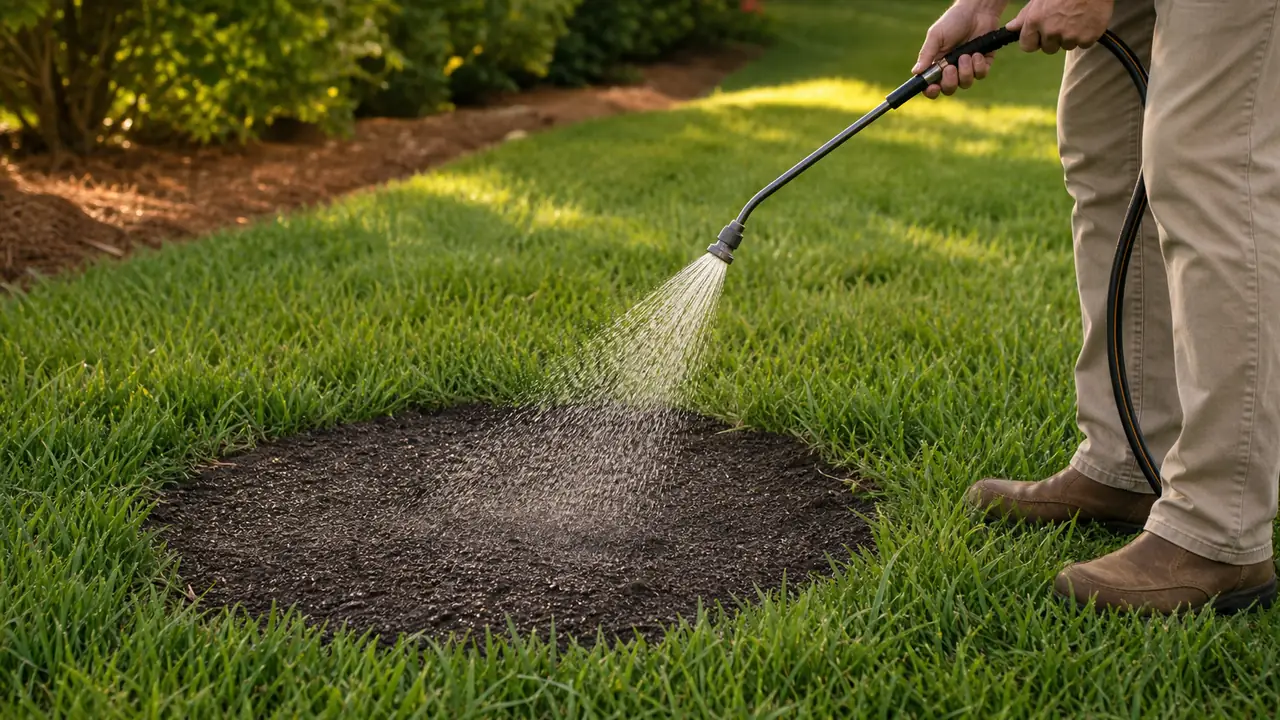
Rain counts as water. Inspect the soil before restarting an automatic schedule. The establishment target is moist, not saturated. Pause irrigation while the patch is wet, then resume with a soft shower that does not move soil or seed. Water applied faster than the soil accepts it recreates the original problem even on a sunny day.
Watch the upper edge, center, and downhill edge separately. A slope can dry unevenly, and one sprinkler setting may overwater the bottom while leaving the top dry. Short, controlled applications may be needed, but the final label and local restrictions control the routine.
YardDay South may be considered only for a bounded, stable warm-region patch whose grass fit, grade, and watering access are confirmed. Patch should return a conditional or no-product route when runoff remains active. Do not treat mulch or a hydroseed-style process as a substitute for drainage correction.
Common questions
Before you repair the patch
Should I put more grass seed down immediately after heavy rain?
No. Wait until the soil is safely workable, identify where material moved, and correct the water path. Reseed only the measured areas that lost material after the grade is stable.
Can I rake washed grass seed back into place?
Only after the soil is no longer saturated and only when the displaced material is clean and suitable. Do not rake through mud or return sediment contaminated by pavement, pet waste, chemicals, or drainage debris.
Will straw stop grass seed from washing away?
Properly applied clean straw can reduce movement on appropriate sites, but it is not enough for every flow or slope. Too much can shade or smother seedlings. Use an extension recommendation or product label, and seek site-specific erosion help for concentrated or severe runoff.
Should I water a seeded patch after it rains?
Inspect moisture first. Rain counts toward the establishment water. Resume gentle irrigation only when the surface needs moisture, and stop if water pools or carries material.
When is washout too serious for a DIY lawn patch?
Escalate recurring gullies, steep or long slopes, foundation or property-line drainage, retaining-structure concerns, exposed utilities, and runoff that ordinary stabilization cannot control. Those are site or stormwater problems, not seed problems.