
The short answer
What to do first
Grass seed may stay invisible because it is not suited to the lawn or season, lacks firm contact with soil, was buried too deeply, dried after absorbing water, remained saturated, moved during watering or rain, or encountered a treatment that prevents germination. First confirm the seed and expected timing, then inspect moisture and soil contact without repeatedly digging through the whole patch. Correct the active problem before adding more seed.
First determine whether the seed is late, missing, or dead
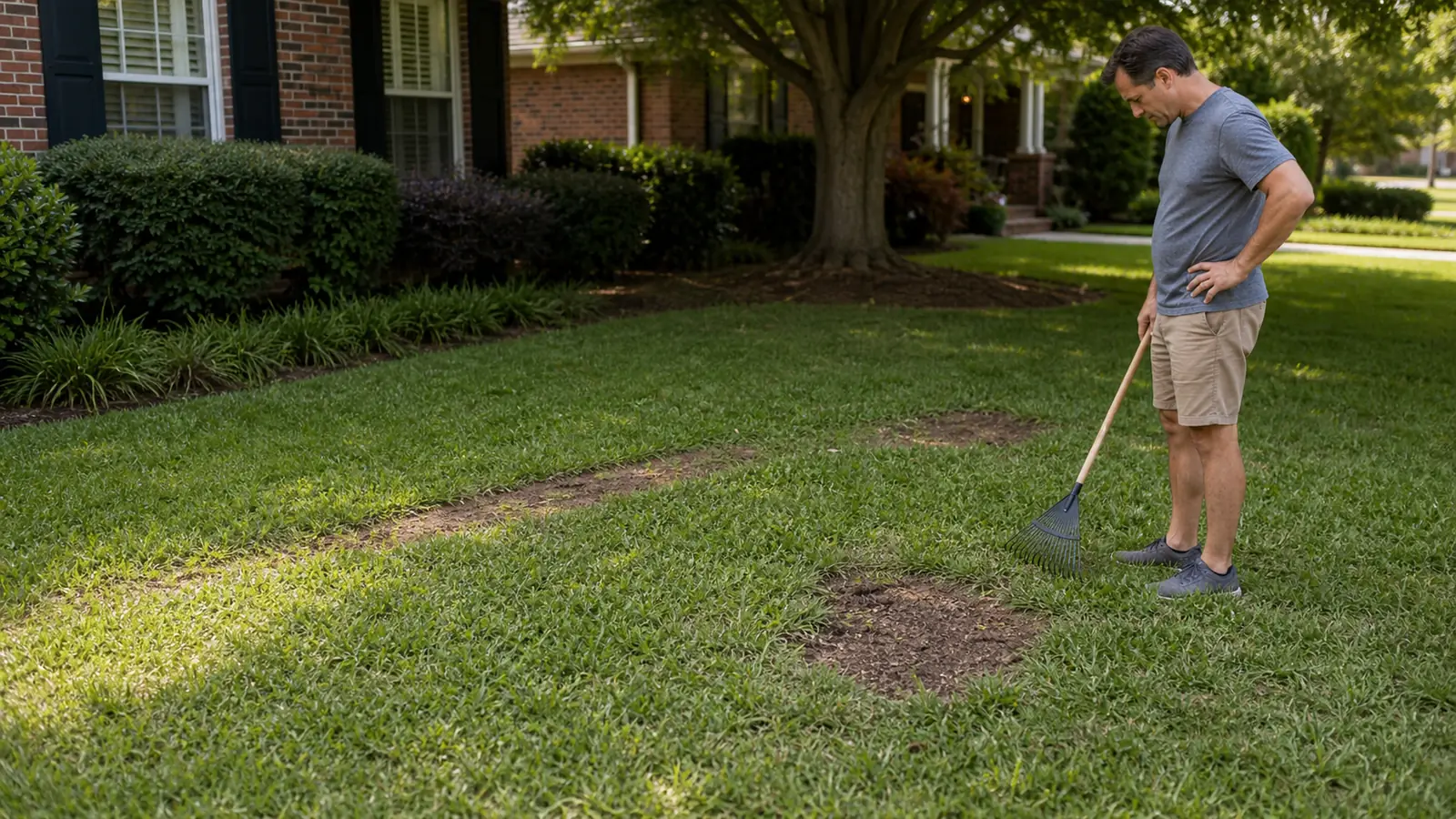
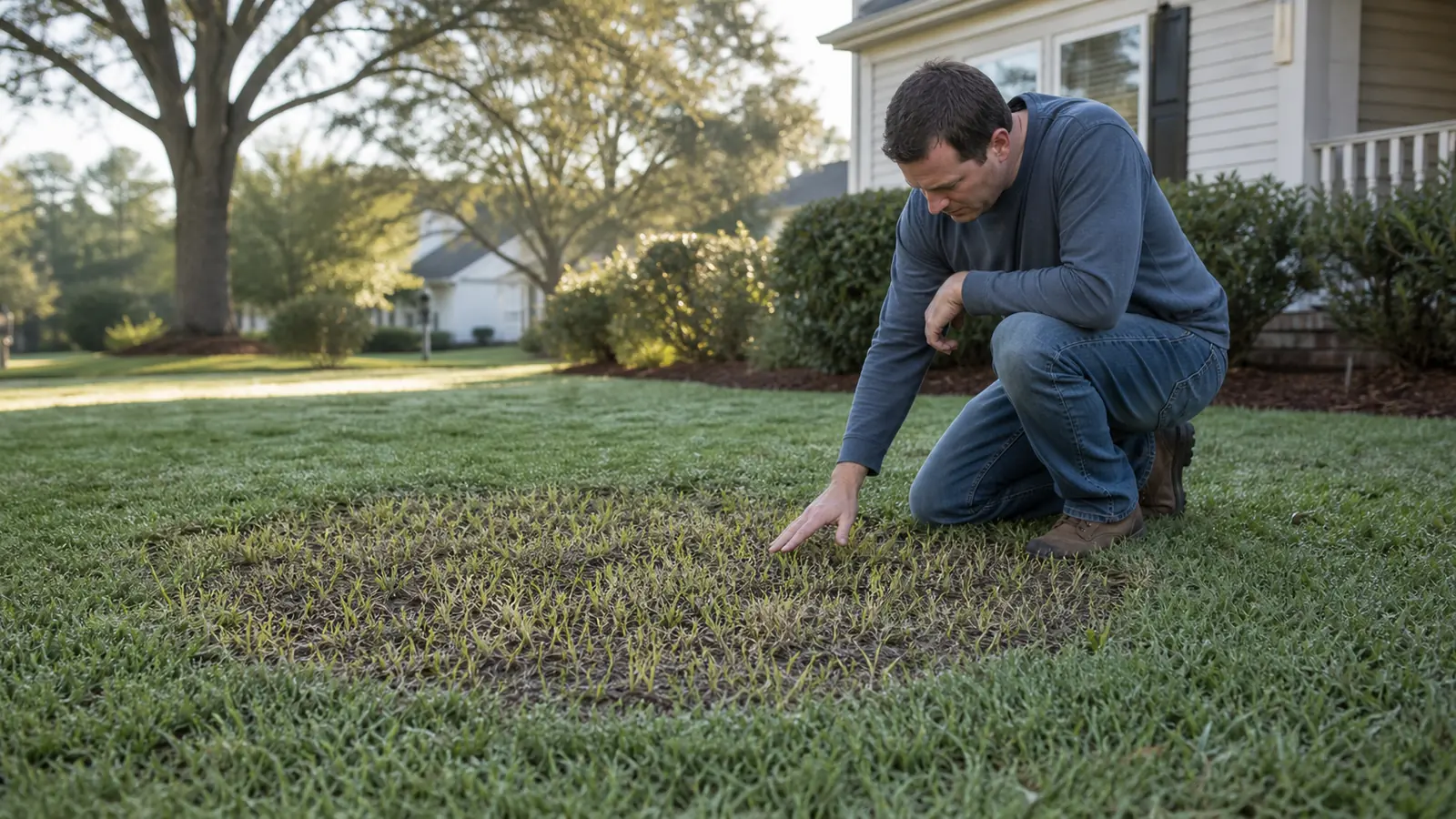
A bare surface does not tell you which part of establishment failed. Some grass species emerge sooner than others, and cool soil can slow the process. A patch can also look empty after seed moved to the edge, settled beneath too much soil, or began germinating and then died before producing enough visible green. Treating every delay as bad seed often leads to excessive seeding and a crowded, less resilient stand later.
Start with the seed label and the date it was applied. Confirm the species, lot information, germination percentage, geographic fit, planting window, application rate, and any label-specific directions. Compare those facts with recent soil conditions rather than a generic internet countdown. A seeded common Bermuda repair, for example, has a different seasonal requirement from a cool-season fescue repair, and many hybrid warm-season lawns are not repaired with matching seed at all.
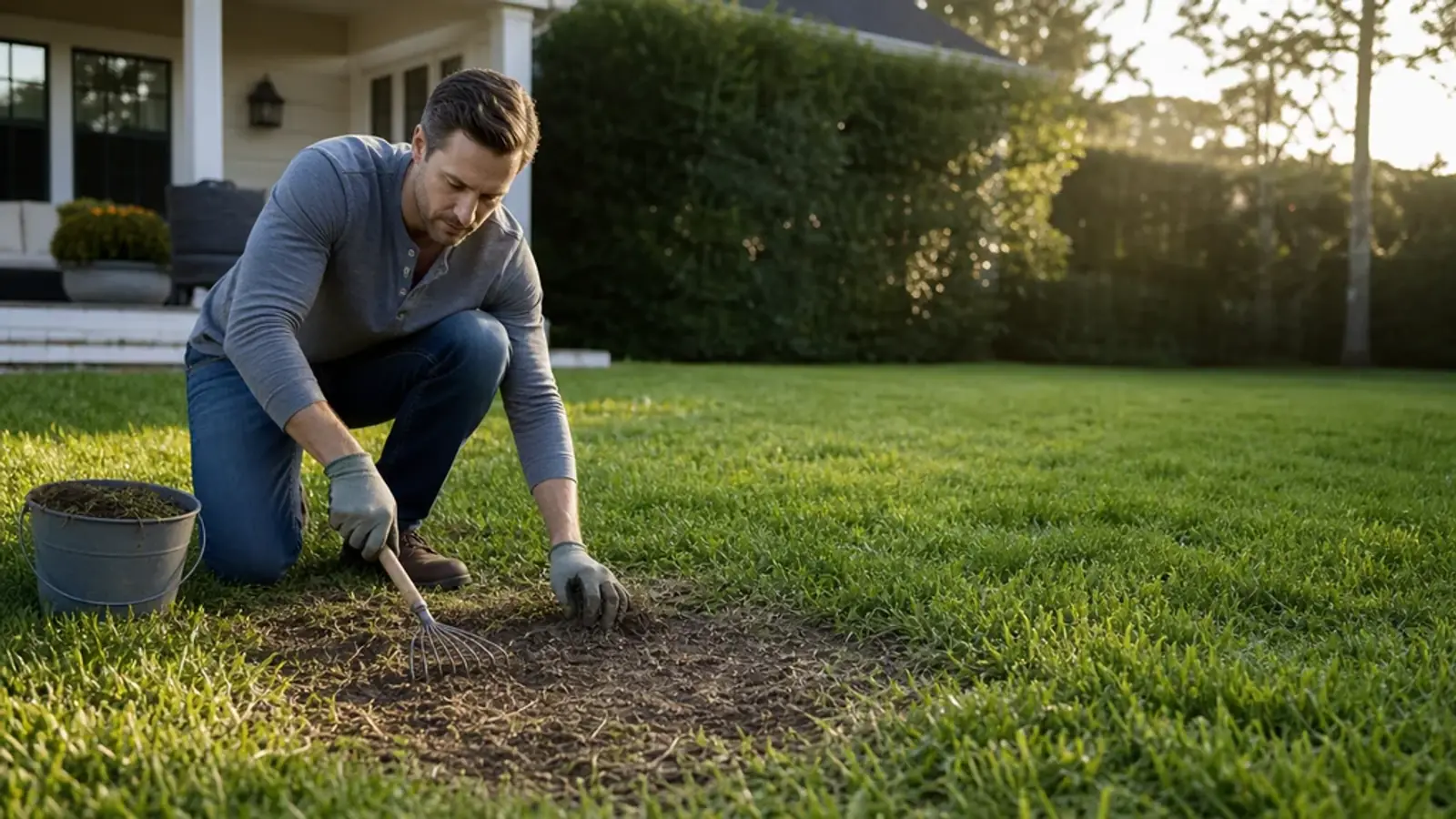
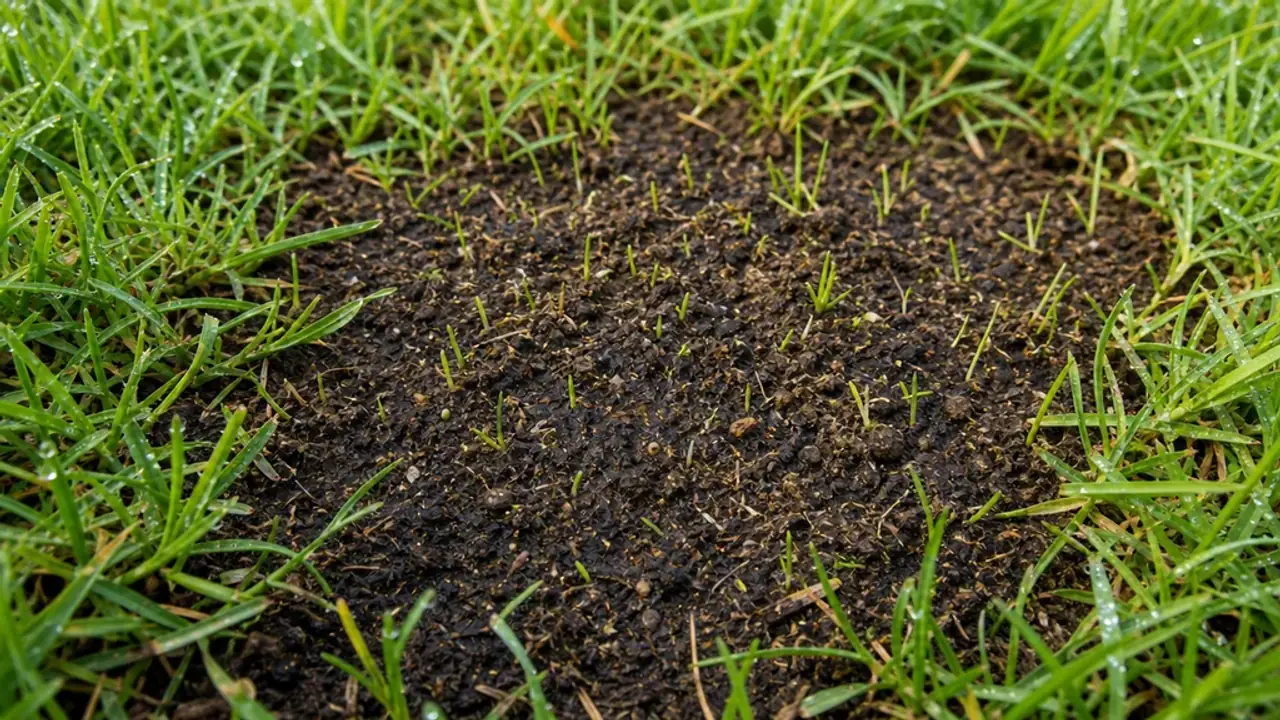
Inspect two or three small points instead of raking the entire patch. Look for seed resting on debris, seed gathered in a low edge, a sealed soil crust, standing water, or a surface that became powder-dry. Record what you find. If the seed is still inside the normal label window and the seedbed remains stable and moist, avoid disturbing it just to check progress every day.
Check seed identity, lawn compatibility, and planting conditions
Seed must be capable of producing the grass you expect in the place where you planted it. Read the analysis label instead of relying on the marketing name on the front of the package. Species, cultivar, germination percentage, purity, test date, and weed content help you evaluate what was applied. Old, poorly stored, or low-viability seed can produce a thin result, but a new bag cannot overcome an incompatible site or season.
Confirm that the surrounding turf can actually be established from the selected seed. Clemson Extension notes that several warm-season turfgrasses are sterile and require vegetative material. Hybrid Bermuda commonly needs matching plugs, sprigs, sod, or growth from existing runners. Seed that produces a different cultivar may create a patch with another texture or color even if it grows.
Temperature guidance is regional and species-specific. Do not apply a universal germination number to every lawn. If the planting occurred outside the recommended local window, the safer response may be to stabilize the soil and wait for an appropriate establishment period. A county extension office can help identify the turf and local timing when the label and existing lawn do not give a clear answer.
- Confirm the exact grass species and whether the existing lawn was seeded or installed vegetatively.
- Use the seed label and local extension timing instead of a universal germination promise.
- Replace seed only after identifying a storage, viability, compatibility, or timing problem.
Correct debris, depth, crusting, and compaction
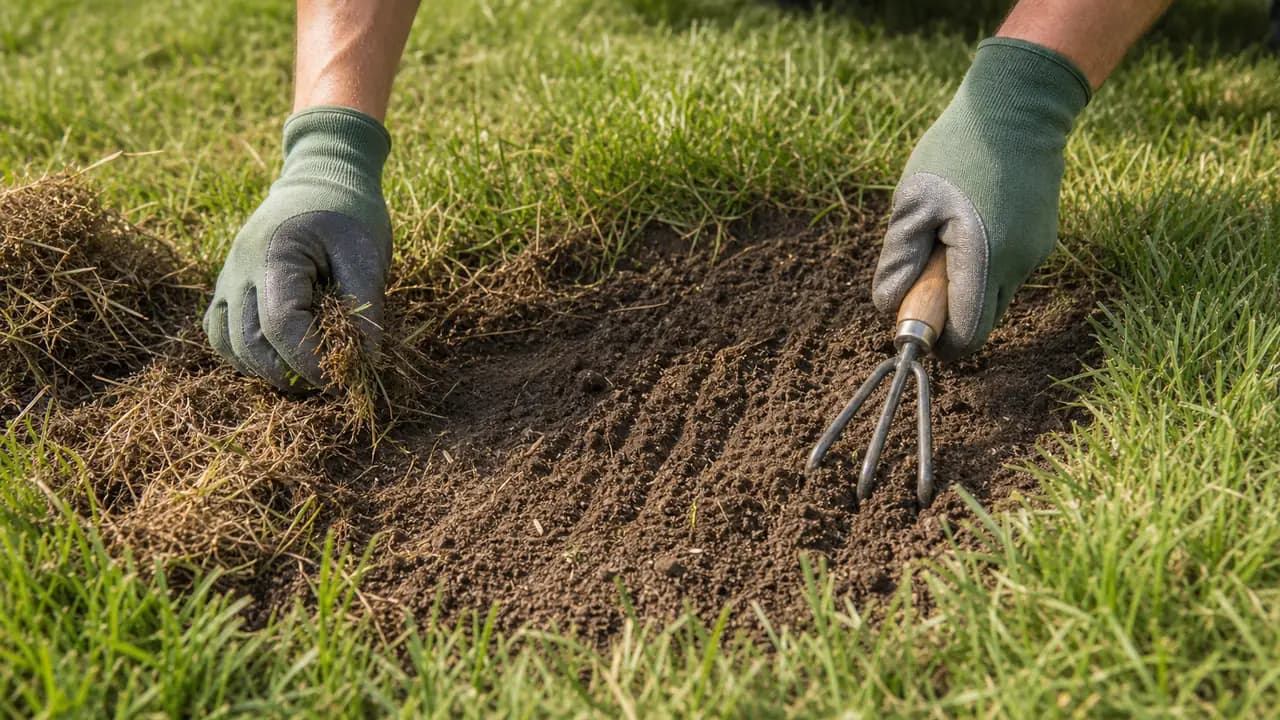
Seed needs close contact with a receptive soil surface. Seed scattered over dead leaves, thick thatch, matted grass, stones, or an intact hard crust can dry quickly and move during irrigation. Seed buried under a thick layer may have difficulty reaching light and the surface. Clemson recommends mixing lawn seed only into the upper quarter-inch of prepared soil and firming the seedbed to improve contact; the final product label controls the specific application.
A patch that feels like pavement may be compacted. Compaction reduces water infiltration, increases runoff, restricts oxygen, and limits root development. Traffic can recreate it after every repair. For a small bare spot, remove loose debris and lightly loosen the surface. A larger compacted traffic lane may require a properly timed cultivation plan or a permanent path rather than another thin layer of seed.
Do not solve poor contact by covering the patch with an arbitrary depth of topsoil. Added material can change the grade, bury nearby grass, or create a texture boundary that holds water differently. Prepare a level, lightly textured, firm surface and follow the selected seed or repair label.
Keep the seedbed moist without making it saturated
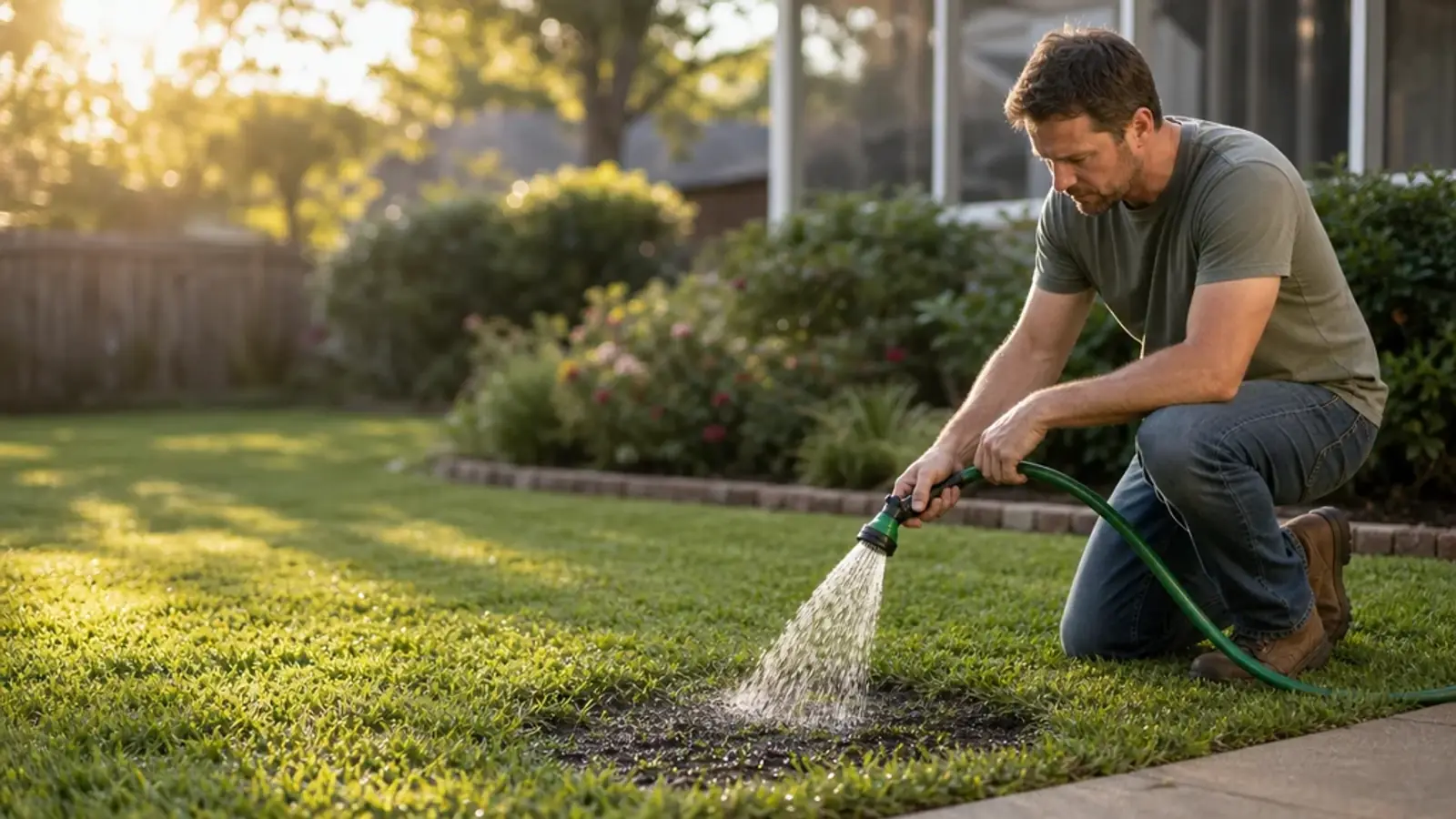
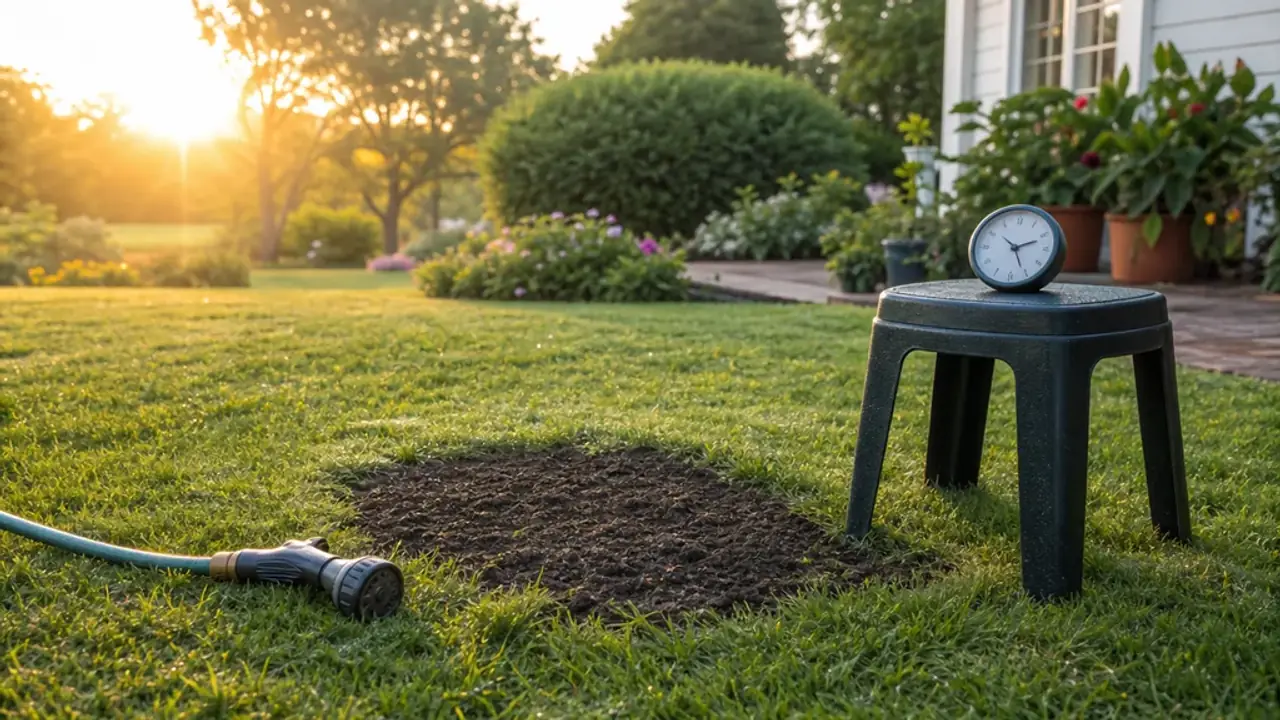
Newly applied seed has little protection from moisture swings. Once seed begins taking up water, allowing the surface to dry before roots develop can kill emerging seedlings. The opposite extreme also causes trouble: saturated soil has limited oxygen, seed can move, and water can collect in low areas. Clemson describes the target as moist but not excessively wet, similar to a wrung-out sponge.
Adjust watering to the soil, shade, wind, temperature, mulch, and rainfall. The University of Minnesota advises minimizing irrigation during rain. Use a soft application that wets the seedbed without creating puddles or carrying material to an edge. If runoff starts before the soil is evenly moist, stop and correct the application rate, compaction, grade, or incoming water source.
After seedlings emerge and begin rooting, transition gradually from frequent surface moisture toward less frequent watering that reaches the developing root zone. Staying forever on a tiny surface-only schedule can encourage shallow roots. The product label and local conditions should guide the transition.
Review recent treatments and conditions that seed cannot fix
A pre-emergent herbicide is designed to interfere with seedling establishment, and other lawn treatments can carry reseeding intervals. Find the exact product used, read its current label, and follow the stated interval. Do not add fertilizer, lime, fungicide, or another chemical simply because the patch is slow. A soil test can guide amendments; a guess can add stress or obscure the original problem.
Also compare the patch with the healthy lawn. Dense shade, standing water, a downspout, pet traffic, equipment, buried construction material, or a repeated walking route can defeat multiple seeding attempts. Seed is planting material, not a drainage, light, or traffic correction. Address the continuing cause before purchasing another bag.
Pause and seek local help when the bare area is expanding, seedlings appear water-soaked or collapsed, roots detach easily, an unusual residue or odor is present, or multiple patches appeared after a treatment. Those observations have several possible causes. Photos, dates, weather, labels, and a sample evaluated by an extension office or qualified turf professional are more useful than a remote disease guess.
- Do not reseed until the latest pesticide label permits it.
- Redirect traffic and correct standing water or runoff before another attempt.
- Escalate expanding, collapsing, widespread, or treatment-linked damage for local identification.
Retry only after the failed step is understood
Build the second attempt around the evidence. If seed washed to one edge, fix flow and stabilize the surface. If the top layer dried, change the watering routine. If the soil stayed saturated, correct drainage or reduce application. If the seed and lawn are incompatible, choose the appropriate seed, plug, sprig, or sod repair. If a treatment interval is active, wait.
Remove only loose dead material and displaced debris. Avoid repeatedly cultivating healthy surrounding roots. Re-level the patch, measure the actual bare area, and apply the selected material at its labeled rate. Adding extra seed as insurance can create an overly dense stand and does not correct the cause.
YardDay should enter the decision only after the region, grass compatibility, site, and watering routine fit a homeowner patch repair. Patch can help organize those conditions, but the final package label and local turf guidance control the application.
Common questions
Before you repair the patch
How long should I wait before deciding grass seed failed?
Use the species and germination guidance on the seed label plus local soil conditions. Different grasses and temperatures produce different timelines. If the seedbed is stable and inside the normal label window, avoid disturbing it solely because another grass emerged faster elsewhere.
Can I just add more seed to a bare spot that did not grow?
Not until you identify the likely failure. More seed will not correct poor soil contact, an active herbicide interval, standing water, runoff, dense shade, incompatible grass, or an unreliable watering routine.
Does grass seed need to be covered with soil?
It needs direct contact with prepared soil, but it should not be deeply buried. Clemson recommends mixing lawn seed into only the upper quarter-inch and firming the seedbed. Follow the specific seed or repair-product label.
Can too much water stop grass seed from growing?
Yes. The seedbed should remain moist, not saturated. Puddling, prolonged standing water, and runoff can limit oxygen or move seed. Reduce irrigation during rainfall and correct drainage or flow problems before reseeding.
Will grass seed grow after a pre-emergent application?
Many pre-emergent products are intended to prevent seedlings from establishing. Find the exact product label and follow its reseeding interval. Do not estimate the interval from the product category alone.