
The short answer
What to do first
New grass can yellow or die when the seedbed dries, remains saturated, is shaded by excessive mulch, is seeded too densely, receives an incompatible treatment or excessive fertilizer, encounters heat or traffic before roots establish, or develops a seedling disease under favorable conditions. Reduce immediate stress, preserve photos and treatment records, and compare the whole pattern before adding water, fertilizer, fungicide, or more seed. Collapsing, slimy, rapidly expanding, or widespread seedlings need local identification.
Separate pale growth from collapsed or disappearing seedlings
Yellow is a symptom, not a diagnosis. Seedlings shaded beneath heavy mulch can look pale while remaining upright. A dry section may fade from the highest or most exposed edge. A saturated low spot may yellow while the upper soil remains greener. Seedlings damaged by traffic can be flattened in a recognizable path. A disease can also affect young turf, but color alone cannot identify the cause.
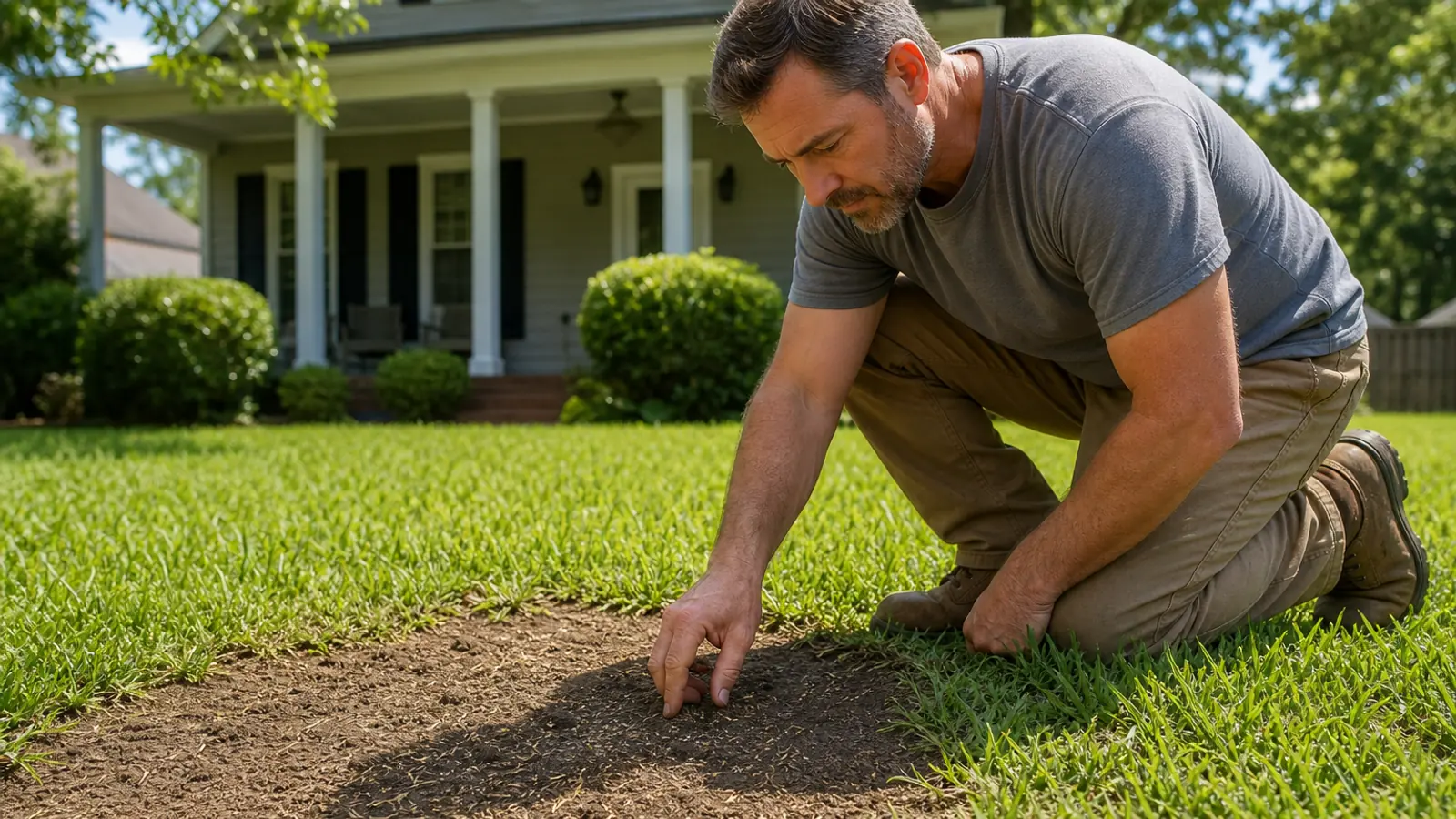
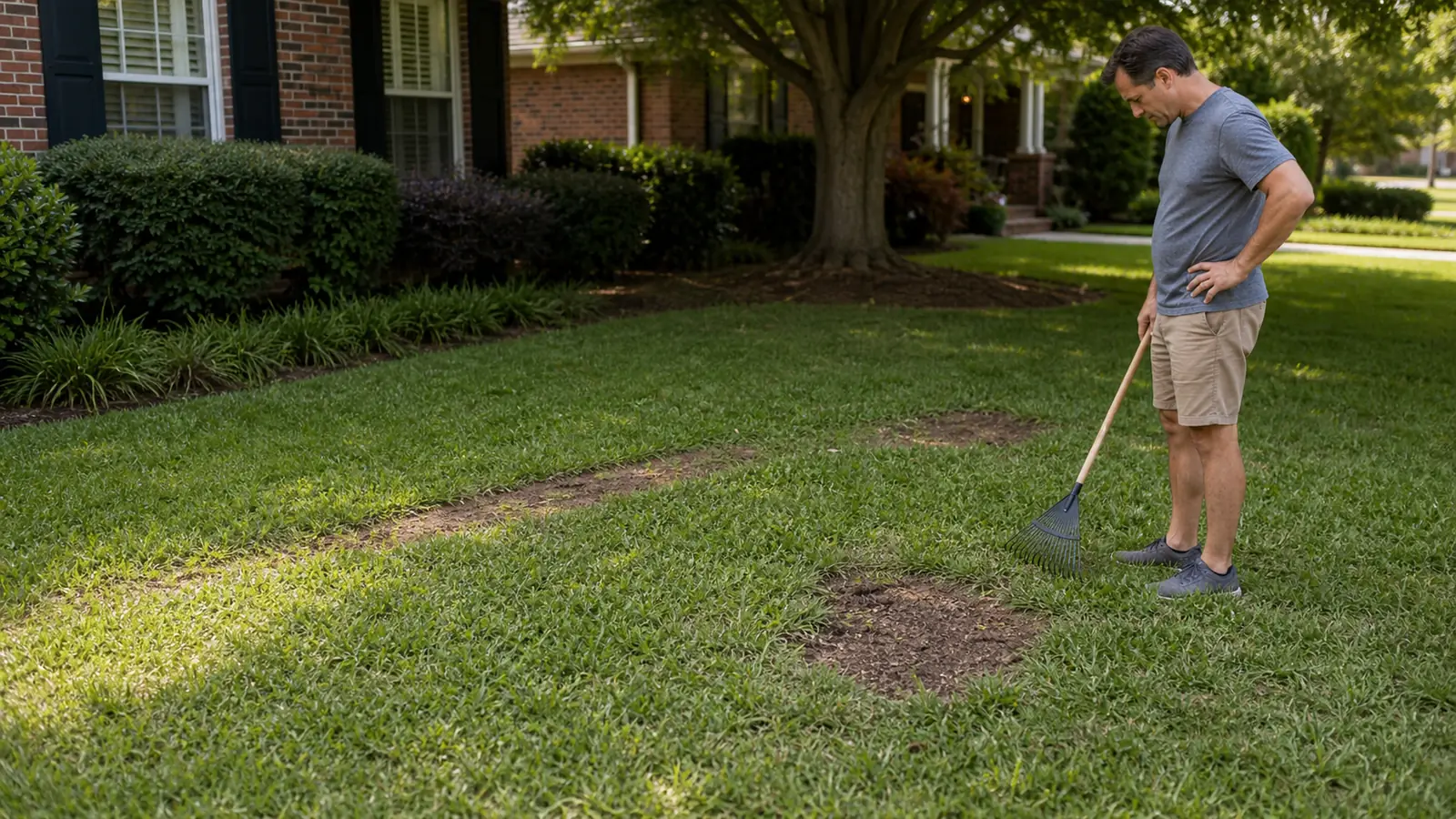
Before changing the routine, photograph the whole patch and several close views. Note whether the plants are upright, wilted, flattened, water-soaked, slimy, cut, pulled out, or missing. Check whether the edge is stable or expanding and whether the pattern follows shade, a sprinkler, a low area, footsteps, fertilizer granules, mulch depth, or a recent application.
Write down the seed or repair product, application date and rate, grass species, weather, watering, mulch, fertilizer, herbicide, other treatments, and first mowing. Those records help an extension office distinguish cultural stress from a pest or disease. Adding an unverified treatment first can alter the symptoms and injure seedlings that might otherwise recover.
Correct moisture at both extremes
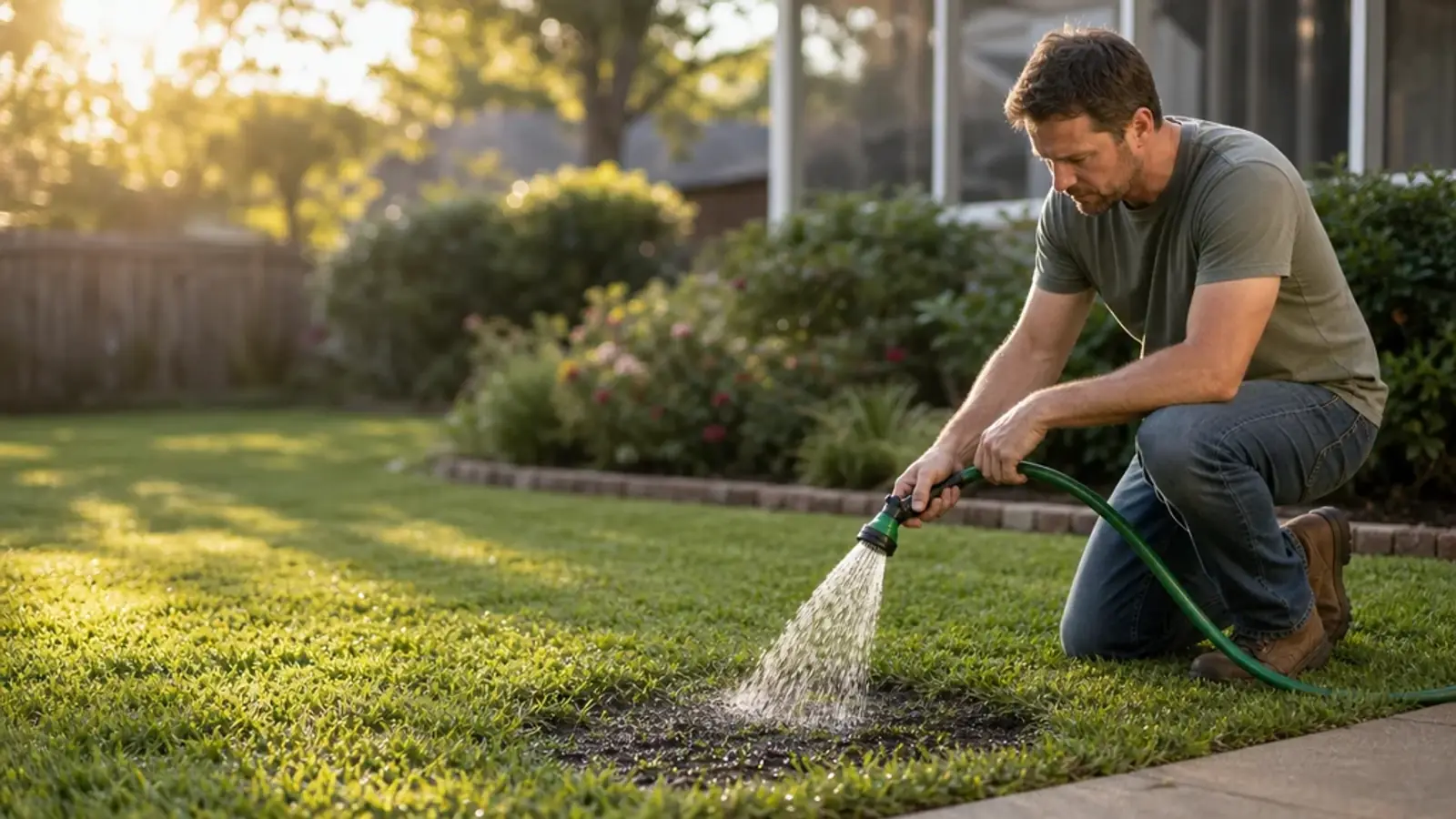
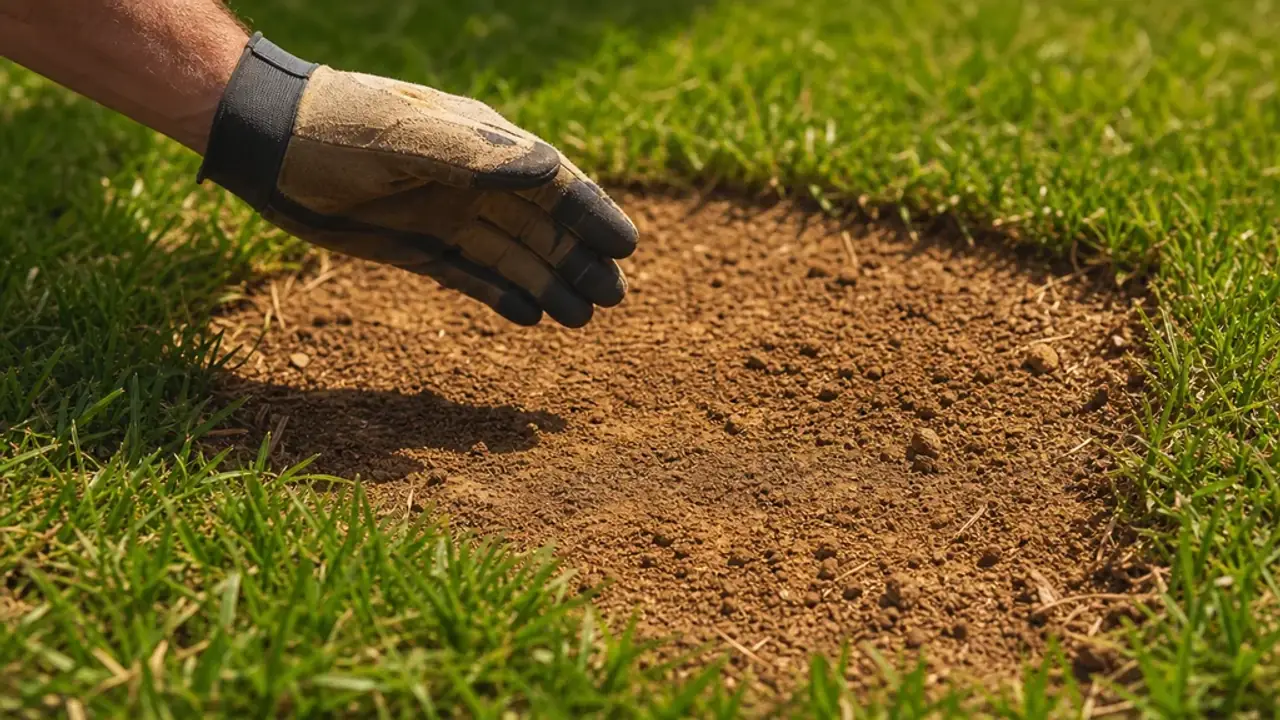
Seedlings begin with shallow, delicate roots. If the surface dries after germination, young plants can wilt and die quickly. Clemson advises maintaining moisture during establishment because allowing swollen seed or undeveloped roots to dry can cause loss. The answer is not continuous saturation: the target remains evenly moist soil with usable air space.
Probe the soil in the yellow area and in healthy green growth. A powder-dry top layer, cracking edge, or rapid drying beside pavement points toward insufficient moisture. Puddling, a sour smell, footprints that fill with water, or a low spot that remains wet after the rest dries points toward excess water or drainage. Correct the actual difference instead of increasing every sprinkler zone.
As roots develop, gradually reduce watering frequency and wet more of the root zone. The University of Minnesota advises reducing frequency after germination. This transition is site-specific. Do not move directly from constant surface watering to prolonged drought, and do not keep mature seedlings in a saturated surface layer.
Check for excessive mulch, seeding rate, or crowding
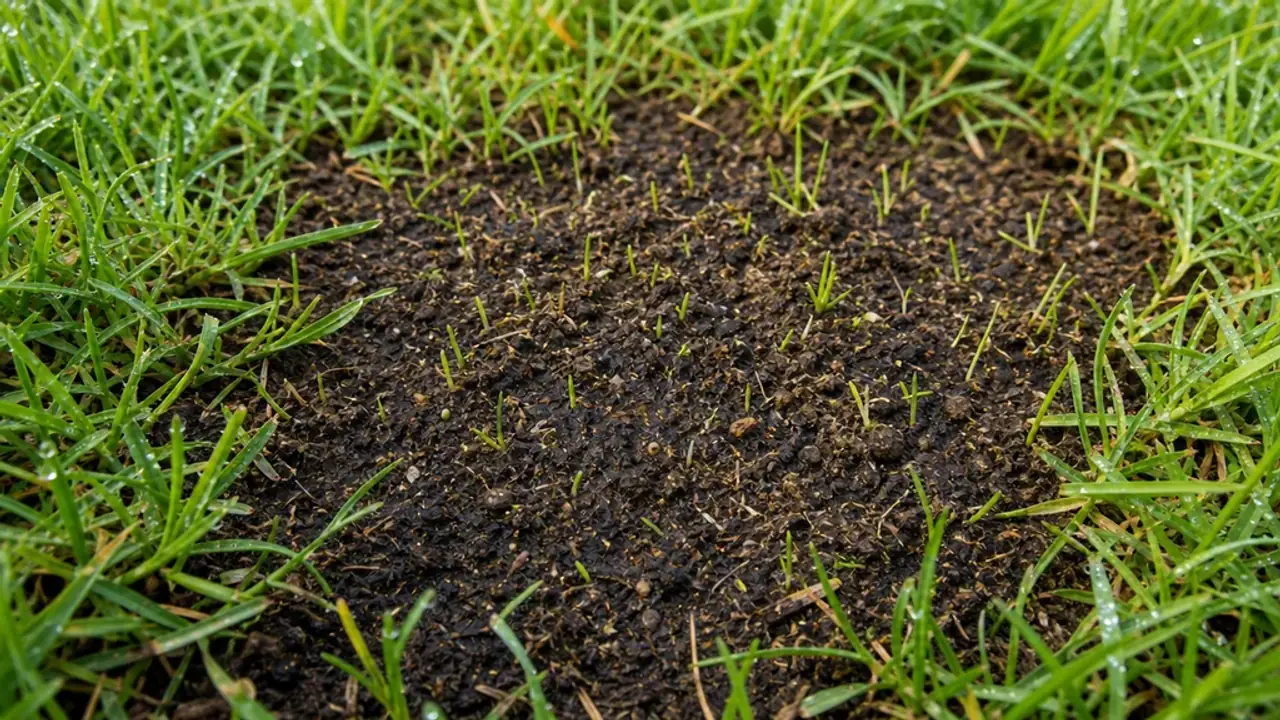
Mulch can protect moisture and reduce erosion, but more is not automatically better. Clemson notes that if seedlings yellow beneath straw or hay, lightly removing some mulch can restore light. Do not tear rooted seedlings out with a heavy rake. Lift only enough loose material to reveal the plants and follow the establishment guidance for the selected mulch.
A heavy seeding rate can create a crowded, humid layer with intense competition. Penn State identifies excessive seeding, high fertilizer rates, wet soil, heat, and humidity as conditions associated with damping-off outbreaks. These conditions increase risk; they do not prove that a specific fungus caused the loss. Thin or reseed only with label- and expert-guided reasoning after the active problem is controlled.
Also check whether existing tall grass, fallen leaves, or repair material is covering the seedlings. Remove loose shading debris gently. Do not scalp the surrounding lawn to deliver more light; abrupt mowing stress can create another problem.
Do not treat yellow color as an automatic fertilizer request
Yellow plants can be associated with nutrition, but color alone does not identify a deficiency. Excess fertilizer can injure young tissue, increase salt stress, or produce soft growth. Penn State also lists high fertilizer rates among conditions that can contribute to seedling disease. Clemson recommends avoiding excessively high nitrogen during establishment and timing a light application only at a defined seedling stage.
Review what was applied and where. A line that follows a spreader pass, a spill point, granules concentrated at one edge, or decline after a spray is important evidence. Save the labels and receipts. Follow the label for watering, reseeding, and new-turf restrictions, and contact the manufacturer or local extension office when an application may be involved.
Use a soil test before making broad pH or nutrient corrections. Do not add lime, iron, nitrogen, fungicide, or a household remedy solely to change the color. Products used without a supported cause can delay recovery, create runoff, and make a later diagnosis harder.
- Preserve every recent product label and application date.
- Map whether yellowing follows a spreader, spill, or spray pattern.
- Use soil testing and local guidance instead of color-based fertilizer guesses.
Protect shallow roots from heat, mowing, and traffic
New seedlings have not built the root system or wear tolerance of an established lawn. Heat reflected from pavement, wind across exposed soil, and a hot afternoon can dry one part of a patch faster than another. Adjust moisture from observation, work during cooler periods, and avoid assuming that every yellow edge needs more fertilizer.
Keep people, pets, wheels, hoses, and mower turns off young grass. Begin mowing only when seedlings reach the species-appropriate threshold; Clemson advises mowing when growth is about one-third higher than the normal mowing height. Use a sharp blade and dry-enough soil so seedlings are cut rather than pulled from the ground.
A cleanly cut patch that remains rooted is different from plants torn out with soil attached. If roots never formed, revisit contact, saturation, soil, and timing. If the damage follows traffic, redirect the route. New seed cannot mature while the same mechanical injury continues.
Escalate collapse, slime, rapid spread, or unusual growth
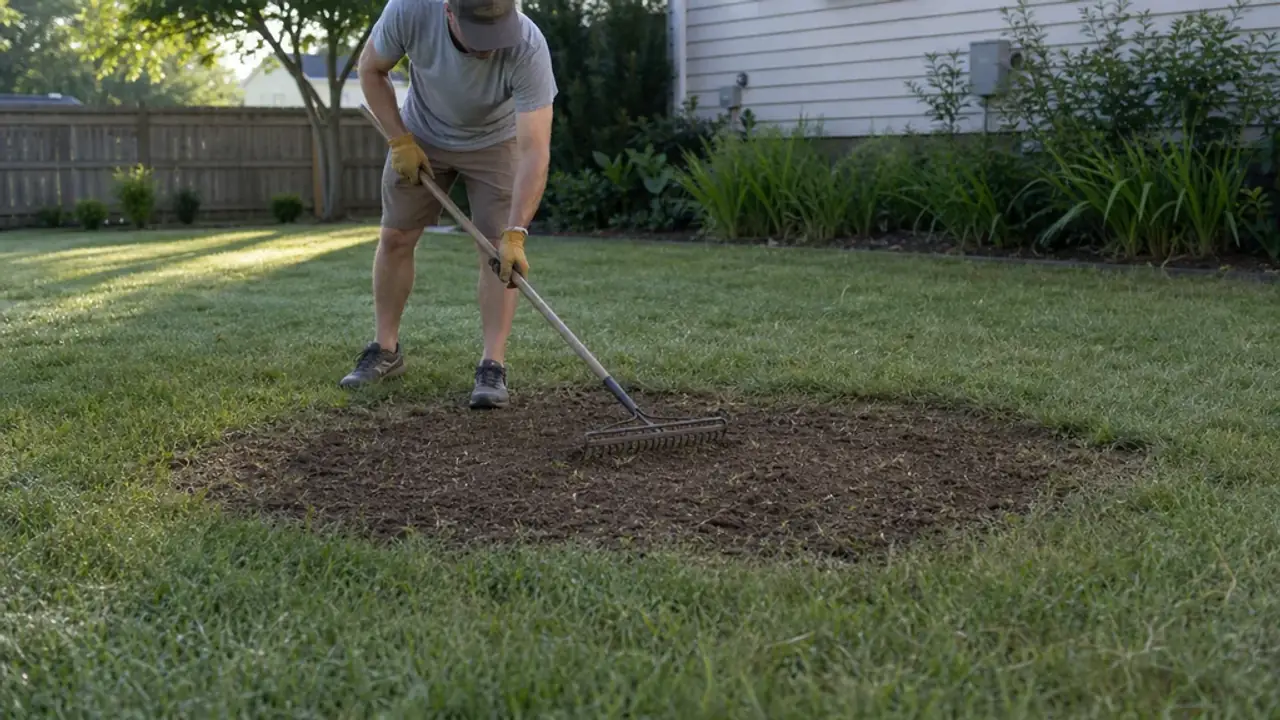
Penn State describes damping-off as a group of seedling diseases rather than one condition identifiable from a single photograph. Possible signs include blighted seedlings that collapse in circular or irregular areas, water-soaked or slimy plants, matted dead tissue, and sometimes white growth visible when dew is present. Similar-looking injury can have non-disease causes, so these signs should trigger identification rather than an automatic fungicide.
Stop routine patch care and contact a local extension office or qualified turf professional when decline expands rapidly, multiple areas appear, seedlings collapse despite corrected moisture, roots or crowns rot, white or web-like growth appears, or the symptoms follow a pesticide or fertilizer application. Keep people and pets away from any unknown residue and follow the product label for exposure guidance.
Submit the strongest evidence you can: close and wide photos, intact plants with roots and nearby soil when requested, the grass species, planting and symptom dates, seed and product labels, rates, irrigation, rainfall, temperatures, mulch, mowing, traffic, and treatments. A diagnosis based on a representative sample is more defensible than selecting a disease name from color alone.
Protect living seedlings; repair dead areas only after the cause stops
If seedlings remain upright and rooted, reduce the identified stress and give them time under the correct establishment routine. Gently relieve excess loose mulch, correct watering, block traffic, and follow the label. Do not rake through viable plants to make the patch look uniform.
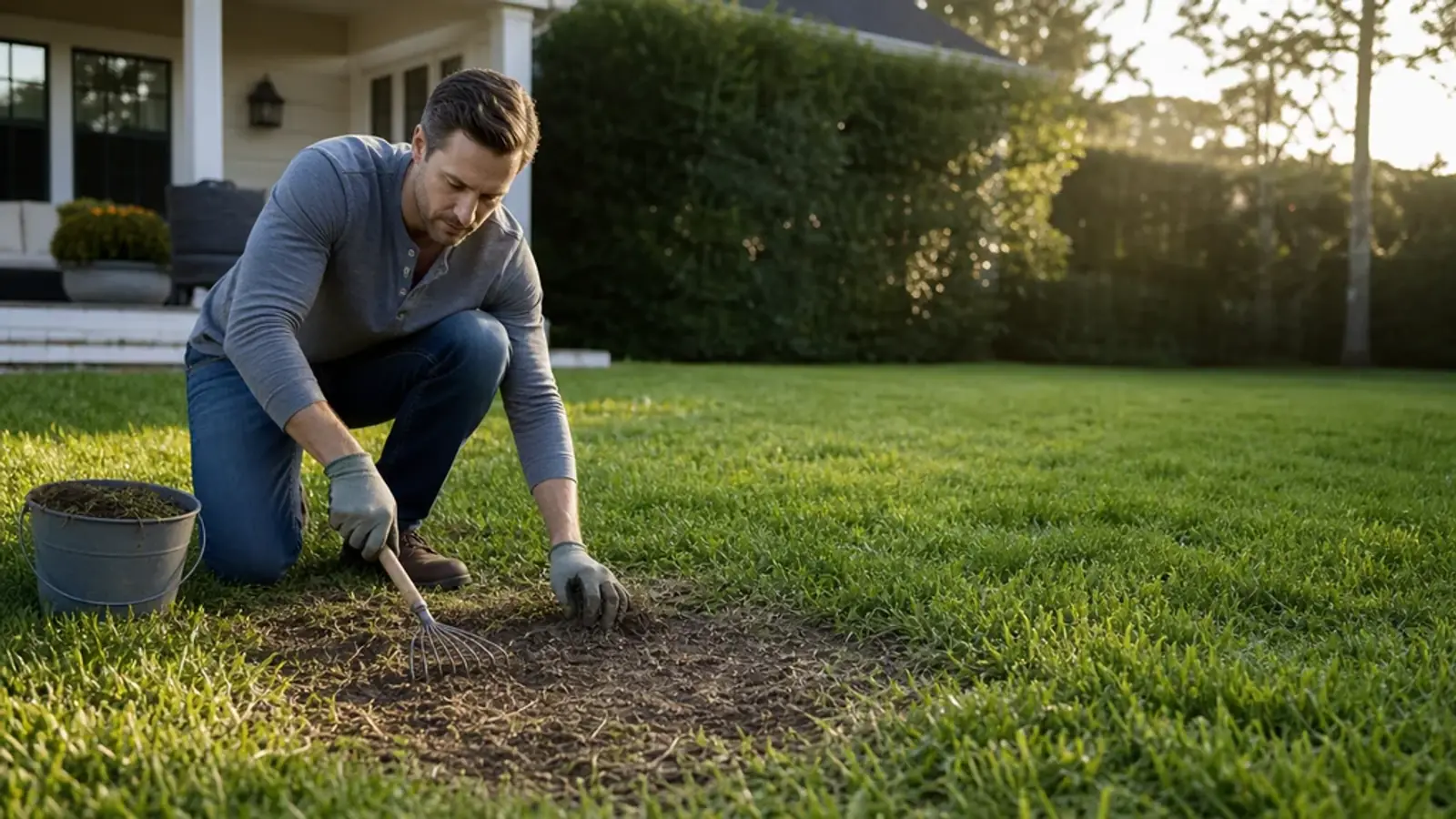
If an area is confirmed dead, wait until the cause is corrected. Remove loose dead tissue, preserve healthy edges, lightly restore the seedbed, and select a repair compatible with the existing grass and season. Measure only the dead area. Reapplying across living seedlings can create excessive density and disrupt roots.
A YardDay recommendation is conditional on a stable cause, approved South region, compatible grass and label, workable soil, and a reliable watering routine. Patch should block a product route for expanding, saturated, heavily shaded, treatment-linked, or unidentified collapsing damage. No patch system should be presented as a disease treatment.
Common questions
Before you repair the patch
Why is my new grass light green or yellow?
Possible causes include excess mulch shade, uneven moisture, saturation, crowding, heat, traffic, or a treatment or fertility issue. Color alone cannot identify the cause. Compare the pattern, soil moisture, labels, and recent care before applying anything.
Can overwatering make new grass yellow?
Yes. Saturated soil can limit oxygen and keep the seedling zone overly wet. Compare the stressed area with healthy soil, pause irrigation during rainfall, and correct puddling or drainage rather than maintaining standing water.
Should I fertilize yellow grass seedlings?
Not based on color alone. Review recent applications, follow the seed and fertilizer labels, and use a soil test or local extension guidance. Excess fertilizer can add stress and may increase disease risk in a dense, wet seedbed.
How can I tell whether new grass has damping-off?
You cannot confirm it from yellow color alone. Collapsed, water-soaked, slimy, matted, or rapidly expanding seedlings can be consistent with damping-off or other serious problems. Preserve samples and records and seek local identification before using a fungicide.
Should I reseed immediately after new grass dies?
No. Correct the moisture, mulch, density, treatment, site, traffic, or identified disease problem first. Then remove only loose dead material and reseed the measured dead area when the grass type and season fit.