
The short answer
What to do first
A lawn-patch pattern can narrow the questions to ask, but a photo alone cannot confirm disease, insects, chemical injury, compaction, pet damage, drainage failure, or incompatible turf. Record the shape, edge, location, timing, progression, grass type, watering, weather, and recent site history, then verify the cause before applying seed, fertilizer, pesticide, or a patch product.
Start with the pattern, then challenge the first explanation
University of California IPM explains that pattern and location can indicate a source: sudden uniform spots can suggest a nonliving injury, while symptoms that expand gradually may be more typical of disease or insects. The same guide also points investigators toward sprinklers, dog-use areas, chemical applications, shade, traffic, mowing paths, low areas, slopes, and objects left on the lawn.
Those relationships produce hypotheses, not certainty. UC IPM cautions that lawn disease can be difficult to identify and that damage is not always caused by disease. University of Minnesota Extension likewise begins its turf diagnostic with symptom categories rather than a single photo verdict.
Generated images are not evidence in this atlas. The YardDay images are reviewed internal records used to demonstrate documentation and comparison, not to teach a universal visual signature.
Lines, tracks, rectangles, and object-shaped damage
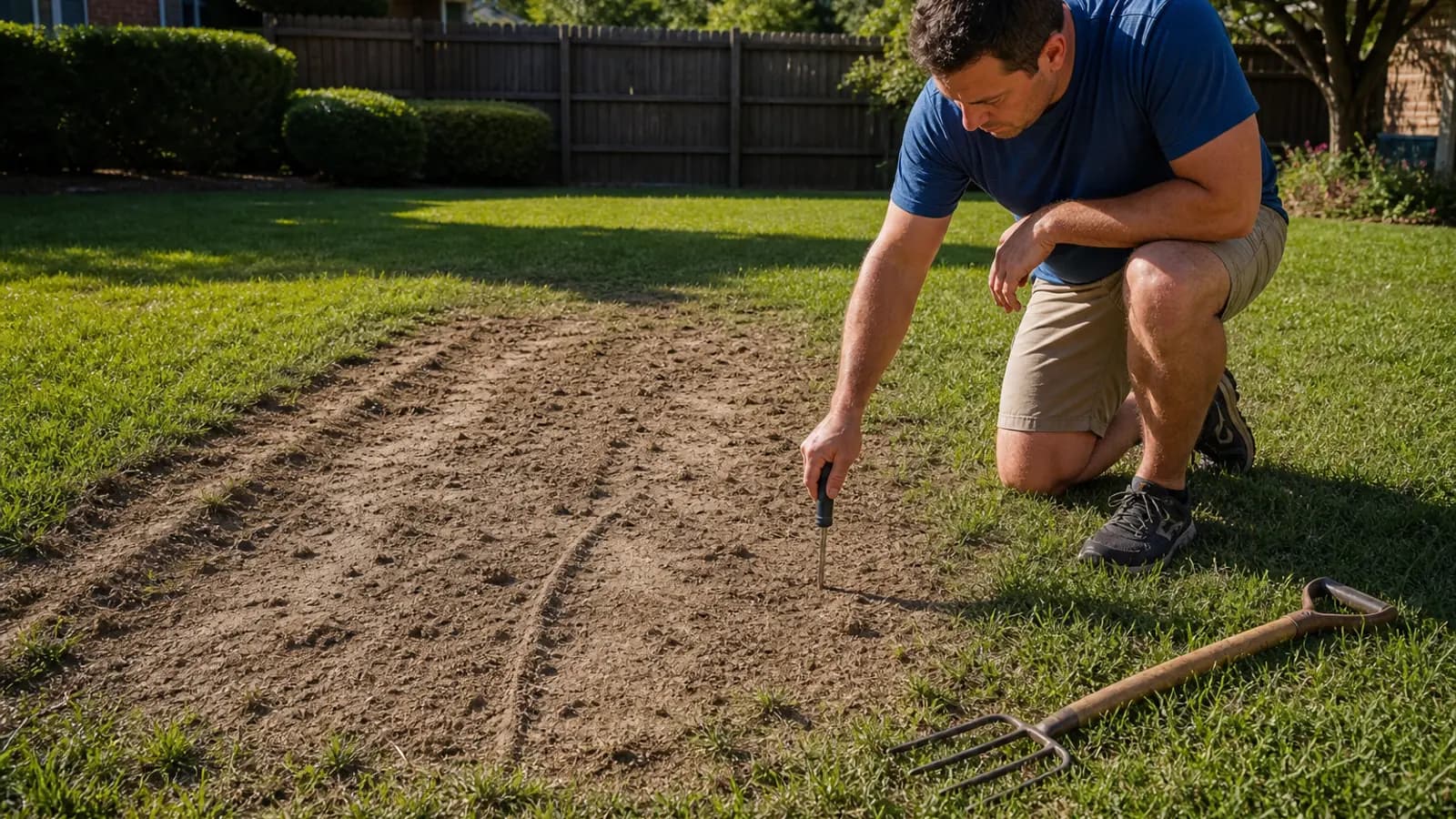
A patch that follows a wheel track, walkway edge, spreader pass, temporary pool, trampoline, tarp, or construction route makes site history especially important. Possible causes include wear, compaction, blocked light, trapped moisture, chemical overlap, heat beside pavement, or several of those together.
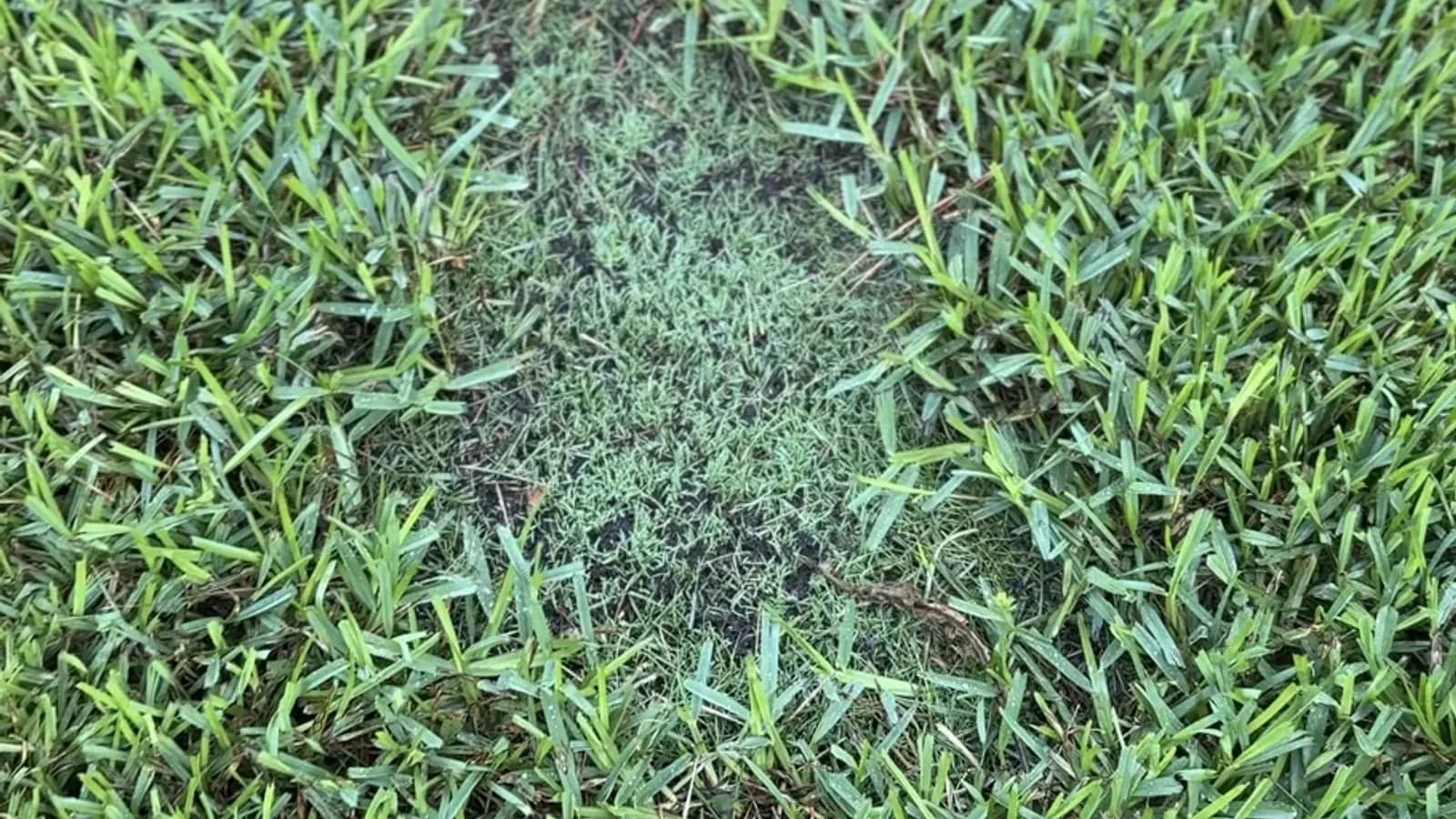
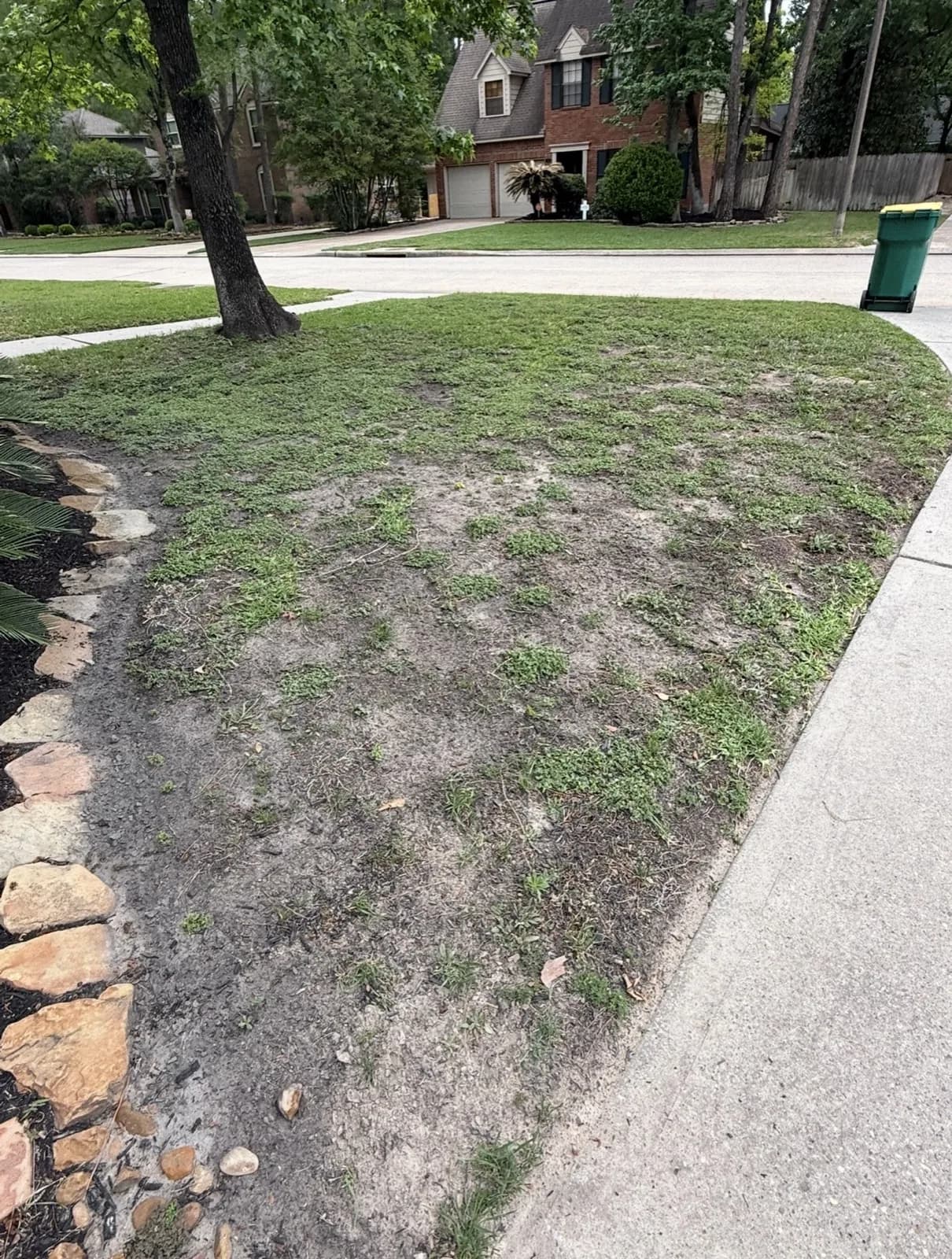
The real internal photo below was documented as tough compacted soil. Its irregular bare shapes alone would not prove compaction without the retained site notes. That distinction is the standard for every atlas entry: image plus history, never image alone.
Debris-covered or physically blocked soil
Leaves, dead thatch, building material, fabric, stones, and other surface barriers can prevent repair material from reaching soil. Photograph the area before removal, then record what remains underneath. If the obstruction extends below the surface, stop treating it as ordinary patch preparation.
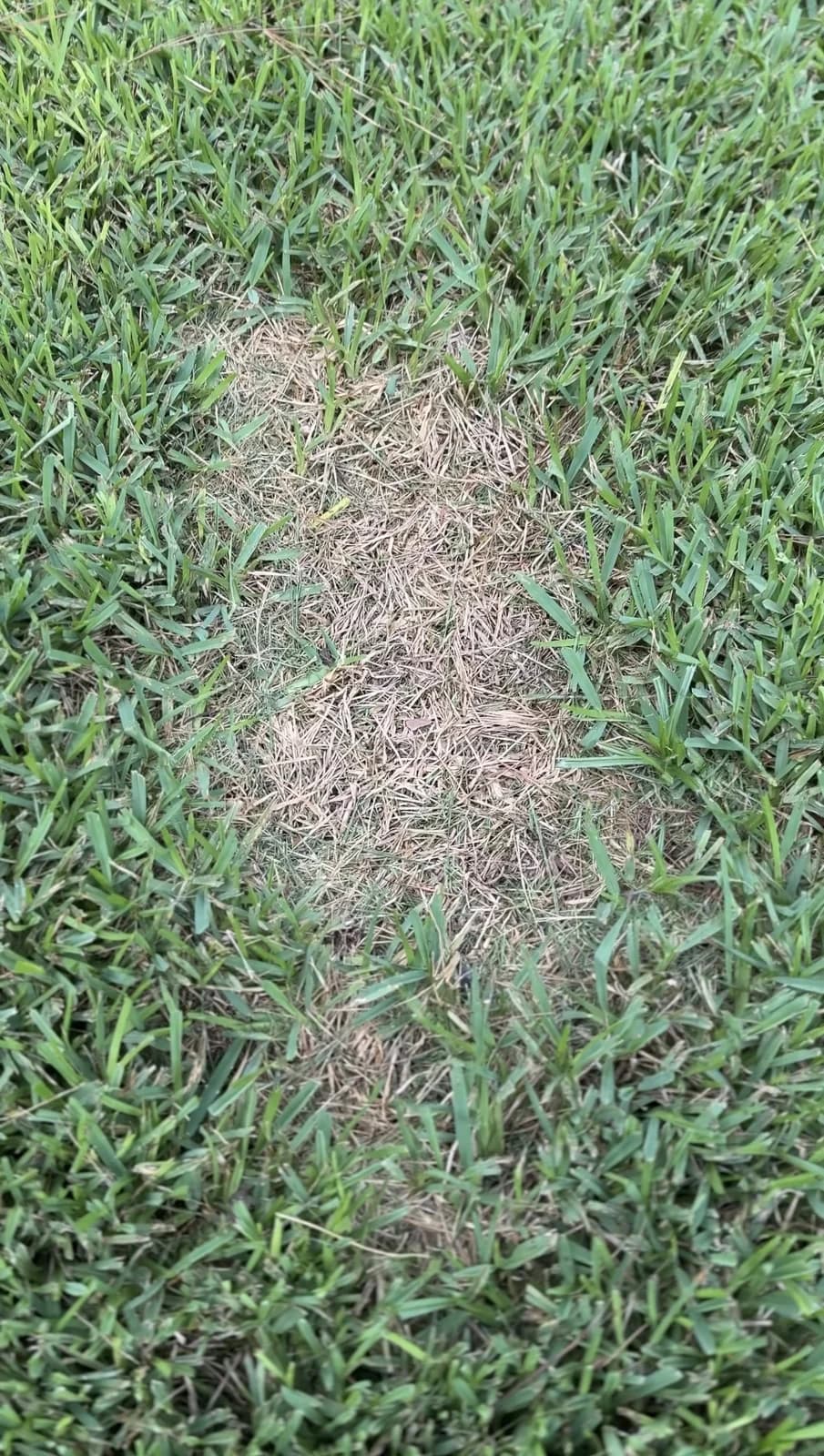
The reviewed YardDay photo below documents dead grass debris on one bare patch. It does not identify why the patch first became bare. The record supports debris removal as a preparation step and preserves the larger cause as unknown.
Circles, rings, arcs, and expanding edges
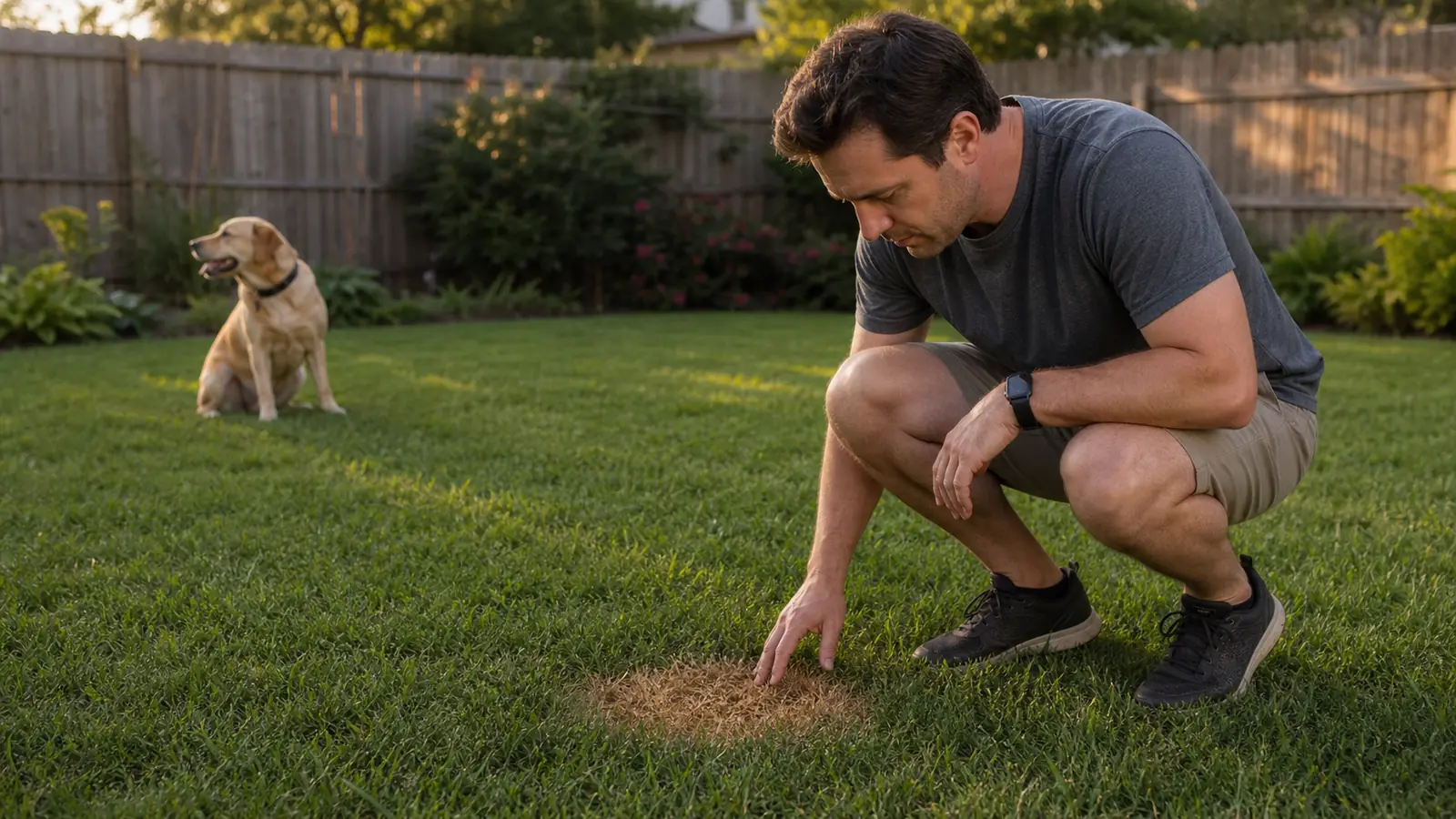
Circular damage has many possible causes. University of Minnesota's turf diagnostic lists diseases, dog spots, herbicide injury, and other problems within circular-pattern categories. Size, edge color, leaf lesions, roots, timing, weather, and progression all matter.
Do not identify a fungus from shape alone or apply a fungicide as a test. UC IPM recommends obtaining an accurate diagnosis and, when disease is suspected, collecting plants near the advancing edge with leaves, stems, roots, and soil for a diagnostic laboratory.
- Mark the edge and photograph whether it expands over several days.
- Inspect individual blades and roots, not only the aerial pattern.
- Seek extension or laboratory help before disease treatment.
Location clues: low spots, sprinklers, shade, and traffic
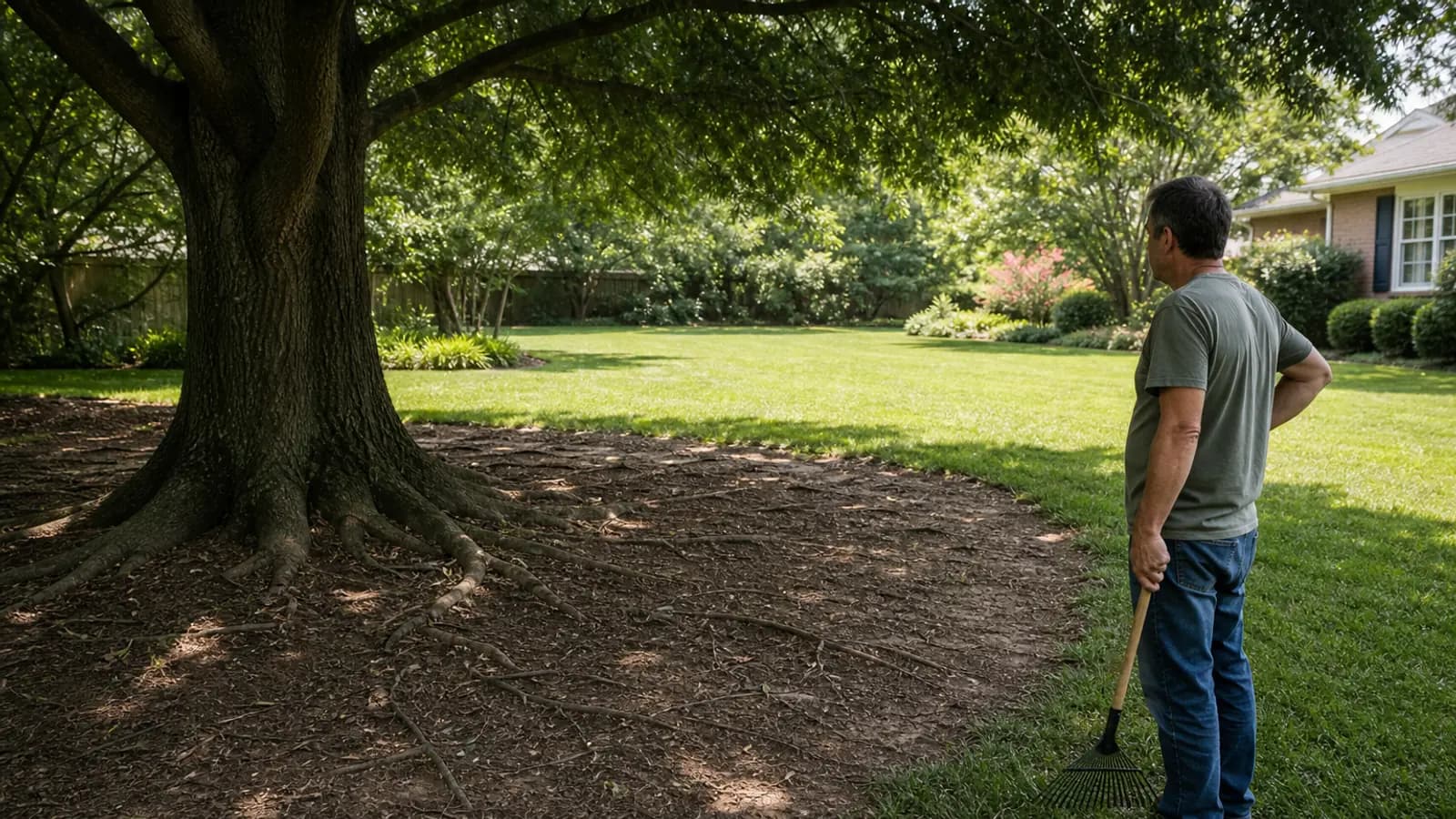
A low patch that stays wet suggests a different investigation than dry soil beside pavement. A wedge around a sprinkler can point toward uneven coverage; a canopy-shaped thin area can point toward shade and root competition; a worn path can point toward traffic and compaction.
Test the clue. Compare infiltration inside and outside the patch, observe sprinkler coverage, record direct sunlight, and redirect traffic. If changing one verified condition changes the pattern over time, confidence improves.
Stop patching when the evidence points beyond patch repair
Pause seed and product applications when a patch is expanding, rings recur, grass pulls up without roots, soil has an unexplained odor or stain, multiple plant species are injured, water remains standing, or symptoms began after a chemical application. Also stop when major roots, buried debris, erosion, utilities, or a grade problem prevent safe preparation.
Use a county extension office, turf professional, arborist, drainage contractor, utility-location service, or diagnostic laboratory according to the risk. The best next step can be a sample or site correction rather than another lawn product.
Common questions
Before you repair the patch
Can Patch diagnose a lawn disease from one photo?
No. A photo can organize visible clues, but disease diagnosis can require grass identification, site history, weather, blade and root inspection, progression, and a laboratory sample.
Does a circular brown patch always mean fungus?
No. Circular patterns can be associated with disease, dog activity, chemical injury, and other causes. Inspect the edge, individual plants, roots, timing, and site history before treatment.
Why does the atlas use only YardDay internal photos?
The photos have retained provenance and reviewed field records. They illustrate documentation and comparison, not universal disease signatures or customer outcomes.
When should I send a turf sample to a laboratory?
Consider a laboratory or extension diagnosis when damage is expanding, recurring, severe, or suspected to be disease. A useful sample includes plants near the active edge with leaves, stems, roots, and soil.