
The short answer
What to do first
Repair compacted lawn damage by removing or redirecting the pressure source, checking drainage and buried debris, then restoring pore space at a depth and season appropriate for the grass and severity. Light surface crusting may be prepared by hand; broad, deeply compacted, graded, contaminated, or root-zone damage needs renovation or professional assessment before seed or a patch product is applied.
Watch the comparison
Pro Hydroseed vs. YardDay
Professional equipment is built for large jobs. This 32-second commercial shows why a measured homeowner patch belongs in a different category.
Video transcript and visual description
Professional hydroseeding is built for big jobs. The video shows full-yard equipment, then an isolated bare patch and the YardDay homeowner process. YardDay brings the hydroseed-style process down to patch size. The closing frames show the YardDay South package and the reminder to water once a day. Results vary with preparation, soil, weather, region, application, and watering.
Read the shape and history of the damage
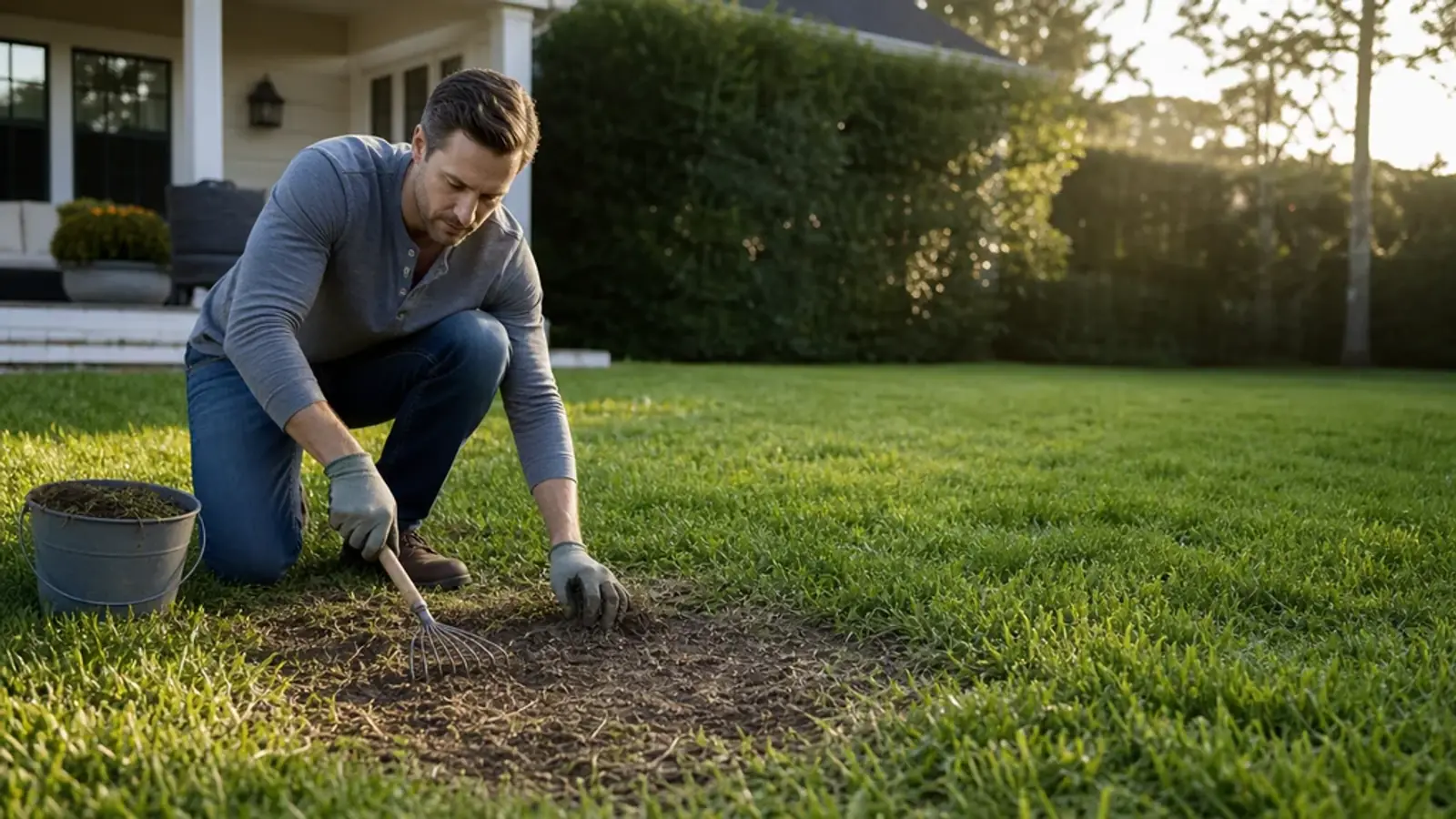
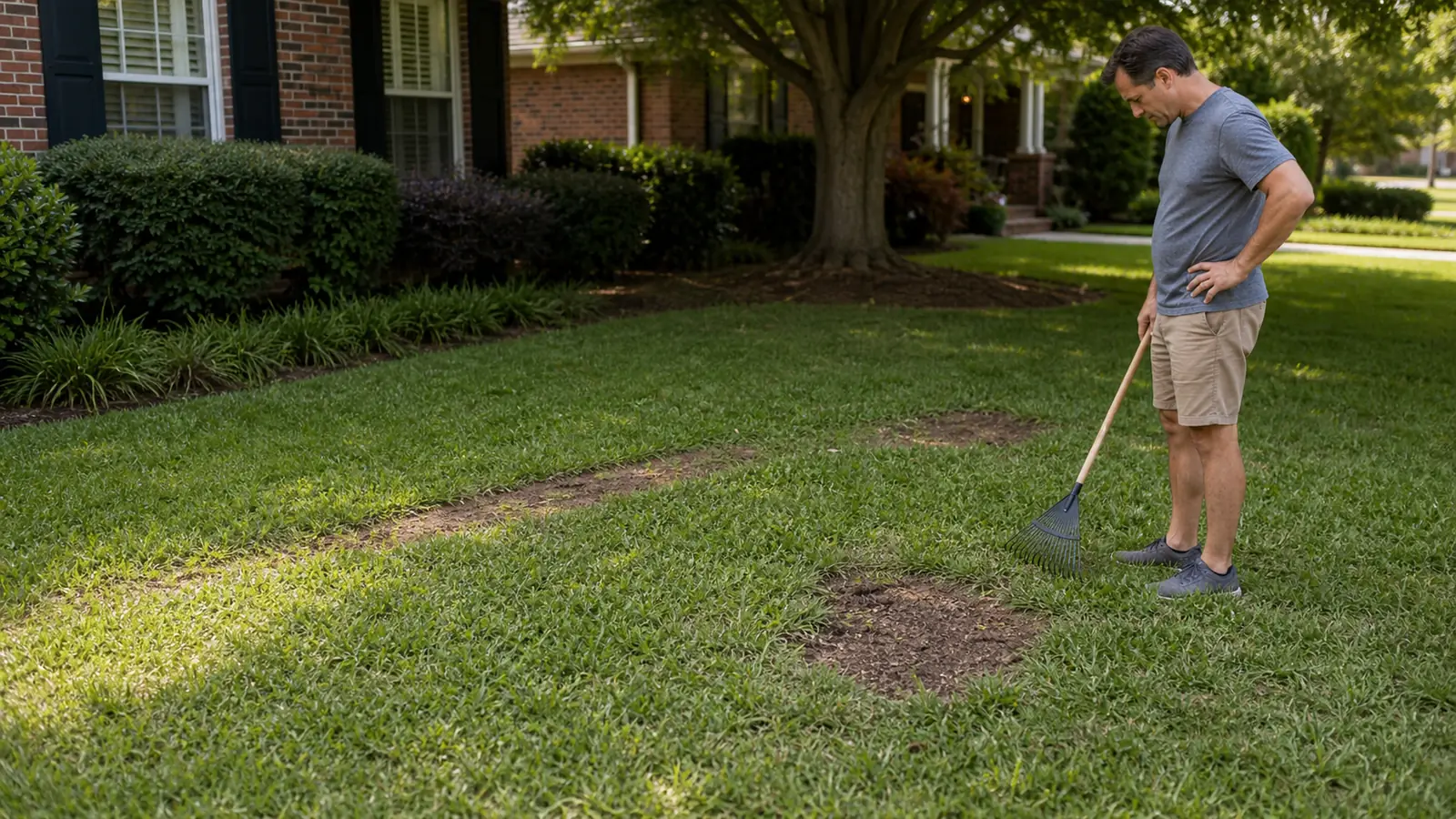
Compaction often follows use: a footpath, mower route, equipment track, trampoline ring, pool footprint, staging area, or construction entrance. University of Georgia Extension notes that compacted turf can thin and become more sensitive to drought and other stresses because infiltration, gas exchange, nutrient acquisition, and root growth are restricted.
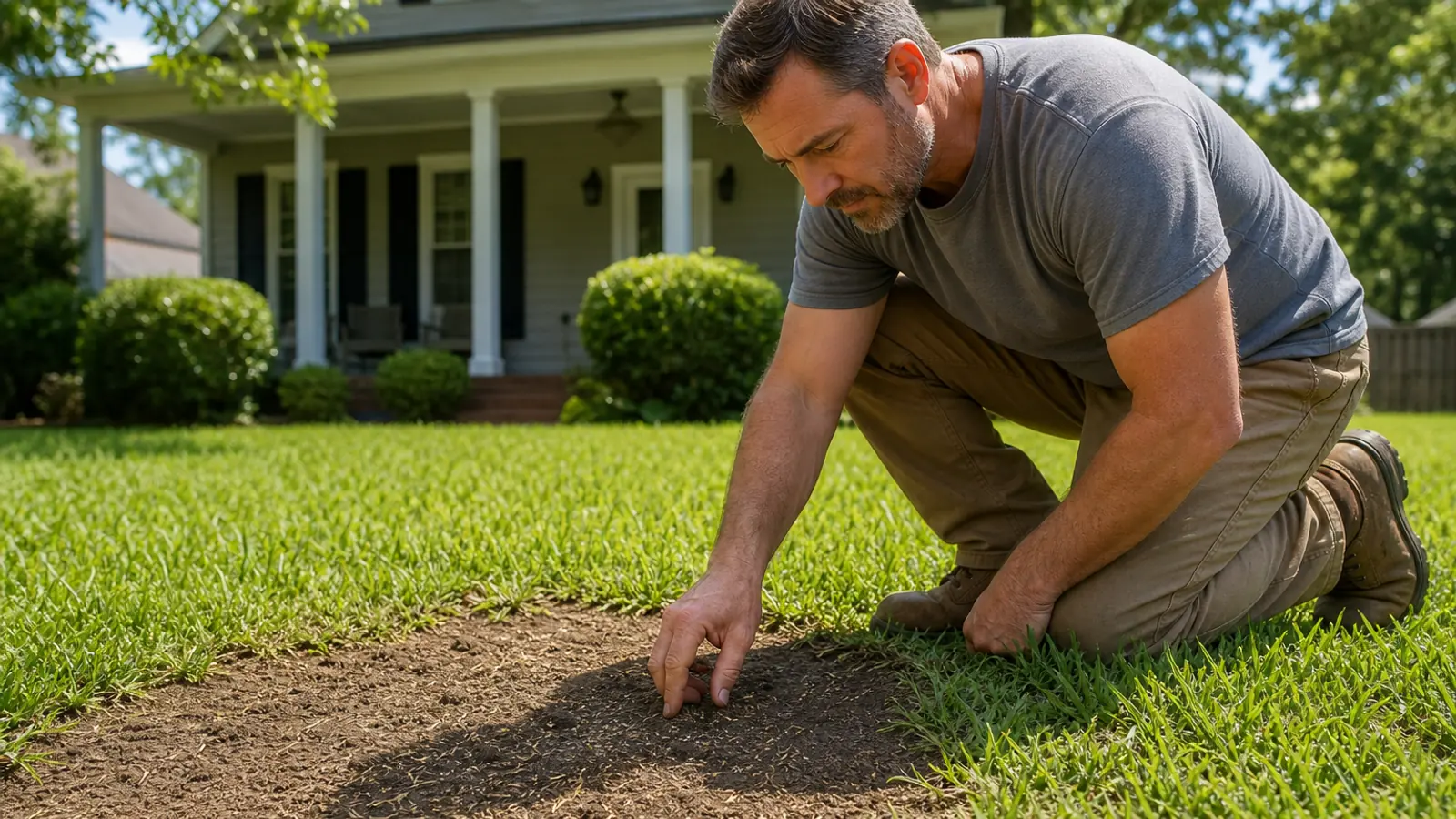
A matching shape is a clue, not proof that compaction is the only problem. Temporary pools can also block light and leave saturated soil; construction can add buried debris, grade changes, spills, or subsoil at the surface. Record what occupied the area and how long it remained there.
Stop the pressure before repairing the grass
Redirect repeated foot or wheel traffic and move temporary structures before preparing the soil. If the same use returns immediately, a path, pad, or different surface may be more honest than reseeding the same footprint every season.
Avoid working saturated soil; traffic and aggressive cultivation can worsen structure when wet. Let muddy areas drain, then compare how water enters the affected soil and the healthy lawn next to it.
- Keep vehicles and loaded equipment off the repair area.
- Create a durable route for repeated human or pet traffic.
- Do not seed until standing water, buried material, and grade problems are addressed.
Match the repair to the depth of the damage
For a small crusted patch, remove debris and lightly loosen the surface so water and repair material can reach soil. For an established lawn with broader compaction, core aeration removes plugs and creates larger pores. Penn State Extension distinguishes core aeration from solid spikes and advises doing aeration when conditions allow the grass to recover and the soil has enough moisture for the tines to penetrate.
A homeowner patch product belongs after the soil can accept water and support roots. It is not a substitute for deep renovation, grading, contaminated-soil removal, or rebuilding a construction-damaged soil profile.
Separate a surface patch from a damaged soil profile
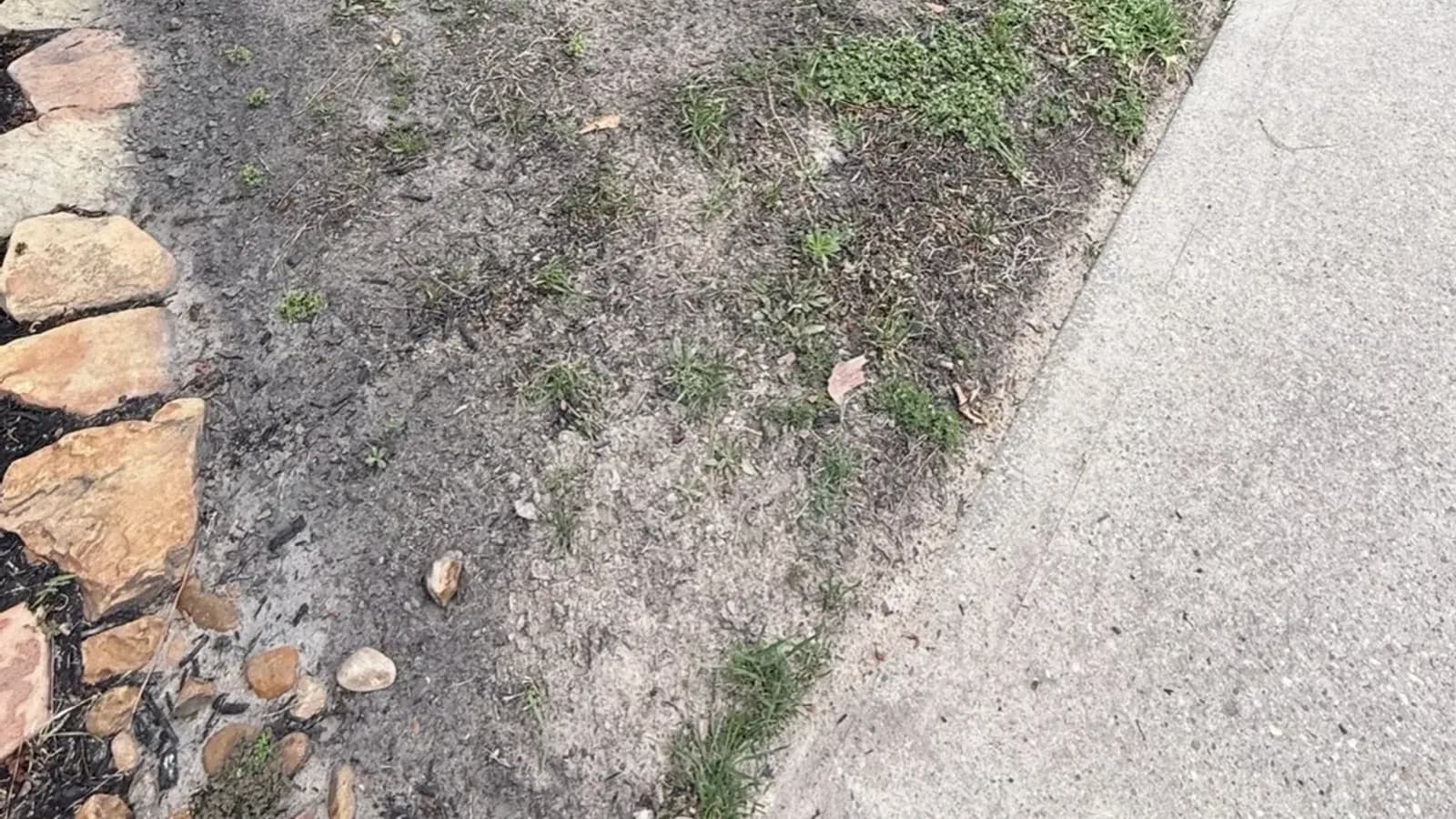
Use several observations together before choosing tools. Compare how quickly a gentle amount of water enters the affected and unaffected soil, whether roots are shallow or absent, whether the grade changed, and whether the hard layer is limited to the surface. A single hard spot on a dry afternoon is not enough to map the depth or extent of compaction.
Surface damage is more plausible when the footprint is small, the surrounding grade remains intact, water enters after light preparation, and no foreign material appears. Broader renovation is more plausible when wheel ruts remain, water follows tracks, subsoil or aggregate is exposed, turf roots stop at a dense layer, or the damaged area spans a construction access route. Professional soil evaluation is the safer next step when depth, contamination, utilities, or structural drainage is uncertain.
This classification prevents two opposite mistakes: using heavy equipment on a small repair that could recover with careful preparation, and sprinkling seed over deep damage that cannot support roots. University of Georgia Extension ties compaction to restricted infiltration, gas exchange, nutrient acquisition, and root growth; the repair should address those physical limits before appearance.
Prepare, test infiltration, then choose the grass repair
Remove loose debris, restore the surface to the surrounding grade, and test a gentle application of water. It should enter the soil without immediate ponding or racing along a wheel rut. Use a soil test before adding lime or nutrients; do not use fertilizer as a physical-compaction remedy.
Once the cause is controlled and the soil is receptive, select grass or a repair system suited to the region, light, traffic, and season. Follow its label for coverage and watering. Keep the area out of service while seedlings establish.
- Small surface crust: hand preparation may be enough.
- Broad established-lawn compaction: consider correctly timed core aeration.
- Deep construction or grade damage: obtain a site assessment before planting.
Plan how the repaired area will be used afterward
Recovery is temporary if the same load returns before the grass can tolerate it. Mark an alternate walking route, move play equipment on an appropriate schedule, keep vehicles on a durable surface, and prevent contractors from using the repaired area as a staging lane. For a location that must carry repeated traffic, consider whether turf is the correct surface rather than treating recurring wear as repeated product failure.
Inspect after rainfall and after the first renewed use. New ponding, ruts, or thinning in the original outline indicate that the pressure or drainage problem remains active. Pause additional seed and correct that use pattern before restarting establishment.
Stop when compaction is only part of the damage
Stop a DIY patch repair when excavation reveals concrete, gravel, plastic, or construction waste; when soil has an unexplained odor or stain; when the area remains waterlogged; when grade sends water toward a structure; or when remediation would disturb major tree roots or buried utilities.
Large equipment footprints, severe rutting, widespread subsoil exposure, erosion, or repeated failure after traffic control can require a landscaper, soil professional, drainage contractor, arborist, or utility-location service.
Common questions
Before you repair the patch
How can I tell if lawn soil is compacted?
Look for thinning that follows traffic or equipment patterns, shallow rooting, slow infiltration, runoff, and hard soil. These are clues; compare with nearby healthy soil and investigate drainage and buried debris.
Will aeration fix every compacted bare patch?
No. Core aeration can help established turf with compaction, but it does not remove construction debris, correct major grade problems, replace contaminated soil, or make a repeated traffic route disappear.
Can I reseed where a trampoline or temporary pool sat?
Yes, if the structure is removed, drainage and grade are sound, the soil is not deeply compacted or contaminated, and the site fits the grass. Correct the soil and keep pressure off the repair first.
Should I add fertilizer to loosen compacted soil?
No. Fertilizer does not restore soil pore space. Use a soil test for nutrient decisions and address physical compaction with suitable preparation, core aeration, or renovation.